
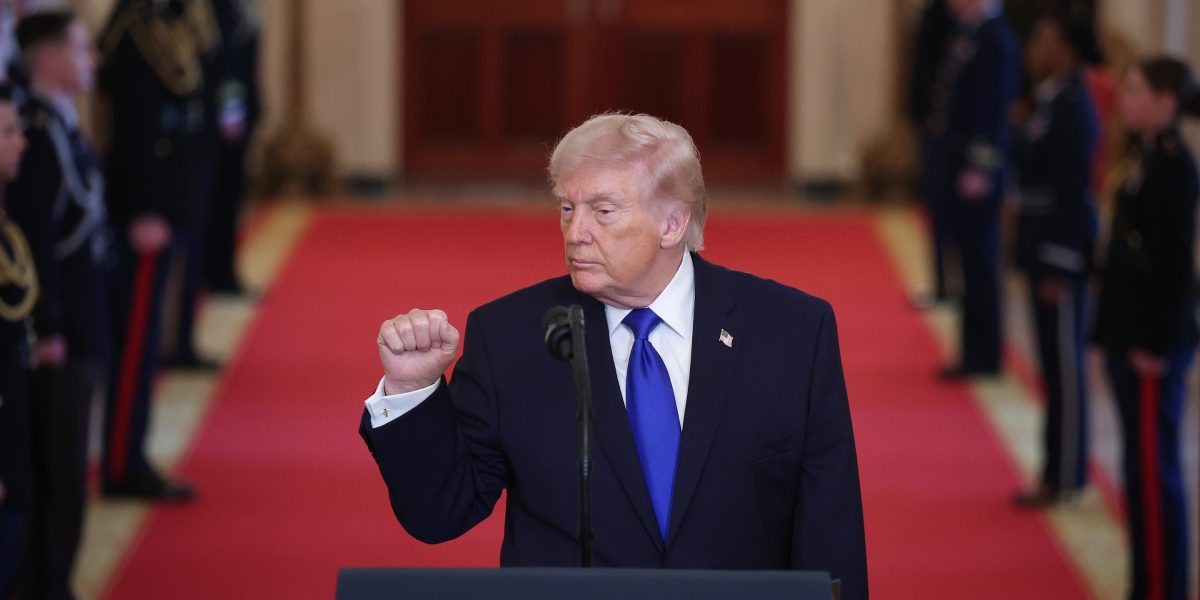
Hours before President Donald Trump’s State of the Union address, the Committee for a Responsible Federal Budget (CRFB) issued a sharp rebuke of the administration’s fiscal policies, intensifying a public dispute with the White House over tariffs, tax cuts, and the escalating national debt.
Maya MacGuineas, president of the CRFB, released a statement Tuesday warning that the nation is “more indebted than it has ever been outside a war or emergency,” a claim that directly challenges the optimistic economic narrative the administration is expected to present to Congress.
The timing of the CRFB’s statement follows a weekend of escalating tensions sparked by a Supreme Court ruling Friday that deemed President Trump’s emergency tariffs, enacted under the International Emergency Economic Powers Act (IEEPA), unlawful. The CRFB subsequently analyzed the ruling’s financial implications, estimating a $2 trillion revenue shortfall over the next decade. Without that revenue, the CRFB projected the national debt could reach 131% of GDP by 2036, a significant increase from previous projections of 120%.
Treasury Secretary Scott Bessent publicly criticized the CRFB’s analysis on Sunday, appearing on Fox News with Maria Bartiromo. Bessent dismissed MacGuineas’s figures as “wrong” and asserted that federal revenue would remain stable. He went on to personally attack MacGuineas, stating, “Maya MacGuineas should be ashamed,” and suggesting the “responsible” be removed from her organization’s name.
MacGuineas responded to Bessent’s criticism, characterizing it as “a bit of an odd response.” She clarified that the CRFB actually supports the administration’s goal of utilizing tariff revenue to improve the nation’s fiscal outlook, having previously lauded the revenue generated by tariffs as a “bright spot.” Although, she cautioned that temporary tariff replacements alone are insufficient and must be coupled with budgetary savings, spending reductions, or alternative revenue sources.
The CRFB has consistently identified the administration’s domestic agenda as a primary driver of the growing debt. MacGuineas’s statement specifically targeted Trump’s signature legislative achievement, the One Big Beautiful Bill Act, warning that the Congressional Budget Office (CBO) projects it will add $4.2 trillion to the national debt by 2034. The CRFB has previously estimated the bill’s tax breaks and spending provisions could ultimately increase the national debt by $32 trillion over 30 years.
As President Trump prepares to address the nation on issues of economic security, the CRFB highlighted the potential long-term consequences of continued borrowing. The organization warned that the mounting debt could hinder economic growth, with total interest payments on the national debt projected to approach $17 trillion by 2036, exceeding $2 trillion annually by 2035.
MacGuineas urged the president to acknowledge the bipartisan nature of the debt problem in his address and called for lawmakers to adopt a 3% deficit-to-GDP target, address the solvency of Social Security and Medicare, and establish a bipartisan debt commission. With the approaching 250th anniversary of the United States, she argued that Americans deserve assurance that their leaders are “taking our fiscal situation seriously and are prepared to deal with it effectively.”
