
Russia warned South Korea on Saturday against providing financial support for Ukraine to purchase weapons, a move that comes as Seoul considers joining a NATO initiative to fund arms supplies. The warning from Russian Foreign Ministry spokeswoman Maria Zakharova signals a potential deterioration in relations between Moscow and Seoul, and underscores the Kremlin’s opposition to international efforts to bolster Ukraine’s defense capabilities.
Zakharova stated that South Korea’s participation in the NATO “PURL” initiative – which allocates funds for Ukraine to procure weapons from the United States – would “push back the prospects for resolving the Russia-Ukraine conflict” and “cause irreparable damage” to bilateral ties, according to Russia’s state news agency Xinhua. Moscow, she added, would be “forced to exercise its right to retaliate.”
The Korea Times reported Friday, citing sources within South Korea’s Foreign Ministry, that NATO had requested Seoul’s involvement in the PURL program. The program was launched last summer in response to shifts in U.S. Policy regarding arms deliveries to Ukraine, operating by allowing Kyiv to submit urgent weapons requests which are then financed by NATO member states.
The escalating tensions follow a series of attacks across Ukraine overnight Monday, marking the eve of the fourth anniversary of Russia’s full-scale invasion. Regional authorities reported three deaths and multiple injuries as a result of Russian strikes. In the Odesa region, two people were killed and at least three wounded when drones struck industrial, energy, and civilian infrastructure, according to Governor Oleg Kiper. A drone attack in Zaporizhzhia killed a 33-year-old man and injured another, while a missile hit Kharkiv’s Kholodnogirsky district, with damage assessment ongoing.
Meanwhile, Hungary has threatened to block the European Union’s next package of sanctions against Russia, seeking a resumption of Russian oil transit through a pipeline supplying Hungarian refineries. Foreign Minister Peter Szijjarto stated on X, formerly Twitter, that Hungary would not allow decisions beneficial to Kyiv to proceed “until Ukraine resumes oil transit to Hungary and Slovakia via the Druzhba pipeline.” Ukraine has condemned the move as “ultimatums and blackmail,” alongside similar threats from Slovakia to halt electricity supplies.
In a separate development, Russian President Vladimir Putin declared the development of Russia’s nuclear forces an “absolute priority” following the expiration of the New Start treaty with the United States. Speaking on Russia’s “Defender of the Fatherland Day,” Putin vowed to strengthen the army and navy, drawing on experience gained from the war in Ukraine. The expiration of New Start leaves the world’s two largest nuclear powers without any binding arms control agreements.
Further complicating the situation, a police officer was killed and 24 people wounded in Lviv, western Ukraine, on Sunday after several explosive devices detonated. President Volodymyr Zelenskyy blamed Russia for the attack, which Lviv’s mayor described as a terrorist act. A 23-year-old female police officer died in the incident, and twelve people remained hospitalized, two in serious condition. A woman has been detained in connection with the investigation.
On Sunday, Russia launched 297 drones and nearly 50 missiles at targets across Ukraine, flattening a residential house in Kyiv, according to Zelenskyy. He stated that a “significant proportion” of the attacks were intercepted and called on allies to strengthen Ukraine’s air defenses. Simultaneously, a massive Ukrainian missile attack caused significant damage to energy infrastructure and disrupted power, heat, and water supplies in Russia’s Belgorod region, bordering Ukraine. Emergency crews in Russian-controlled areas of Zaporizhzhia and Luhansk also worked to restore power and extinguish fires following Ukrainian attacks on energy infrastructure and an oil depot.
Four Moscow airports – Sheremetyevo, Domodedovo, Vnukovo, and Zhukovsky – briefly suspended flights on Sunday due to a drone attack, but resumed operations later in the day. Russian air defenses reportedly downed 71 Ukrainian drones, including 11 en route to Moscow.
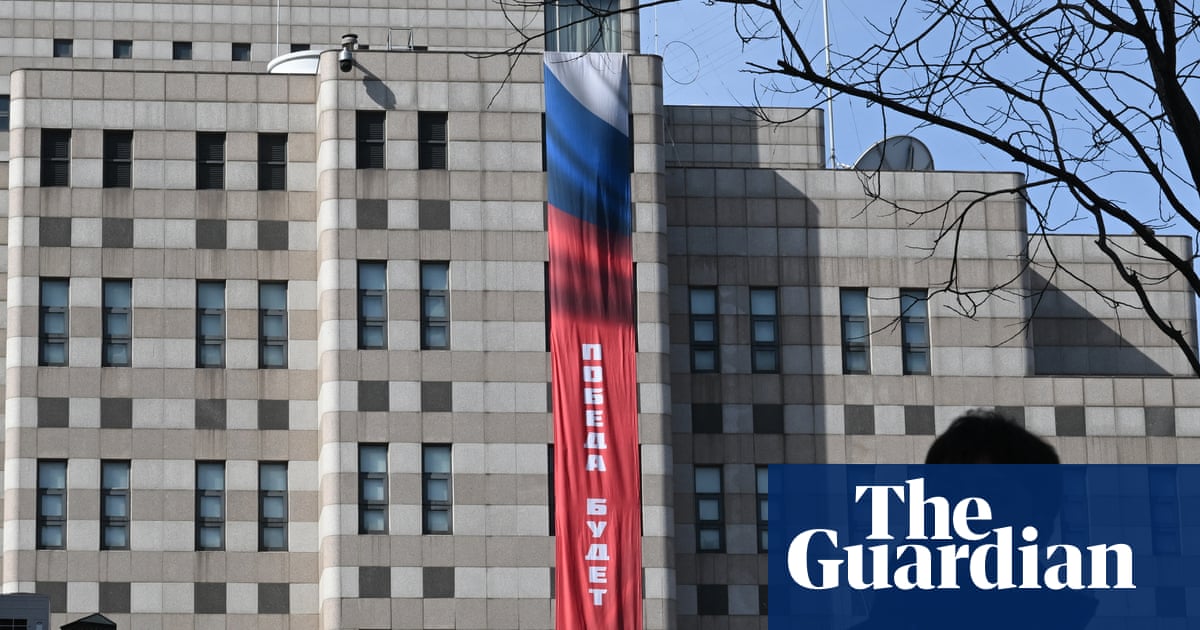
South Korea’s foreign ministry has also formally requested the Russian embassy in Seoul to remove a large banner displayed on its building bearing the message “victory will be ours” in Russian, Yonhap news agency reported Sunday. The ministry expressed concern that the banner, widely seen as a reference to Russia’s war in Ukraine, could create unnecessary tensions.
