
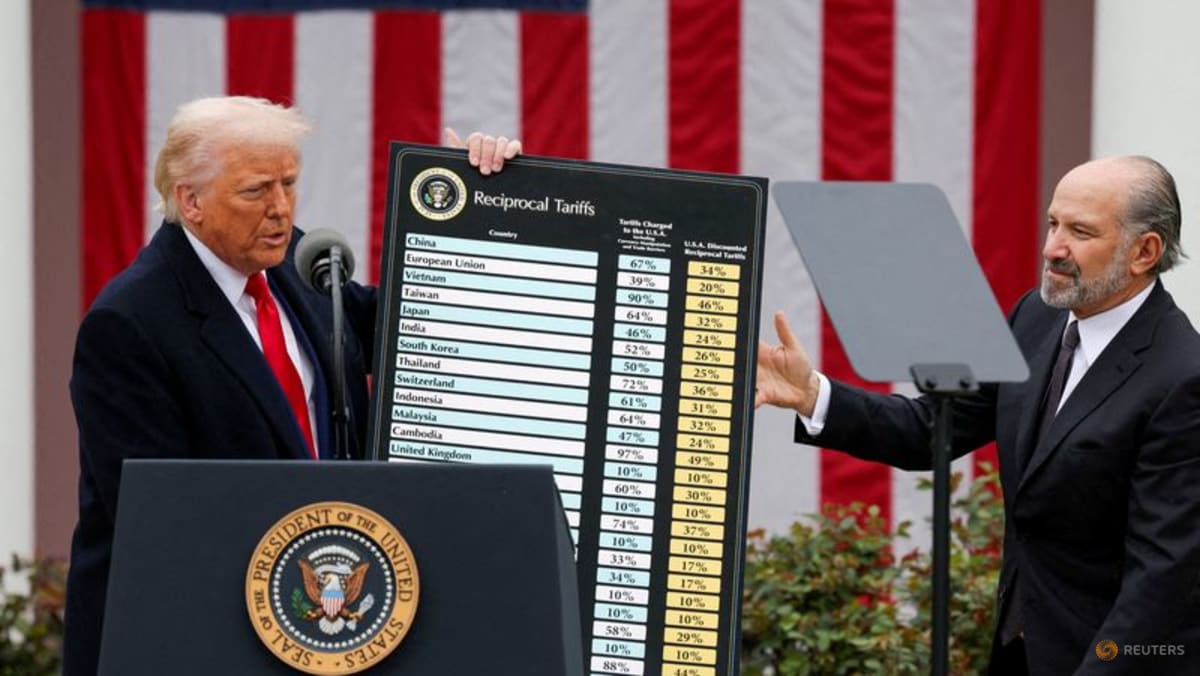
WASHINGTON — The Supreme Court on Friday significantly curtailed President Donald Trump’s ability to impose tariffs, ruling 6-3 that he exceeded his authority when enacting sweeping tariffs using a 1977 law intended for national emergencies. The decision strikes down many, but not all, of the tariffs implemented during Trump’s presidency.
The case centered on the International Emergency Economic Powers Act (IEEPA), a law originally passed to restrict the president’s emergency economic powers stemming from the 1917 Trading with the Enemy Act. While IEEPA allows the president to regulate commerce during a national emergency, the Court found that Trump’s application of the law to justify broad tariffs on goods from across the globe was not permitted. Chief Justice John Roberts, writing for the majority, stated the Trump administration “points to no statute” in which Congress had previously indicated IEEPA’s language could be applied to tariffs.
The rulings came in two consolidated cases, V.O.S. Selections, Inc. V. United States and Learning Resources, Inc. V. Donald Trump, brought by businesses challenging the legality of the tariffs. Lower courts had previously sided with the businesses, and Friday’s decision affirms those rulings.
According to government data from October to mid-December, the tariffs struck down by the Court represent approximately two-thirds of the revenue generated from Trump-imposed tariffs. Trump had implemented some additional tariffs under other legal authorities, which are not affected by this ruling.
The White House offered no immediate comment on the decision. However, Trump, who was addressing a gathering of governors when informed of the ruling, reportedly called it a “disgrace” and left the room, according to two individuals familiar with his reaction. He also indicated he had a “backup plan,” one of those sources said.
Just a day before the ruling, Trump had publicly lamented the possibility of the tariffs being overturned, stating, “Without tariffs, this country would be in such trouble right now.” He argued that the tariffs were vital for U.S. Economic security, claiming that without them, other nations would exploit the United States, citing China as a prime example.
Despite Trump’s assertions, financial markets reacted positively to the news, with stocks rallying following the Court’s decision.
In a dissenting opinion, Justice Kavanaugh argued that both the text of IEEPA, its historical context, and previous Supreme Court rulings supported the Trump administration’s position. He acknowledged the tariffs “may or may not be wise policy,” but maintained they were “clearly lawful.”
Candace Laing, president and CEO of the Canadian Chamber of Commerce, cautioned that the ruling should not be interpreted as a complete reset of U.S. Trade policy. She warned that Canada should prepare for the potential use of “blunter mechanisms” to exert trade pressure, which could have broader and more disruptive effects.
Trump is expected to address the ruling in a press conference scheduled for 12:45 p.m. ET.
