
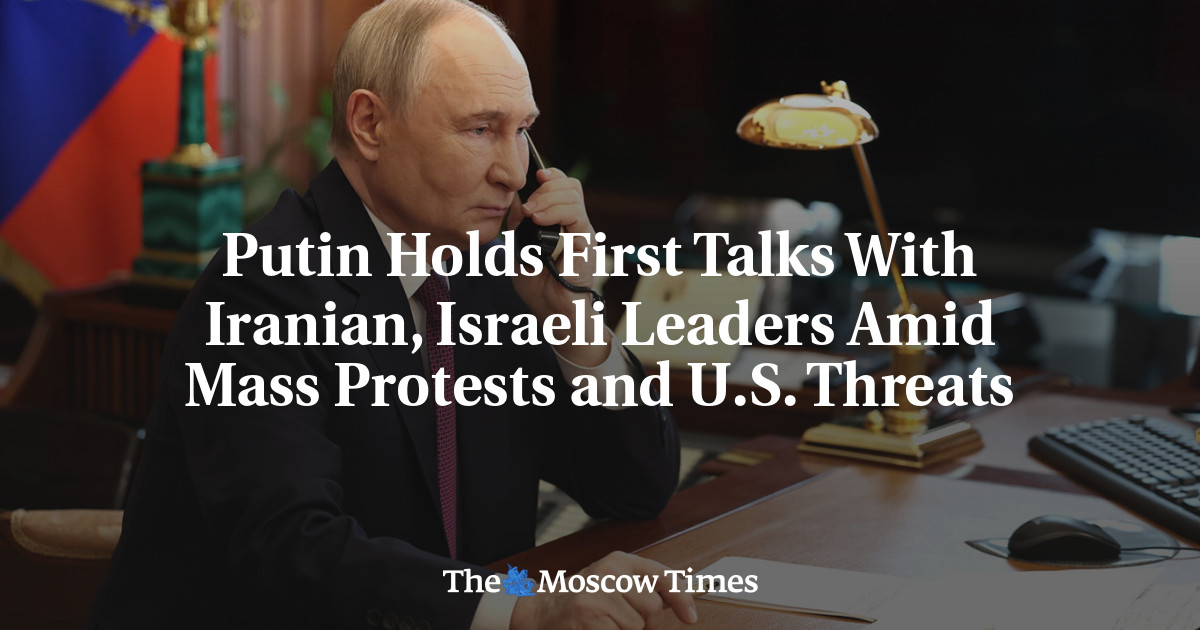
Putin Engages in Diplomatic Efforts Amidst Iran Protests and US-Iran Tensions
President Vladimir Putin has engaged in direct communication with the leaders of Iran and Israel, marking his first public response to the escalating tensions in the Middle East. This diplomatic outreach occurs against a backdrop of widespread protests in Iran and previous threats from former U.S. President donald Trump regarding potential military action against the Islamic republic.
Iran Protests and Government Response
Iran has been gripped by mass demonstrations as late December, fueled by public discontent over soaring inflation and economic hardship. The Iranian government has responded with a severe crackdown on protesters, implementing a nationwide internet blackout and, according to the U.S.-based Human Rights Activists News Agency (HRANA), resulting in the deaths of at least 2,677 people. HRANA’s reporting provides detailed documentation of the casualties and the government’s suppression of dissent.
U.S. Response and De-escalation
Former president Trump had initially signaled a willingness to intervene on behalf of the Iranian people, stating that the U.S. military was prepared for action should Iran target protesters. Though, these threats were later tempered following assurances from Tehran that the killing of protesters would cease. This shift highlights the delicate balance between supporting Iranian citizens and avoiding a wider conflict in the region.
Putin’s Conversations with iranian and Israeli Leaders
The Kremlin reported that Putin spoke with Iranian President Masoud Pezeshkian, emphasizing Russia’s “continued efforts” to de-escalate tensions between Washington and Tehran.Kremlin spokesperson Dmitry Peskov stated that this diplomatic initiative is “assistance not only to Iran, but to the entire region, as well as to the cause of regional stability and peace.” further details of the conversation are expected to be released.
In a seperate phone call with Israeli Prime Minister benjamin Netanyahu,Putin “outlined fundamental approaches in favor of intensifying political and diplomatic steps in the interests of ensuring stability and security in the region.” The Kremlin statement indicated Russia’s readiness to “continue undertaking appropriate mediation efforts and to promote constructive dialog involving all interested states.” This demonstrates Russia’s positioning as a key mediator in the complex geopolitical landscape of the Middle East.
international Perspectives and Accusations
Reports from The New York Times indicated that netanyahu cautioned Trump against launching military strikes against Iran, underscoring the potential for unintended consequences and regional instability.
Russia’s permanent representative to the UN Security Council, Vassily Nebenzia, accused the United States of “escalating tensions and stirring up hysteria around Iran.” Nebenzia characterized the protests in Iran as “yet another example of the use of tried and tested methods of ‘color revolutions’,” a term often used by Russian officials to describe what they perceive as Western-backed efforts to destabilize governments.
Analysis: Russia’s Role and regional Implications
Putin’s diplomatic engagement reflects Russia’s strategic interests in maintaining stability in the Middle East. Russia has cultivated close ties with both Iran and Israel, and a major escalation in the region would likely undermine its influence and security interests. By positioning itself as a mediator, Russia aims to play a constructive role in de-escalating tensions and preventing a wider conflict.
The situation remains highly volatile, with the potential for miscalculation and unintended consequences. The interplay between the United States,Iran,Israel,and Russia will be crucial in determining the future trajectory of the region. Russia’s ability to facilitate dialogue and promote diplomatic solutions will be a key factor in preventing further escalation and fostering long-term stability.
Key takeaways
- President Putin has initiated diplomatic contact with both Iran and Israel amidst heightened tensions.
- Iran is experiencing widespread protests due to economic hardship, met with a forceful government crackdown.
- The U.S. has signaled a willingness to de-escalate following assurances from Iran regarding the treatment of protesters.
- Russia is positioning itself as a mediator,emphasizing the importance of political and diplomatic solutions.
- The situation remains precarious, requiring careful diplomacy to prevent further escalation.
