
.
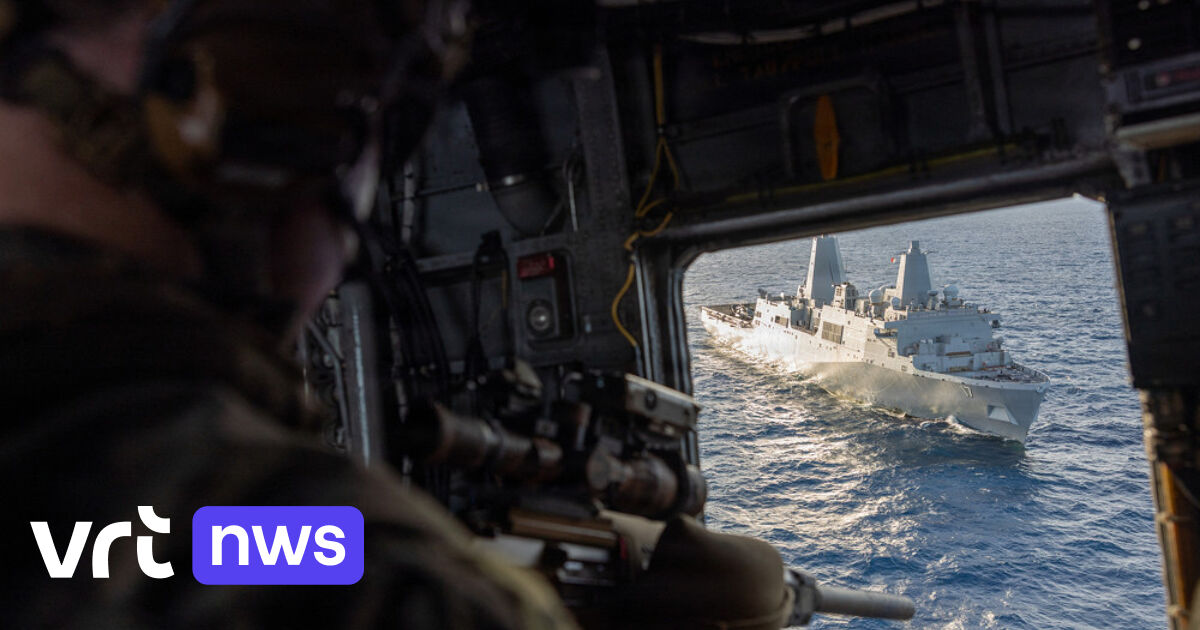
U.S. Southern Command is now at the center of a structural shift involving maritime counter‑narcotics operations in the Eastern Pacific. The immediate implication is heightened operational risk for non‑state maritime actors and a potential rise in diplomatic friction with regional states.
The Strategic Context
Since the early 2000s the United States has layered a “gray‑zone” maritime posture onto its traditional counter‑drug mission in the Caribbean and Eastern Pacific. This posture rests on three enduring structural forces: (1) the persistence of trans‑national narcotics networks that finance organized crime and, increasingly, illicit procurement of advanced weaponry; (2) the United States’ reliance on maritime power projection to enforce sanctions and deter state‑sponsored illicit activity in its near‑abroad; and (3) a multipolar regional environment where emerging powers (e.g., China, Russia) and traditional rivals (e.g.,Venezuela) seek to exploit gaps in U.S.enforcement for strategic leverage. The escalation of kinetic actions against suspect vessels reflects a convergence of domestic political pressure to curb drug‑related violence and a broader U.S. strategy to signal resolve in the “gray‑zone” of non‑kinetic coercion.
Core Analysis: Incentives & Constraints
Source Signals: The Southern Command announced that two U.S.‑operated ships engaged vessels on known Eastern Pacific drug routes,resulting in five fatalities (three on one vessel,two on another). A similar attack the previous day killed four individuals. Earlier, the U.S. seized a Venezuelan oil tanker listed under sanctions. Since September, U.S. forces have conducted at least 104 killings in maritime drug‑interdiction actions. No public evidence has been provided linking the targeted boats to drug trafficking, prompting UN inquiries and criticism of Defence Secretary Pete Hegseth for alleged post‑engagement killings.
WTN Interpretation: The United States is motivated by a combination of operational and political incentives. Operationally,eliminating vessels believed to transport narcotics reduces financing streams for criminal networks that intersect with broader security concerns (e.g., arms smuggling, cyber‑crime). Politically, visible kinetic actions satisfy domestic constituencies demanding a hardline stance on the drug crisis and reinforce the credibility of U.S. sanctions regimes. The leverage the U.S. holds includes superior naval assets, intelligence‑sharing arrangements with regional partners, and the ability to unilaterally designate vessels under sanctions. Constraints arise from international legal norms governing the use of force at sea, the risk of diplomatic retaliation from states that perceive the actions as overreach (notably Venezuela), and internal scrutiny from the United Nations and U.S. congressional oversight committees. The lack of publicly disclosed evidentiary links to drug trafficking heightens the legal and reputational risk, potentially limiting the scope of future operations.
WTN Strategic Insight
“The current wave of maritime strikes illustrates how the United States is extending its gray‑zone toolkit-using limited kinetic force to enforce sanctions and disrupt illicit finance-while testing the boundaries of international maritime law.”
Future Outlook: Scenario Paths & Key Indicators
Baseline path: If the United States continues to operate without a substantive evidentiary disclosure and regional partners maintain tacit support, the pattern of low‑intensity strikes is likely to persist. Diplomatic protests may increase, but no major escalation with state actors will occur. The operational tempo will remain calibrated to avoid overt violations of the United Nations Convention on the Law of the Sea (UNCLOS), preserving the current strategic equilibrium.
Risk Path: If credible evidence emerges that targeted vessels are linked to state‑sponsored activities, or if UN or congressional scrutiny intensifies to the point of imposing legal constraints, the United States could face coordinated diplomatic retaliation (e.g., sanctions, expulsion of U.S. naval assets) and a possible shift by traffickers to option maritime corridors. In that scenario, the U.S.may either scale back kinetic actions in favor of heightened surveillance or, conversely, intensify force to reaffirm deterrence, raising the risk of broader regional confrontation.
- Indicator 1: Outcome of the upcoming United Nations human Rights Council review on maritime use‑of‑force (scheduled within the next three months).
- Indicator 2: Publication of the U.S.Department of Defense’s fiscal year budget request for maritime interdiction assets (expected in the next quarter).
- Indicator 3: Official statements from the Venezuelan Ministry of Foreign Affairs regarding the seized tanker and any retaliatory measures (to be monitored over the next six weeks).
- Indicator 4: Congressional hearings on the legality of recent maritime strikes, including any bipartisan resolutions (anticipated within the next two months).
