
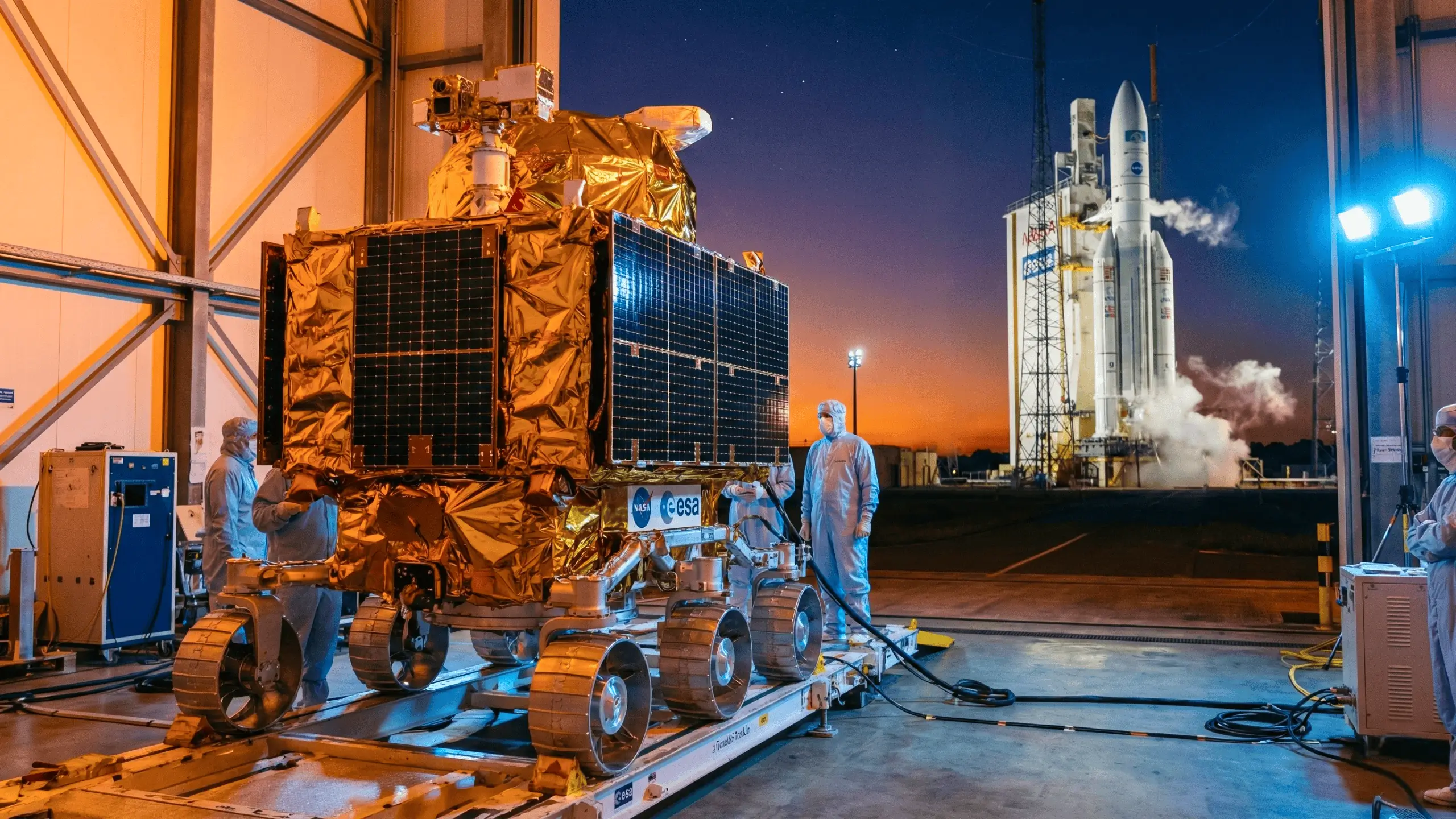
European Rover Rosalind Franklin to Resume Search for Life on Mars in 2028 with NASA Support
PARIS – The European Space Agency’s (ESA) Rosalind Franklin rover mission, designed to search for signs of past or present life on Mars, is back on track for a 2028 launch, thanks to renewed collaboration with NASA. Originally planned in partnership with Russia,the mission was suspended following the invasion of Ukraine.
The Rosalind Franklin rover boasts an unprecedented capability to drill up to two meters beneath the Martian surface, accessing areas shielded from radiation where evidence of life might be preserved.Equipped with instruments including the MOMA (Mars Organic Molecule Analyzer), an organic molecule analyzer, a subsurface radar, and a mass spectrometer, the rover will perform advanced analysis of Martian samples and detect potential biosignatures on-site, eliminating the need to return samples to Earth for study.
NASA will provide a launcher, landing system, and radioisotope heating unit – critical components for the mission’s success. This support allows ESA to reactivate the Exomars programme with a revised launch date of 2028 and an anticipated arrival on mars in 2030. The additional time will be used to adapt the rover’s systems and strengthen transatlantic cooperation.
For Europe,the rosalind Franklin rover represents a landmark achievement in planetary exploration,marking the continent’s first independent foray into Martian surface exploration.The mission underscores a growing European ambition to play a leading role in space alongside the United States,China,and India.
The primary goal of the mission is to investigate the possibility of ancient life on Mars, contributing to the basic question of whether life exists beyond Earth. This project signifies a renewed scientific ambition and a return to strong space cooperation between ESA and NASA, opening a new chapter in planetary exploration with significant scientific and strategic implications.
