
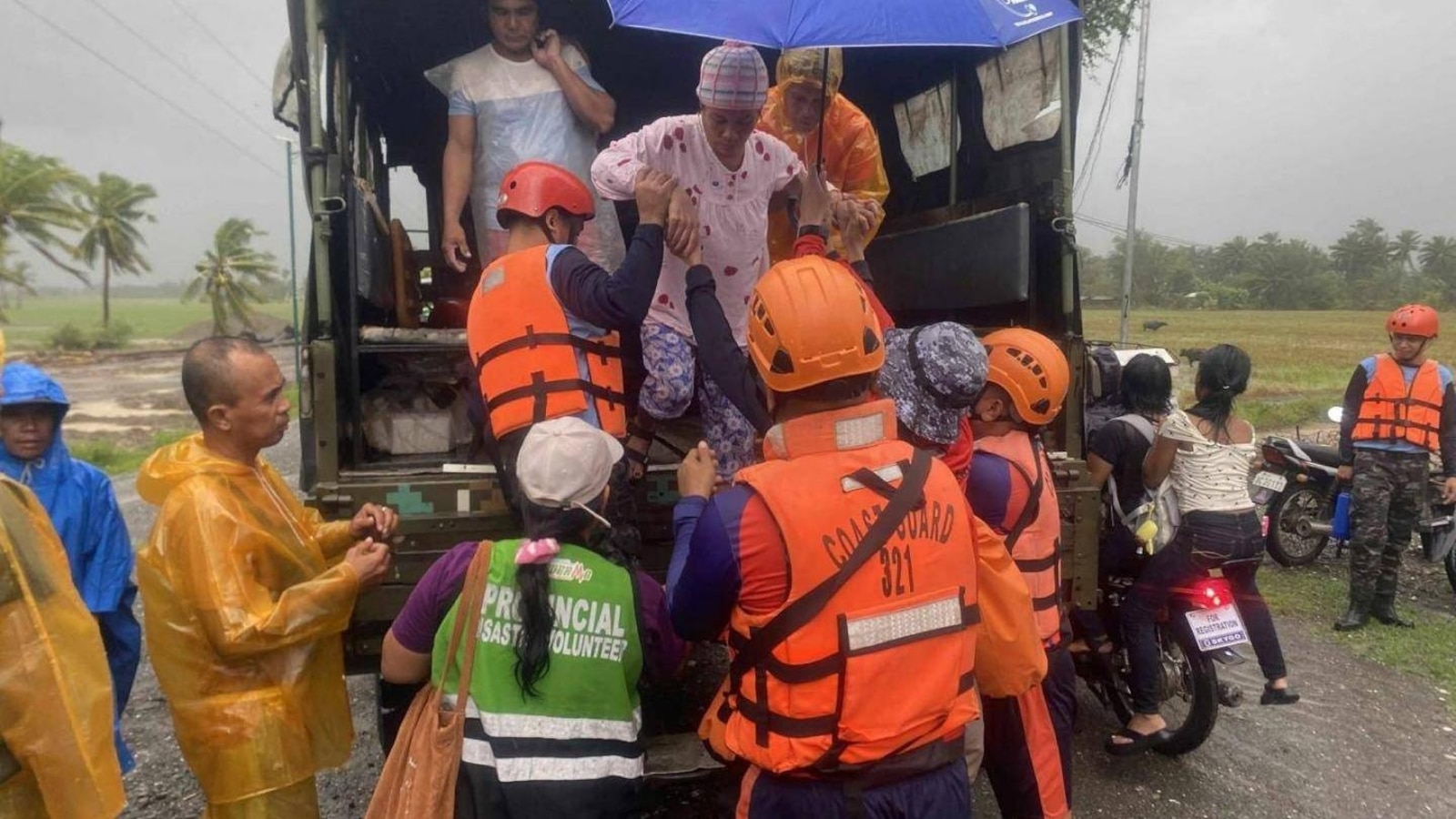
Typhoon Fung-wong, also known as Uwan in the Philippines, has moved away from the archipelago nation, leaving a trail of devastation with at least two confirmed deaths and displacing over 1.4 million peopel, officials reported Monday. The storm triggered widespread flooding and landslides across northern Luzon, prompting a state of emergency declaration by President Ferdinand Marcos Jr. on Thursday.
The typhoon’s impact has been notably severe in northern villages, where fierce winds and torrential rain inundated at least 132 communities. Some residents were reportedly trapped on their roofs as floodwaters rapidly rose. Approximately 1,000 houses sustained damage, and roads remain blocked by landslides, hindering rescue and relief efforts. While the typhoon has passed, authorities warn that lingering rainfall continues to pose a threat in certain areas, including metropolitan Manila.
Bernardo Rafaelito Alejandro IV of the Office of Civil Defense stated that rescue, relief, and disaster-response operations are underway. “We’ll undertake today rescue, relief and disaster-response operations,” he said. Roads blocked by landslides will be cleared as weather conditions improve.
Tropical cyclones reaching sustained winds of 185 kph (115 mph) or higher are classified as “super typhoons” in the Philippines, highlighting the extreme nature of these weather events. The Philippines experiences approximately 20 typhoons and storms annually, alongside frequent earthquakes and volcanic eruptions, making it one of the world’s most disaster-prone countries.
Despite the extensive damage, the Philippines has not yet requested international assistance, though the United States and Japan have offered support.Schools and most government offices are closed Monday and Tuesday, and over 386 domestic and international flights have been canceled, stranding more than 6,600 commuters and cargo workers at ports due to rough seas.
