
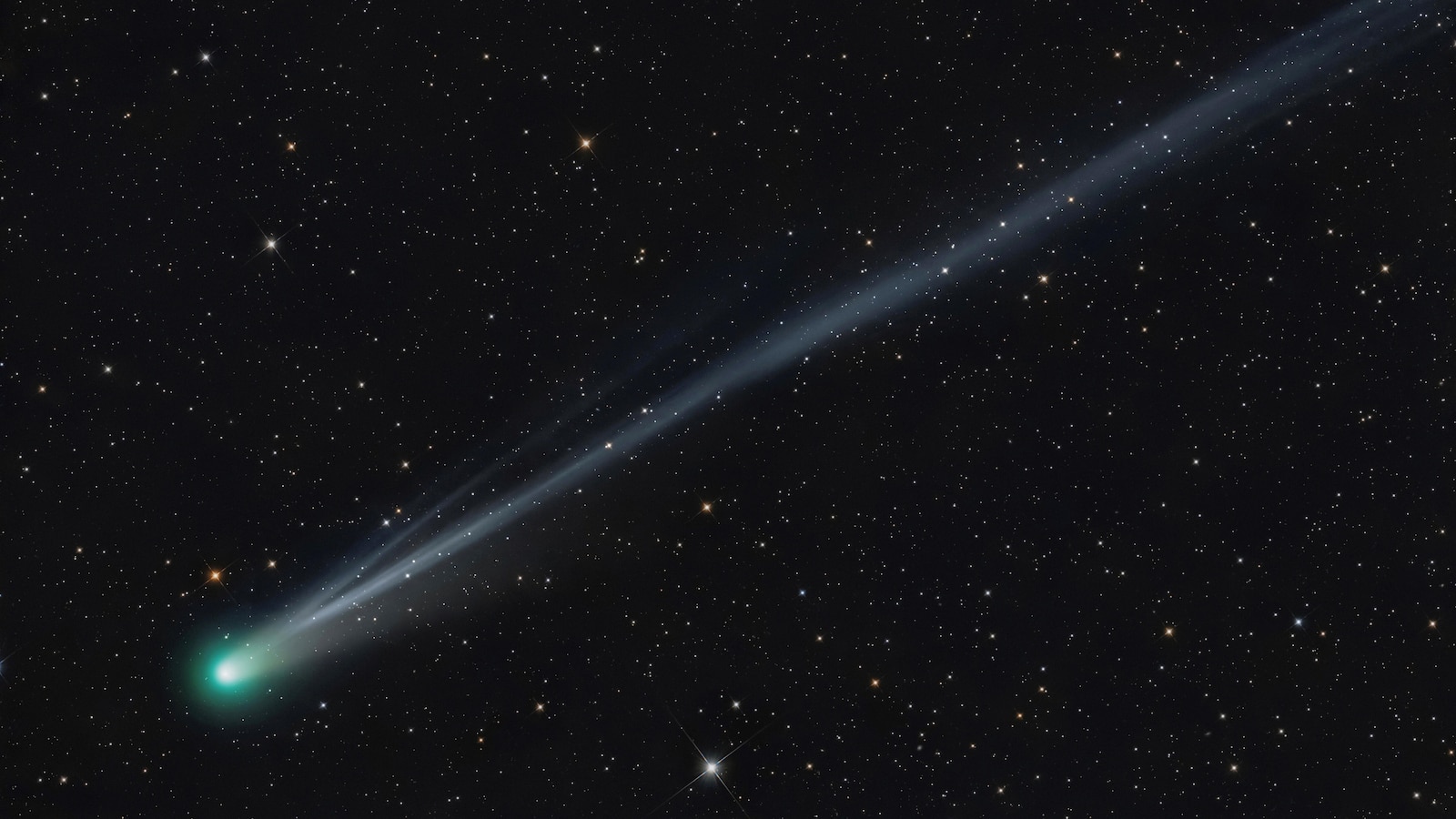
Rare Double Comet Display Lights Up Northern Skies
Skywatchers in the Northern Hemisphere have a rare chance this week to witness two green comets together. comet Lemmon will make its closest approach to Earth around Tuesday, while Comet SWAN had its flyby on Monday, though it’s already beginning to fade as it moves away from the sun.
The simultaneous appearance of two comets visible without specialized equipment is uncommon, but not unheard of, according to experts. both comets originate from the outer solar system-potentially the Oort cloud,far beyond Pluto-and offer a glimpse into the solar system’s ancient past.
To spot the celestial duo, observers should look to the northern sky just after sunset. Comet Lemmon will be low on the horizon, while Comet SWAN will appear to the southwest, also near the horizon. Binoculars may enhance the view through the end of the month, though their brightness remains uncertain.
These “cosmic snowballs” are frozen remnants from the formation of the solar system billions of years ago. As thay approach the sun, they heat up and release gases, creating their distinctive streaming tails and a characteristic green hue.
comet Lemmon, officially designated C/2025 A6, was discovered in January by a telescope searching for near-Earth asteroids. Comet SWAN, or C/2025 R2, was spotted in September by an amateur astronomer using data from a NASA and European Space Agency spacecraft. Despite their color, both comets will likely appear as gray, fuzzy patches to the naked eye.
“Spotting two comets simultaneously without special equipment is rare, but not unprecedented,” said Carson Fuls, director of the University of Arizona sky survey that discovered Comet Lemmon.
Recent notable comet flybys include the green comet that fragmented near the sun earlier this year, Tsuchinshan-Atlas in 2024, Neowise in 2020, and Hale-bopp and Hyakutake in the 1990s.
