
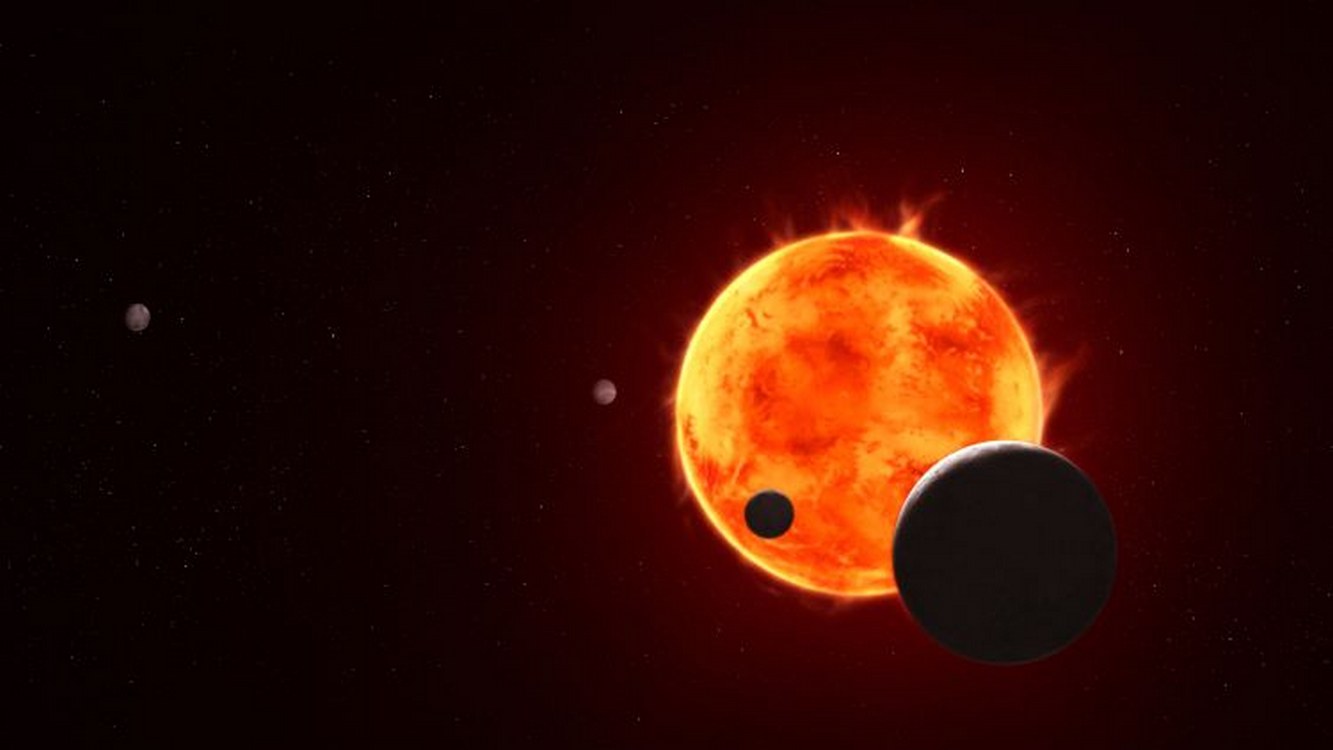
Webb Telescope begins Unveiling Atmosphere of Potentially Habitable Exoplanet
St. Andrews, Scotland – In a landmark achievement for exoplanet research, scientists using the James Webb Space Telescope (JWST) have begun analyzing the atmosphere of TRAPPIST-1e, a planet orbiting a red dwarf star within its habitable zone. While definitive conclusions remain elusive, initial data suggests the possibility of a secondary atmosphere composed of heavy gases like nitrogen, though a bare-rock scenario hasn’t been ruled out.
TRAPPIST-1e is one of seven Earth-sized planets discovered orbiting the ultracool dwarf star TRAPPIST-1, located roughly 40 light-years from Earth. The search for atmospheres on these planets is crucial in determining their potential to harbor life. The JWST’s Near-Infrared Spectrograph (NIRSpec) instrument was utilized to observe the planet as it passed in front of its star – a ”transit” - allowing researchers to analyse how starlight filters through any existing atmosphere.
“But when our observations came down in 2023, we quickly realized that the system’s red dwarf star was contaminating our data in ways that made the search for an atmosphere extremely challenging,” explained dr. Ryan MacDonald, lecturer in Extrasolar Planets at the School of Physics and Astronomy at St. Andrews.
The team spent over a year meticulously correcting for this stellar interference before focusing on the planet’s atmospheric signature. The process relies on identifying changes in the light spectrum as it passes through the atmosphere, revealing the presence of specific chemicals.
“The most exciting possibility is that TRAPPIST-1e could have a so-called secondary atmosphere containing heavy gases like nitrogen. But our initial observations cannot yet rule out a bare rock wiht no atmosphere,” Dr. MacDonald added.
Researchers are continuing to gather data, with plans to analyze nearly twenty JWST transits of TRAPPIST-1e in the coming years. Each observation will refine the understanding of the planet’s atmospheric composition.
“We finally have the telescope and tools to search for habitable conditions in other star systems, which makes today one of the most exciting times for astronomy,” MacDonald stated.
