
Lunar and Geophysical Influences on the Menstrual Cycle: A Recent Study
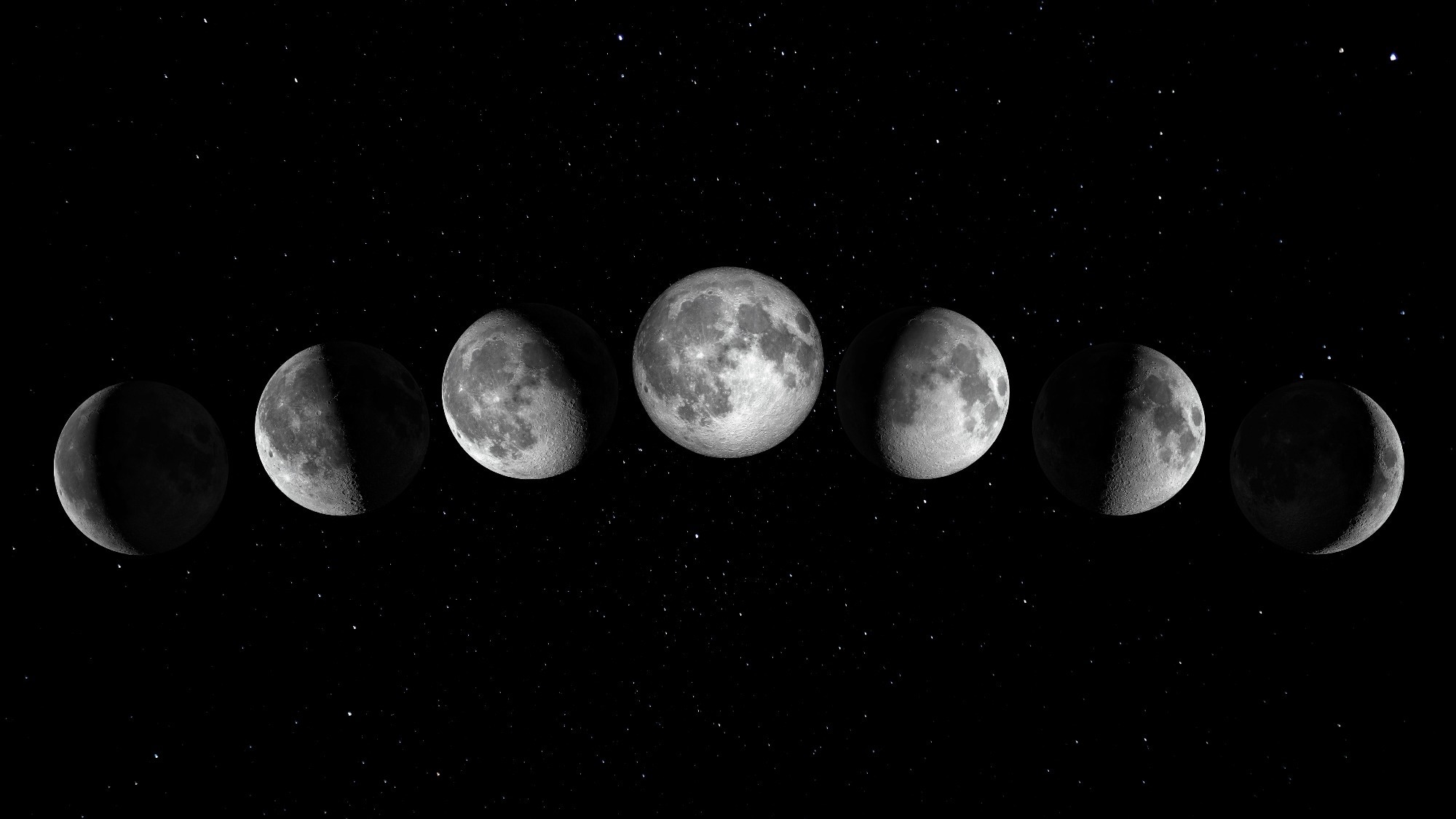
A recent study published in Science Advances investigated the relationship between human menstrual cycles and lunar rhythms, finding continued, though evolving, synchronization. Researchers analyzed data from multiple sources, including historical and contemporary menstrual cycle tracking data, and Google trends searches related to menstrual pain, to explore the influence of lunar cycles – synodic, anomalistic, and tropical – on menstruation.
The study confirmed a historical trend of menstrual onset aligning with lunar phases. Specifically, a tendency for cycles to synchronize with the full or new moons was observed, particularly around the winter solstices and during lunar standstills, periods of heightened gravitational and light influence. However, this synchronization with the synodic month (approximately 29.5 days) has weakened since 2010, coinciding with the increased prevalence of artificial light at night.
Despite the diminishing influence of the synodic month, synchronization with the anomalistic month (~27.55 days, based on the Moon‘s elliptical orbit) and the tropical month (~27.3 days, based on the Sun’s apparent movement) persisted, and in some cases, even strengthened after 2010. This suggests a potential increase in the relative influence of gravitational cycles as light-based cues became less dominant.Synchronization with both the anomalistic and tropical cycles was most pronounced during the winter solstice, when Earth is closest to the sun (perihelion).
Geographical variations were also noted. In Italy, menstrual onset exhibited a bimodal pattern, peaking two days before both the full and new moon, potentially linked to higher light pollution levels in the data collection region. Germany, though, showed a single peak 1.5 days before the full moon.
Longer lunar cycles also demonstrated an effect. Menstrual onset showed strong synchronization with the full moon during minor lunar standstills, coinciding with the Saros series #137 eclipse sequence, which amplifies gravitational effects. Major lunar standstills, conversely, showed weaker synchronization, biased towards the new moon.
Supporting evidence came from Google Trends data, revealing peaks in searches for “period pain” and related terms at perihelion in several countries. Interestingly, this pattern was not global, being absent in italy, France, and New Zealand, and occurring in the Southern Hemisphere during summer months, challenging the hypothesis that moonlight alone drives the observed synchrony.
The researchers conclude that both lunar luminescence and gravimetric cycles influence human menstrual cycles, with the menstrual cycle acting as an internal clock partially aligned with these external rhythms.They propose that gravity may exert its influence indirectly through broader geophysical effects.Moreover, the study suggests that menstrual cycles were likely more strongly synchronized with the moon in the past, before the widespread adoption of artificial lighting.
Source:
Forster, C. H., Domene, E. D., Montagnese, J. J. and S., et al. (2025). Synchronization of women’s menstruation with the Moon has decreased but remains detectable when gravitational pull is strong. Science Advances.doi: https://www.science.org/doi/10.1126/sciadv.adw4096
