
Summary of the Situation in Indonesia:
This article details growing unrest in Indonesia, sparked by economic hardship and perceived government inequality, and the increasingly heavy-handed response from authorities. Here’s a breakdown of the key points:
Causes of the Protests:
Economic Hardship: Austerity measures implemented by President Prabowo have cut funding for vital public services like healthcare and education. Inequality: A significant gap exists between the wealthy elite and ordinary Indonesians, with rising youth unemployment and stagnant wages. The $3,000 housing allowance for lawmakers (ten times the Jakarta minimum wage) became a focal point of anger.
Distrust of Police: A long-standing issue rooted in decades of authoritarian rule under Suharto, where the police are seen as corrupt, violent, and serving political interests rather than protecting citizens. A saying encapsulates this: “report a chicken, lose a buffalo.”
Events of the Unrest:
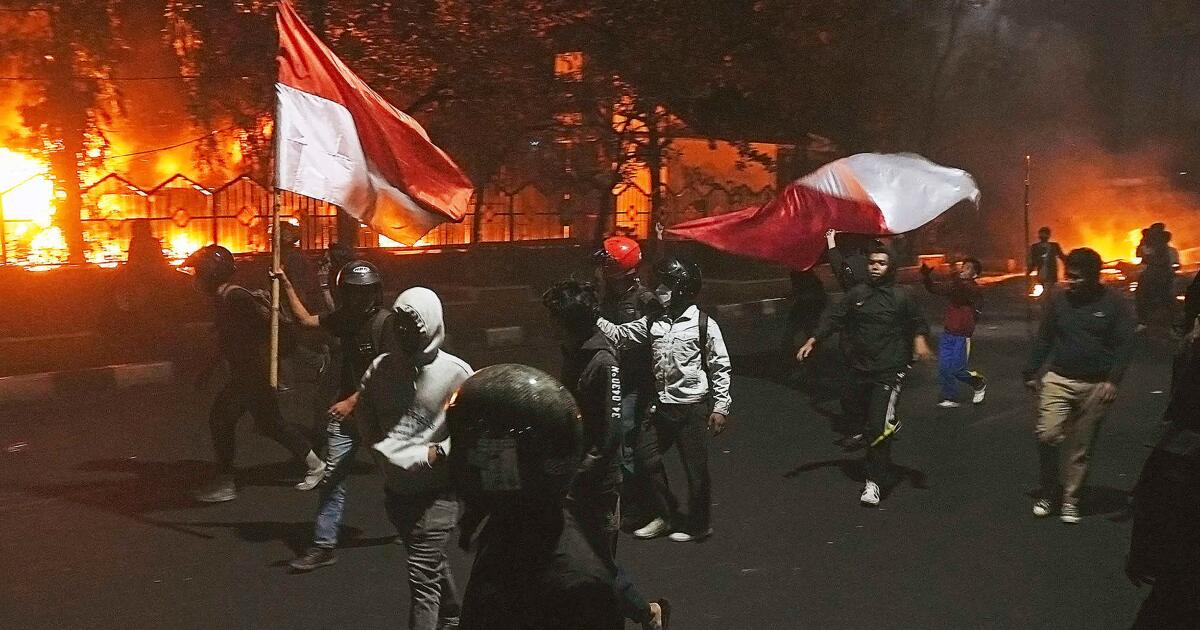
Demonstrations & Violence: Thousands have protested in major cities, some escalating into riots with government buildings burned and looting.
Fatalities & injuries: At least 10 people have died and hundreds injured. Two deaths are directly linked to police actions (tear gas exposure and alleged beating).
Police Response: Police have used tear gas, water cannons, and rubber bullets, leading to over 3,000 arrests. Human rights groups and the UN have condemned the response as excessive and called for investigations.
Triggering Incident: The death of a motorcycle taxi driver hit by an armored police vehicle fueled the escalation.
Government Response & Concerns:
Prabowo’s Response: Initially denounced protests as “treason and terrorism,” then apologized for the incident and promised to scale back lawmakers’ perks. He emphasizes the need to protect citizens but also defend the state.
Return to Authoritarianism: Critics accuse President Prabowo, who himself has a history of alleged human rights abuses under Suharto, of leading the country back towards authoritarianism by expanding the military’s influence.
Lack of Quelling Anger: Government measures haven’t calmed public anger, and protests are expected to continue, with student unions demanding an autonomous investigation into police violence.
In essence, the situation in Indonesia is a volatile mix of economic frustration, deep-seated distrust of the police, and fears of a return to authoritarian rule.
