
“`html
Landmark Xenotransplant: Pig Lung Sustains Human for Nine Days, Offering Hope and Raising Complex Questions
Table of Contents
A groundbreaking study in china demonstrates the feasibility of pig-to-human lung transplantation, despite notable hurdles.
The Experiment
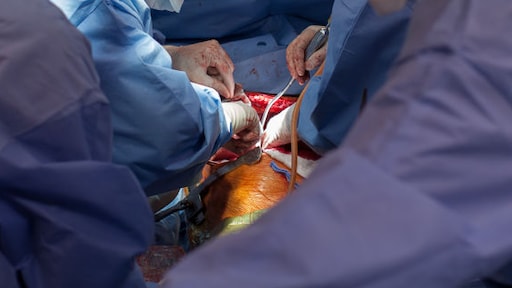
In a first-of-its-kind procedure, researchers in China successfully transplanted a genetically modified pig lung into a 39-year-old brain-dead patient. The lung, altered with six specific genetic adjustments to mitigate rejection, functioned within the recipient’s body for nine days before being removed. This wasn’t about saving a life in the traditional sense, but about rigorously testing a critical boundary in medical science.
The research, detailed in Nature, represents a significant step toward addressing the global organ shortage. The demand for transplantable organs far outstrips supply, and xenotransplantation – the transplantation of living cells, tissues or organs from one species to another – offers a potential solution.
feasibility, Not Finality
While the nine-day functionality is encouraging, researchers emphasize that substantial challenges remain.Organ rejection and the risk of cross-species infection are paramount concerns. “This study shows that lung transplantation from pigs to people is feasible,” the research team stated, “although considerable challenges with regard to organ rejection and infection remain.” Practical application of this technology is still years away.
The study has also drawn scrutiny. Critics point out that the patient’s native right lung continued to function throughout the experiment, making it arduous to definitively assess the pig lung’s contribution to overall respiratory support. As a Harvard surgical professor explained to The New York Times,”They have only proven that a pig lung can be placed in the human body.”
A ‘Promising First Step’
Despite the caveats,the research is being hailed as “promising” by manny in the medical community. Dr. Stephanie Chang, surgical director of the lung transplantation program at NYU, told The New York Times, “It’s a great first step, but a lot of work still needs to be done.” The progress of a reliable method for transplanting animal organs into humans would be a transformative advancement in medicine.
The pursuit of xenotransplantation isn’t limited to lungs. Previous research has explored the transplantation of pig kidneys and hearts. Notably, a 57-year-old American woman lived for 47 days with a genetically modified pig heart before succumbing to complications last July, as reported by RTL News.
Why pigs?
Pigs are currently the preferred animal source for xenotransplantation due to several factors. Professor Ian Always of transplant surgery explained to RTL News that past experiments with chimpanzee and other primate organs faced significant ethical and social objections.Moreover, pigs offer a more efficient source of organs due to their larger size and faster reproductive rate.
