
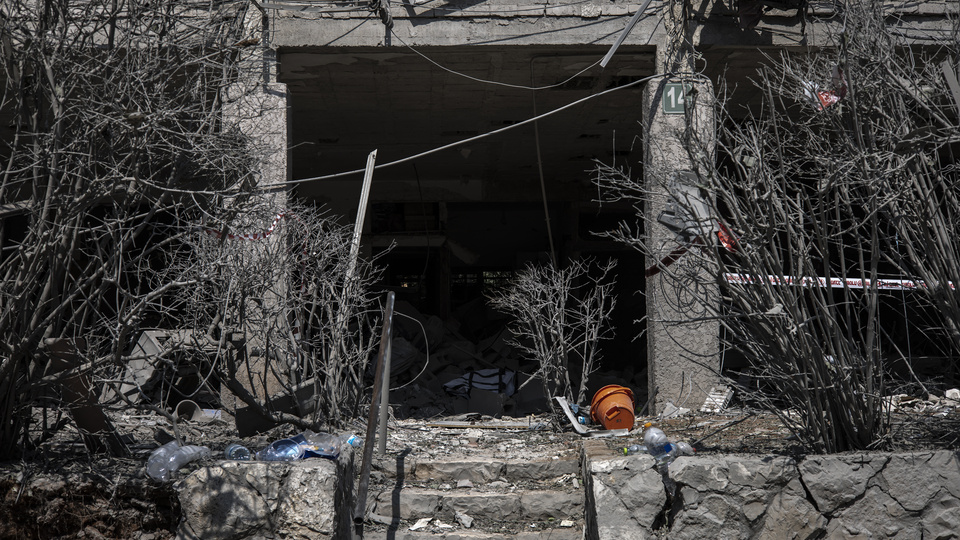
Iran launches Missile Wave Against israel Following Israeli Airstrikes
Table of Contents
- Iran launches Missile Wave Against israel Following Israeli Airstrikes
In a dramatic escalation of tensions, Iran launched a new wave of ballistic missiles against Israel on Saturday, June 14, 2025, in retaliation for Israeli bombings on Friday that targeted over 200 military and nuclear facilities within Iranian territory. the Israeli strikes reportedly resulted in 78 deaths and 320 injuries,according to official Iranian figures.
Missiles Target Residential Areas; Casualties Reported
Alert sirens blared across Tel Aviv and Jerusalem at 01:15 local time, prompting the Israeli army to authorize residents to evacuate to shelters.While numerous missiles were intercepted,some managed to penetrate Israeli defenses,striking residential zones and igniting fires and explosions. At least 34 individuals sustained injuries,with one woman succumbing to her wounds.
Did You Know? Israel’s Iron Dome defense system has an interception rate of over 90% under optimal conditions, but can be overwhelmed by large barrages of rockets and missiles (Council on Foreign Relations).
Yechiel Leiter,the israeli ambassador to the US,stated that “Israel is not defending itself,but also to the West,” while also warning that Iran possesses an arsenal of up to 2,000 missiles. Iranian state television reported that the missile strikes were aimed at military bases, logistics hubs, and strategic infrastructure. internet outages and damaged buildings were reported in Tel Aviv, as firefighters struggled to rescue individuals trapped in the wreckage.
Israel Vows Further Action; Nuclear Facilities Hit
Prime Minister Netanyahu declared that “more will come” in terms of attacks and characterized the operation against Iran as “one of the greatest in Israeli military history,” involving 200 aircraft targeting uranium enrichment plants in Natanz, isfahan, and Fordow, as well as two military bases in western and northwestern Iran. The International Atomic Energy Agency (IAEA) confirmed that a key installation in Natanz was destroyed, even though no increases in radiation levels were detected.
Pro Tip: Follow real-time updates from reputable news organizations and government sources to stay informed about the evolving situation.
Six Iranian nuclear scientists and high-ranking military commanders, including the Chief of the General Staff and leaders of the Islamic Revolutionary Guard Corps (IRGC), were reportedly killed in the attacks. Khatira Abolfazli, a nurse in Tehran, proclaimed, “we will continue to respond overwhelmingly with the support of our people,” as crowds gathered in the capital chanting “death to Israel, death to the United States.”
International community Calls for De-escalation
UN Secretary-General António Guterres urged an immediate ceasefire, emphasizing that “peace and diplomacy must prevail.” Though, nuclear negotiations between Iran and the US, which were scheduled to resume with Omani mediation, have been suspended. US President donald Trump spoke with Netanyahu following the attack, urging Iran to reach a nuclear agreement “or expose themselves to even more brutal reprisals.”
The crisis has prompted the suspension of commercial flights, a surge in oil prices, and heightened security measures throughout the region, with US bases placed on high alert. This escalation marks the highest level of tension between Iran and Israel in decades, unfolding against a backdrop of growing international concern.
Impact of the Conflict
The current war escalation between Iran and Israel has led to notable disruptions:
| Sector | Impact |
|---|---|
| Aviation | Commercial flights suspended across the region. |
| Energy | Oil prices have surged due to uncertainty. |
| security | US military bases are on maximum alert. |
| Diplomacy | Nuclear negotiations between Iran and the US are suspended. |
What are the potential long-term consequences of this conflict? How can the international community effectively de-escalate the situation?
Evergreen Insights: The History of Iran-Israel Tensions
The relationship between Iran and Israel has been complex and fraught with tension for decades. Before the Iranian Revolution in 1979,the two countries maintained relatively close ties. Though, the revolution brought a radical shift, with the new Islamic Republic of Iran adopting a staunchly anti-Israel stance. This animosity has been fueled by ideological differences, regional power struggles, and Iran’s support for groups like Hezbollah and Hamas, which are committed to Israel’s destruction (Brookings Institution).
Over the years, tensions have manifested in various forms, including proxy conflicts, cyber warfare, and accusations of espionage and sabotage. The development of Iran’s nuclear program has further heightened concerns,with Israel viewing it as an existential threat. Despite the deep-seated animosity,there have been occasional,albeit indirect,channels of dialog and negotiation,notably through international intermediaries. The current escalation represents a perilous turning point, with the potential for a full-scale conflict that could destabilize the entire region.
Frequently Asked Questions About the iran-Israel Conflict
What is the role of the United States in the Iran-Israel conflict?
The United States has historically been a strong ally of Israel, providing military and financial support. The US has also been involved in diplomatic efforts to address the Iranian nuclear program and to mediate between Israel and its neighbors. However, the US relationship with Iran has been strained since the Iranian Revolution, and the two countries have been adversaries in various regional conflicts.
What are the implications of this conflict for the global economy?
The conflict between Iran and Israel has the potential to disrupt global oil supplies, leading to higher prices and economic instability. The region is a major producer of oil, and any disruption to production or transportation could have significant consequences for the global economy. Additionally,the conflict could lead to increased geopolitical uncertainty,which could further dampen economic growth.
Disclaimer: This article provides news and analysis of a developing situation. Readers should consult multiple sources and seek professional advice before making decisions based on this information.
