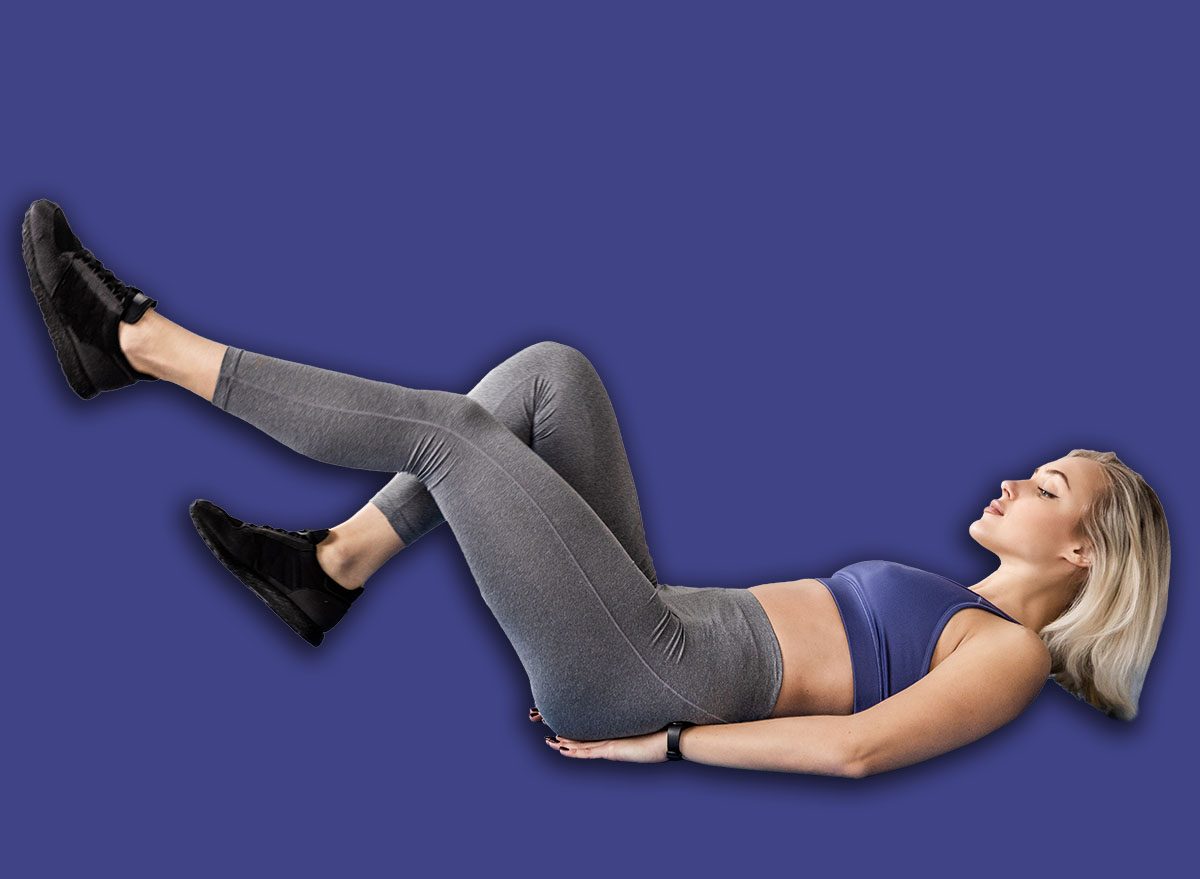
6 Daily Exercises to Firm Belly Overhang After 60
How Core-Strengthening Routines Outperform Yoga in Reducing Abdominal Obesity Post-60
As you age, it’s natural to lose muscle mass unless you take the necessary steps to preserve it. That said, even those who eat a nutritious diet and remain active may notice changes as time passes because aging impacts body composition—not just your weight. One common change is belly fat—and it’s crucial to address for your long-term health and well-being.
The Pathophysiology of Age-Related Abdominal Fat Accumulation
“Belly overhang becomes more common after 60 because of a combination of hormonal, muscular and age-related changes not simply because of weight gain,” explains Nicolle Lopez- Lamberty, Certified Pilates Instructor and Founder & CEO of NuPilates. “In women, testosterone levels begin to decline in their 30s leading to decreased muscle strength and muscle mass. After menopause, estrogen levels decrease causing the body to store more fat around the abdomen rather than the hips and thighs. At the same time, women naturally lose muscle mass which slows metabolism and reduces the body’s ability to support the core.”
An apron belly—or panniculus—is associated with serious health concerns like cardiovascular disease, metabolic syndrome, and type 2 diabetes. Carrying around excess belly fat can also place strain on your lower back.
Why Pilates-Based Core Training Outperforms Yoga for Post-60 Individuals
“Questions around core strength and abdominal support come up almost every day with my clients, particularly those who have had children or are entering midlife,” explains Lizzie Gunderson, the Founder of LIZZIEVSTHEWORLD, a Pilates coaching business that helps women move better and feel stronger. Gunderson is certified in Balanced Body 1, 2 & 3 Mat Pilates, and she coaches out of Bloomington, IN and Indianapolis, IN.
“My approach is always about building real strength rather than chasing quick fixes or ‘flat stomach’ promises. When the deep core is working well, posture improves, movement feels easier and the whole midsection has better support,” Gunderson adds.
6 Evidence-Based Exercises for Abdominal Toning After 60
Heel Slides: Core Engagement During Lower Limb Movement
“This is one of my favorites because it teaches the deep core to stay engaged while the legs move. It’s gentle, accessible and builds the kind of stability that carries over into everyday life,” Gunderson says.

Glute Bridges: Hip-Hinge Mechanics for Spinal Alignment
“Strong glutes take pressure off the lower back and help improve pelvic alignment. A lot of people think of core training as just ab exercises, but your hips and glutes play a huge role in supporting the midsection,” Gunderson tells us.
Bird-Dog: Coordination for Spinal Stability
“This movement challenges balance, coordination and core control all at once. It strengthens the muscles that stabilize the spine without putting unnecessary strain on the back,” Gunderson points out.
Side Plank: Oblique Strengthening for Postural Integrity
“The side body is often overlooked. Side planks strengthen the obliques and deep stabilisers, which are essential for posture, balance and everyday movement,” Gunderson says.