
Asteroid 2024 YR4: Lunar Impact Could Threaten Earth Satellites
Table of Contents
- Asteroid 2024 YR4: Lunar Impact Could Threaten Earth Satellites
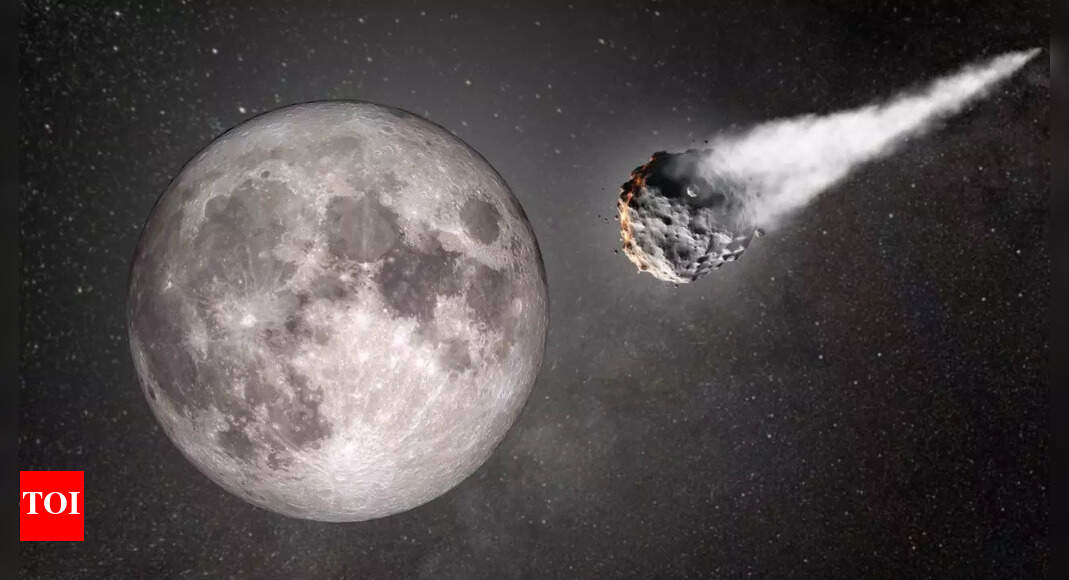
An asteroid, designated 2024 YR4, is on a potential collision course with the Moon, raising concerns about the ripple effects for Earth. While this “city killer” asteroid no longer poses a direct threat to our planet,NASA scientists calculate a 4.3% chance of it striking the lunar surface on December 22, 2032. A lunar impact could eject substantial debris into space, endangering vital satellites and infrastructure.
NASA Simulations Reveal Potential for Historic Lunar Impact
Simulations led by dr. Paul Wiegert at the University of Western Ontario indicate that the 60-meter diameter asteroid could strike the Moon at over 29,000 mph. This impact could create a crater approximately 0.6 miles wide, potentially marking the largest lunar collision in over 5,000 years.While the Moon would absorb the direct hit, the ejected debris poses a significant threat.
Did You Know? The shoemaker-Levy 9 comet impact on Jupiter in 1994 dramatically illustrated the potential consequences of space object collisions.
Earth in the Line of Fire: Satellite Damage Possible
Dr. Wiegert’s team estimates that 10% to 30% of the ejected lunar material, ranging from 0.1 to 10 millimeters, could be drawn towards Earth by its gravitational pull. These high-speed fragments could severely damage or disable satellites.”We were a little bit surprised at the possibility of there being a substantial amount of material at the Earth,” Dr. Wiegert told New Scientist.
Potential for a decade’s Worth of Satellite Damage in Days
The simulations suggest that this space shrapnel could increase particle impact rates by 10 to 1,000 times above normal levels, potentially causing widespread satellite failures across multiple orbits. Systems like SpaceX’s Starlink and other satellite constellations could experience “hundreds to thousands” of micro-impacts, leading to communication blackouts and GPS malfunctions.
Pro Tip: Regularly back up critical data and diversify communication channels to mitigate potential disruptions from satellite failures.
Risks to Lunar Missions and Astronaut Safety
The threat extends to lunar missions. NASA’s upcoming Lunar Gateway space station and Artemis missions could be at risk. Rovers, landers, and astronauts on or near the Moon could face debris traveling at lethal speeds. A 1mm particle could damage solar cells or pierce space suits, while larger fragments (up to 10mm) could breach spacecraft interiors.
Coordinated Space Response Needed to Mitigate Asteroid 2024 YR4
Professor Mark Burchell of the University of Kent emphasized the severity of multiple simultaneous satellite failures. “A lot of satellites failing at once is worse than occasional failures spread over a decade,” he stated, noting that simultaneous outages would strain resources and emergency response systems. Preventive strategies and shielding technologies may become urgent priorities.
While the impact risk is currently calculated at 4.3%, NASA and other international agencies continue to monitor asteroid 2024 YR4 closely. Emergency observations by the James Webb Space Telescope initially helped rule out an Earth-bound strike, but as new data emerges, the trajectory toward the Moon will be reassessed. Scientists agree that preparing for potential consequences is critical.
| metric | Value |
|---|---|
| Asteroid Name | 2024 YR4 |
| Diameter | 60 meters |
| Impact Probability | 4.3% |
| Potential Impact Date | December 22, 2032 |
| Potential Impact Speed | >29,000 mph |
| Potential Crater Width | 0.6 miles |
understanding Asteroid Impacts: Past Context and Future Preparedness
The study of asteroids and their potential impact on celestial bodies, including Earth and the Moon, is a field of ongoing research and concern. Throughout history, Earth has experienced numerous asteroid impacts, some of which have had significant consequences for life on our planet. The most well-known example is the Chicxulub impactor, which is believed to have caused the extinction of the dinosaurs approximately 66 million years ago. This event highlights the potential for asteroids to cause catastrophic damage and underscores the importance of monitoring and mitigating the risks posed by near-Earth objects.
In recent years, advancements in technology and observational capabilities have allowed scientists to identify and track a growing number of asteroids. Organizations like NASA and the European Space Agency (ESA) operate programs dedicated to detecting,cataloging,and characterizing near-Earth objects. These efforts are crucial for assessing the potential threat posed by asteroids and developing strategies for planetary defense.
One of the key strategies for mitigating the risk of asteroid impacts is early detection. By identifying potentially hazardous asteroids well in advance, scientists can calculate their trajectories and assess the likelihood of a collision with Earth or other celestial bodies.This facts can then be used to develop and implement deflection strategies, such as using spacecraft to gently nudge an asteroid off its collision course. While such technologies are still in the early stages of development,they hold promise for protecting our planet from future asteroid impacts.
Frequently Asked Questions About Asteroid 2024 YR4
- What is the current level of concern regarding Asteroid 2024 YR4?
- While the probability of impact is relatively low (4.3%), the potential consequences warrant close monitoring and preparation.
- How are scientists tracking Asteroid 2024 YR4?
- Scientists use telescopes and radar systems to observe the asteroid and refine its trajectory calculations.
- what are the potential long-term effects of increased space debris?
- Increased space debris could lead to higher insurance costs for satellite operators and potentially limit future space exploration activities.
- Could this event affect the cost of satellite-based services?
- Potentially, damage to satellites could disrupt services and increase costs for consumers.
- What can be done to protect satellites from space debris?
- Shielding technologies and improved tracking systems can definitely help mitigate the risk of damage from space debris.
What are your thoughts on the potential threat posed by Asteroid 2024 YR4? How should we prioritize planetary defense efforts?
Share this article and join the conversation! Subscribe to our newsletter for the latest updates on space news and scientific discoveries.
