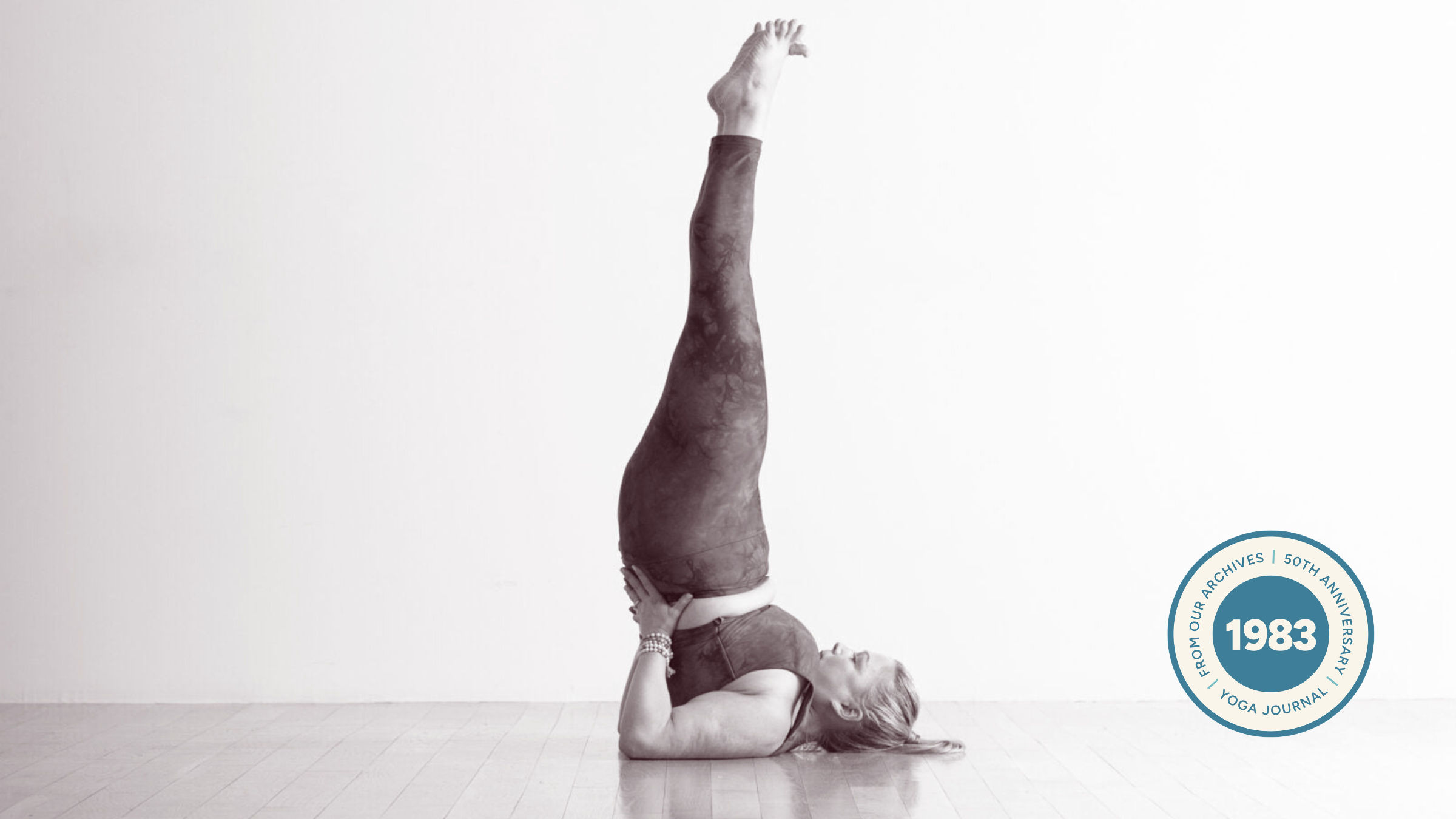
Yoga Journal Re-releases 1983 Archives on Inversion Benefits and Risks
Inversions in yoga, which reverse the body’s traditional vertical orientation to gravity, produce measurable shifts in cardiovascular function and fluid distribution.
While these poses—notably the headstand and shoulderstand—have been practiced for decades, their physiological impact remains a subject of clinical interest as Yoga Journal re-released documentation on Friday from its November-December 1983 archives.
Key Clinical Takeaways:
- Inverted postures alter blood pressure and heart rate by reducing the cardiac workload required to perfuse the brain.
- Gravity-dependent venous and lymphatic return is facilitated during inversions, though this process carries specific risks for those with underlying cardiovascular or ocular conditions.
Cardiovascular Adjustments to Gravity
The human body functions under the constant downward pull of gravity, which necessitates complex circulatory adjustments to maintain homeostasis. “Just as water always flows downhill, the liquids in our body flow down the gravitational gradient, and the circulatory system must constantly adjust to gravity's effects,” Marcia Stefanick, Ph.D., writing in the IYTE Review, noted.
In a standard upright position, the heart must pump blood against gravitational force to supply the brain. When the body is inverted, gravity assists this perfusion, potentially reducing the mechanical effort required by the heart.
Research by Shanker Rao, as detailed in James Funderburk’s Science Studies Yoga, quantified these shifts in medical students. Subjects displayed an average heart rate of 67 beats per minute in a supine position, which increased to 84 beats per minute upon standing. During a headstand, the subjects’ average heart rate reached 69 beats per minute. This variation reflects the body’s adaptation to changing fluid pressure within the venous and arterial systems.
Gravity Assists Drainage During Periodic Inversions
The cardiovascular system relies on the respiratory pump and skeletal muscle contractions to return deoxygenated blood and lymphatic fluid to the heart. Because humans spend the majority of their time upright, these systems often struggle to counteract gravitational pooling in the lower extremities. Over time, this lack of relief can lead to the loss of vessel elasticity and the breakdown of one-way valves, a precursor to varicose veins.
Periodic inversions allow gravity to assist in draining the lower body and recycling lymphatic fluid. This process helps clear metabolic waste and ensures that fresh nutrients are delivered to cells.
Medical Conditions That Prohibit Inversion Practice
Despite the potential benefits, inversions present significant risks for specific patient populations. The increased pressure in the head, neck, and chest regions can be hazardous for individuals with pre-existing conditions. Medical professionals advise that those with high blood pressure, hiatal hernia, or heart and stroke history avoid these positions unless operating under expert supervision.
This historical focus reflects the mission of Yoga Journal, which was founded in California in 1975 by the California Yoga Teachers Association. The publication originated from the association’s newsletter, The Word, and launched with the specific goal of combining the essence of classical yoga with modern scientific understanding. Initially staffed by volunteers, the organization grew from distributing only 300 copies of its first issue to achieving a readership of over 1,300,000 by 2010.
Ocular health is also a critical consideration. Individuals diagnosed with glaucoma or those with a history of detached retina are cautioned against inversions due to intraocular pressure changes. The practice is generally discouraged for those with active spinal injuries or during menstruation. Older adults with a history of osteoporosis or vertebral fractures should likewise avoid active inversions to prevent injury.