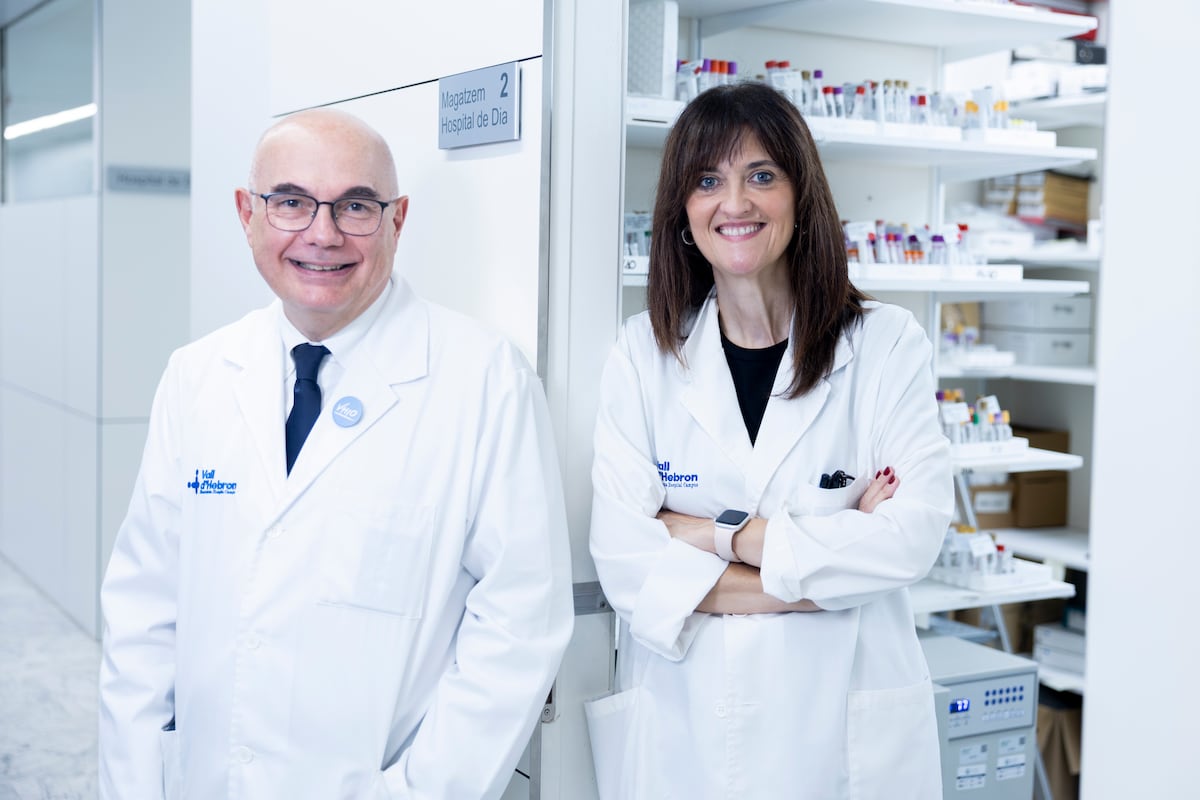
VHIO’s Lab-to-Clinic Model Yields ‘Cured’ Metastatic Colon Cáncer Cases, EL PAÍS Reports
Metastatic colon cancer patients with the BRAF V600E mutation are living longer than ever before thanks to a treatment cycle that moves findings from lab research directly into patient care.
Key Clinical Takeaways:
- BRAF V600E mutations occur in 8% to 12% of colon cancers, with 70% of cases identified only after the disease has disseminated to secondary organs.
- The therapeutic strategy combines the BRAF-inhibitor encorafenib with the EGFR-blocker cetuximab and chemotherapy to counteract the tumor’s ability to reactivate its growth pathways.
- Clinical data shows that while some patients achieve a state of no evidence of disease, long-term outcomes remain under investigation as researchers work to address acquired drug resistance.
The Laboratory and Clinical Dialogue
The clinical framework at the VHIO relies on a bidirectional flow of information between bench-side research and patient care. Oncologists, pathologists, and bio-statisticians analyze individual tumor profiles to determine why specific treatments fail or how malignant cells develop resistance. “The key is knowing what is happening in the cancer,” Josep Tabernero, director of the VHIO, told EL PAÍS, according to Echoharbor.
This translational model proved life-saving for Miguel Doganoc de León, a 68-year-old physician diagnosed in October 2021 with metastatic colorectal cancer and extensive liver involvement, according to EL PAÍS.
At the time of his diagnosis, clinical expectations suggested a life expectancy of less than one year, EL PAÍS reported. Five years later, Doganoc de León remains alive and under medical control due to his participation in an institutional clinical trial.
Addressing Molecular Resistance
Early attempts to treat the BRAF V600E mutation ran into major obstacles. Researchers observed that while encorafenib blocked a specific pathway, the cancer cells utilized an accessory EGFR pathway to maintain proliferation. Elena Élez, an oncologist at the center, told EL PAÍS that standard monotherapy was insufficient because the cells possessed an inherent capacity for reactivation.
By analyzing why patients progressed despite treatment, the research team identified that only 60% of the malignant cells carried the targetable mutation, according to echoharbor.news. Patients often developed secondary mutations after the initial treatment stopped working. This evidence prompted the integration of encorafenib and cetuximab with chemotherapy in the first-line setting, a protocol that significantly improved patient outcomes compared to previous standards of care.
Evolving Standards of Care
The application of targeted therapy has shifted the prognosis for a segment of the patient population. Tabernero said that there are patients with metastatic disease who are now considered cured, though he noted this does not apply to every case. The center continues to monitor those who have reached a point of no evidence of disease, with the current follow-up period spanning three to four years since the initial trials.
Understanding tumor biology and molecular mutations like BRAF V600E is increasingly essential to guide the selection of targeted therapies for cancer patients.
Future Trajectories in Resistance Research
Current research priorities include identifying methods to reverse acquired resistance and testing new drug combinations in later lines of treatment.
“We are here to try to break the statistics,” Élez told EL PAÍS regarding the commitment to treating patients who have exhausted traditional therapeutic options.
Founded in 2006 as Spain’s first center dedicated exclusively to translational cancer research, VHIO began with four laboratories and seconded staff, growing to 900 professionals and a €65 million budget. The institute is a founding member of Cancer Core Europe and has contributed to the approval of nearly 80 new drug indications used worldwide.
Disclaimer: The information provided in this article is for educational and scientific communication purposes only and does not constitute medical advice. Always consult with a qualified healthcare provider regarding any medical condition, diagnosis, or treatment plan.