Xi Jinping Adopts Patient Approach to Taiwan Reunification in Rare Meeting with KMT Leader
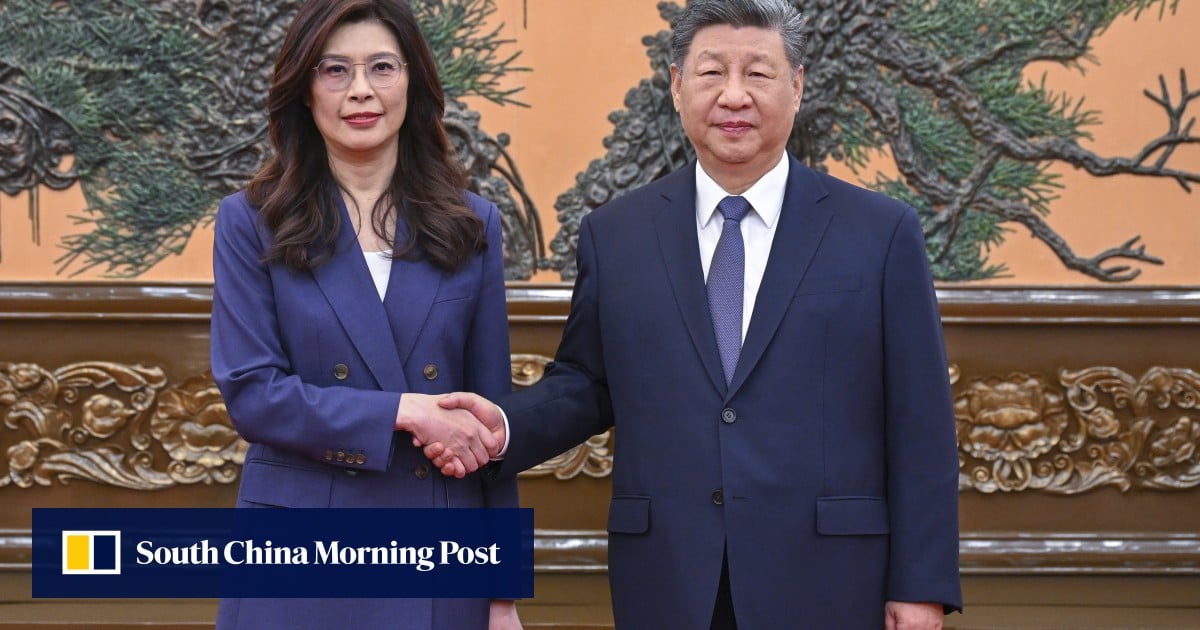
Chinese President Xi Jinping met Kuomintang (KMT) Chairperson Cheng Li-wun in Beijing on April 10, 2026, to discuss cross-strait peace. This landmark summit, the first between sitting party leaders in a decade, emphasizes Beijing’s “party-to-party” diplomacy while reiterating a strict opposition to Taiwan independence to safeguard regional stability.
This is more than a diplomatic curiosity. It is a calculated pivot. By engaging the KMT directly, Beijing is effectively bypassing the official government channels in Taipei, which have been frozen since 2016. This creates a precarious environment for anyone with interests across the Taiwan Strait—from corporate executives to municipal planners—who now find themselves navigating a world where political alignment, rather than official treaty or law, dictates the flow of communication, and commerce.
The Pivot to Party-to-Party Diplomacy
For years, the official line from Beijing has been a stalemate. Since the Democratic Progressive Party’s (DPP) Tsai Ing-wen assumed the presidency in 2016, high-level communications between the two governments vanished. The reason was simple: Tsai refused to endorse the concept of a single Chinese nation.
Now, the strategy has shifted. Beijing is experimenting with “party-to-party” diplomacy. Instead of waiting for a change in the Taiwanese presidency, Xi Jinping is building a bridge directly to the KMT, Taiwan’s largest opposition party. This approach allows Beijing to maintain its claim over the island while creating a functional channel for dialogue with a “Beijing-friendly” wing of Taiwanese politics.

The meeting at the Great Hall of the People was a clear signal of this intent. Xi Jinping framed the dialogue as a necessity for the “shared homeland,” emphasizing that China is open to exchange with various parties, provided they oppose Taiwan independence.
“The leaders of our two parties are meeting today in order to safeguard the peace and stability of our shared homeland, to promote the peaceful development of cross-strait relations, and to allow future generations to share in a bright and beautiful future.”
The stakes are high. Beijing has not ruled out taking the island by force, but the current tone suggests a preference for a “patient approach” to reunification, provided the political conditions on the ground shift toward the KMT’s vision.
Symbolism in Motion: Nanjing, Shanghai, and Beijing
Cheng Li-wun’s itinerary was not a random collection of city visits; it was a carefully choreographed narrative of philosophical and economic alignment. The delegation’s stops were designed to underscore the KMT’s historical and financial ties to the mainland.
- Nanjing: Cheng visited the mausoleum of Sun Yat-sen. As the spiritual godfather of the KMT, Sun Yat-sen represents the shared ideological roots that Beijing hopes to revive.
- Shanghai: This leg focused on the “bottom line” of the relationship: money. Cheng met with City Party Secretary Chen Jining to highlight Taiwanese business interests. This acknowledges that economic interdependence remains the strongest deterrent against conflict.
- Beijing: The climax of the trip, where the high-level summit with Xi Jinping took place, cementing the political framework for future interactions.
This geographic progression—from the spiritual to the economic and finally to the political—shows that the KMT is attempting to frame its relationship with Beijing as a comprehensive necessity for Taiwan’s survival and prosperity.
The Domestic Fracture and the 1992 Consensus
While the KMT frames this visit as a mission for peace, the reaction in Taipei is visceral. The ruling DPP has accused Cheng Li-wun of being “subservient” to Beijing. The core of the dispute remains the “1992 Consensus”—an ambiguous agreement that both sides acknowledge there is only one China, though they interpret what that means differently.
Cheng Li-wun argues that maintaining this consensus is the only way to “avoid war” and “prevent tragedy.” From her perspective, the 1992 Consensus is a pragmatic shield. From the DPP’s perspective, it is a surrender of sovereignty.
This political schism creates a volatile atmosphere for international stakeholders. When the two primary political forces in Taiwan are this polarized, the legal and regulatory landscape for cross-strait investment becomes a minefield. Businesses are increasingly relying on corporate law firms specializing in international trade to navigate the conflicting mandates of Taipei and Beijing.
Navigating the New Cross-Strait Reality
The “patience” Xi Jinping is exhibiting is not a sign of weakness, but a strategic choice. By fostering a relationship with the KMT, Beijing is creating a blueprint for a future administration in Taipei that might be more amenable to its terms. However, this “party-to-party” model creates significant uncertainty for the private sector.
Companies operating in Shanghai or Nanjing may find their assets subject to the whims of political alignment. As the boundaries between party diplomacy and government policy blur, the need for professional risk mitigation has never been more urgent. Many firms are now engaging geopolitical risk analysts to forecast how a potential shift in Taiwanese leadership—or a further breakdown in DPP-CCP relations—could impact their supply chains.
The instability is not just corporate; it is civic. As communication channels fluctuate, the need for verified cross-border legal consultants to handle residency, property rights, and trade compliance is spiking.
The meeting between Xi Jinping and Cheng Li-wun marks a return to a decade-old pattern of KMT-CCP engagement, but the context has changed. The world is more fragmented, and the rhetoric of “rejuvenation” is now coupled with a stark warning against independence. Whether this “patient approach” leads to a sustainable peace or is merely a tactical pause remains to be seen.
In an era where a single meeting in Beijing can shift the economic outlook for millions, the only real defense is preparation. Those caught in the crossfire of this diplomatic experiment must look toward verified professionals who understand the intricacies of this specific regional tension. For those seeking the expertise required to navigate these shifting sands, the World Today News Directory remains the essential resource for connecting with the legal and strategic minds capable of managing the volatility of 2026.