
Global Momentum Builds in the Fight Against Cervical Cancer
Worldwide, nations are intensifying their commitment to eliminating cervical cancer, driven by the World Health Organization’s (WHO) aspiring 90-70-90 targets. Significant progress is being made in expanding access to HPV vaccination,screening,and treatment programs.
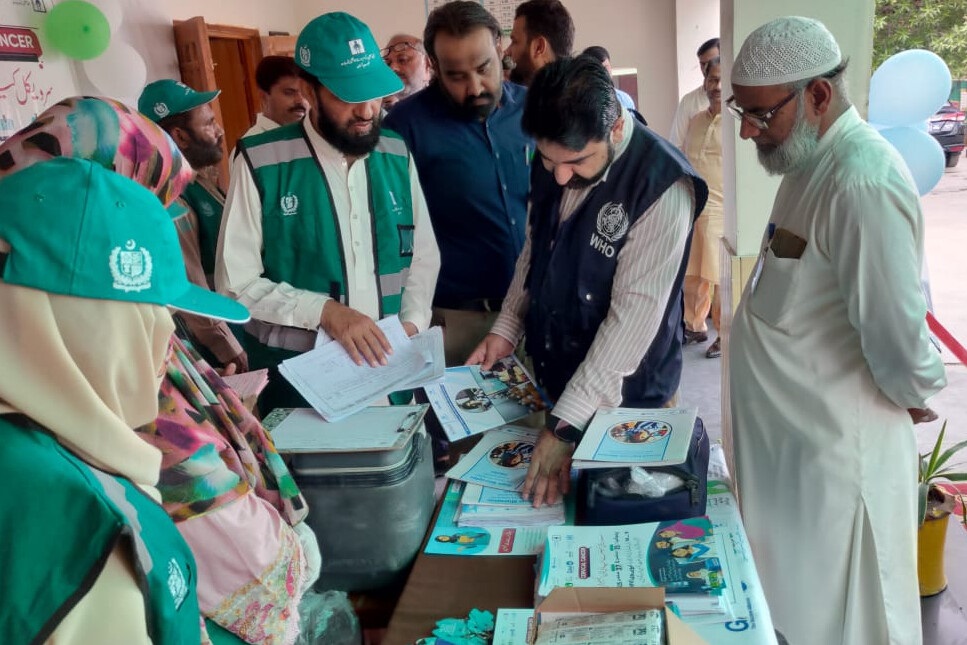
Recent initiatives demonstrate a global surge in action. Pakistan launched a national HPV vaccine introduction campaign, reaching over 9 million girls – the largest single HPV campaign undertaken by any country to date. Nigeria has committed US$700,000 through the ‘Renewed Hope Initiative’ to its nationwide cervical cancer elimination effort, reinforcing its support for WHO’s goals and its co-leadership of the resolution establishing World Cervical Cancer Elimination Day.
Several countries have integrated HPV vaccination into their national immunization programs. China is scaling up vaccination to all 13-year-old girls, while Cuba will launch vaccination for all girls in Grade 4 in October 2025. nepal ran a nationwide campaign in February 2025, marking the HPV vaccine’s introduction to its national immunization schedule. Tajikistan will include HPV vaccination for all girls aged 10-14 years in its routine immunization schedule starting October 2025, and Tunisia introduced the vaccine into its routine program for 12-year-old girls in April 2025. Earlier, in October, campaigns were launched in Ghana (targeting 2.4 million girls aged 9-14) and for girls aged 9-12 in an unnamed country.
Beyond vaccination, countries are focusing on extensive elimination strategies. Indonesia has reaffirmed its commitment to eliminating cervical cancer by 2030 through its national Cervical Cancer Elimination Plan 2023-2030, emphasizing vaccination, screening, and treatment. Rwanda, through its Mission 2027 and Accelerated Plan for Elimination, is rapidly expanding screening and treatment services, aiming to achieve the 90-70-90 targets three years ahead of the global deadline.
International partnerships are also playing a crucial role. Spain,through the Spanish Agency for International development Cooperation (AECID),is providing a three-year investment to support the WHO Cervical Cancer Elimination Initiative in the African and Eastern Mediterranean Regions. Unitaid and WHO are expanding their partnership across the WHO western Pacific Region to strengthen prevention and treatment programs, focusing on equitable access to screening and treatment for precancerous conditions.
South Africa has championed cervical cancer elimination on the G20 health agenda and co-led the resolution establishing World cervical Cancer Elimination Day,while finalizing its national Strategic framework for Cervical Cancer Elimination.
Gavi, the Vaccine Alliance, and its partners estimate that their goal of reaching 86 million girls with HPV vaccination by the end of 2025 has been met. Official WHO/UNICEF HPV vaccine coverage estimates to verify this number will be released in July 2026.
