
The Rise of Group 7: How a TikTok Experiment created an Unexpected Tribe
A simple social experiment by musician Sophia James (@sophiajamesmusic) has sparked a viral sensation on TikTok, uniting users under the banner of “Group 7.” James posted seven videos promoting her new song, ”So Unfair,” designed to test the TikTok algorithm. Each video subtly divided viewers into groups, with the seventh video culminating in the statement: “If you see this video, you are Group 7. I don’t know what that says about you.”
That seventh video exploded in popularity, amassing over 33 million views – roughly 30 million more than the other six.It quickly became a badge of honor to be designated a member of Group 7, fueled by a playful sense of exclusivity. American influencer Jason Sappy explained the phenomenon in a video,stating,”We all decided that Group 7 are the cool people. You’re either in Group 7 or you’re a nobody. That’s my personal opinion, and I think the internet would agree.”
Behavioral scientist Loes Pouwels of Radboud University attributes the trend to a fundamental human need for belonging. “People simply have the need to belong somewhere,” she explained. Research supports this, demonstrating a tendency for individuals to favor their own group, even when assigned randomly - such as based on eye color.
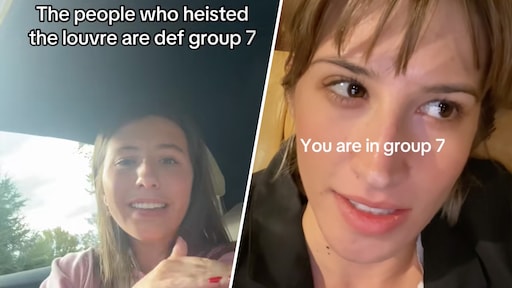
The desire to identify with Group 7 has manifested in humorous reactions and further TikTok content, with users actively demonstrating their affiliation. Influencer Julia Hill even joked that the perpetrators of the Louvre robbery were “in Group 7 anyway,” implying other groups wouldn’t have been so successful.
The trend’s reach extends beyond typical TikTok users. Human rights activist Malala Yousafzai, tennis star Naomi Osaka, and Dutch actress Roos Smit (known from SpangaS) have all participated, amplifying its visibility. Pouwels notes the importance of influential figures in driving such trends: “If other influencers with many followers pick up the trend and adopt it, the chance increases that others who follow them will also want to be part of it.”
The experiment proved remarkably successful for James, who reportedly learned from online sources that “bullying” the algorithm with a high volume of videos – prioritizing quantity over quality – could increase visibility. While Pouwels acknowledges the TikTok algorithm remains unpredictable, the strategy worked. James gained over 100,000 followers in a few days, and listens to her music have considerably increased.
The story echoes a previous TikTok phenomenon, were George Baker’s song “Una Paloma Blanca” experienced a resurgence in popularity on the platform.
