
ASEAN Rallies Against Economic Weaponization
Regional Bloc Seeks Unified Stance Amid Global Trade Upheaval
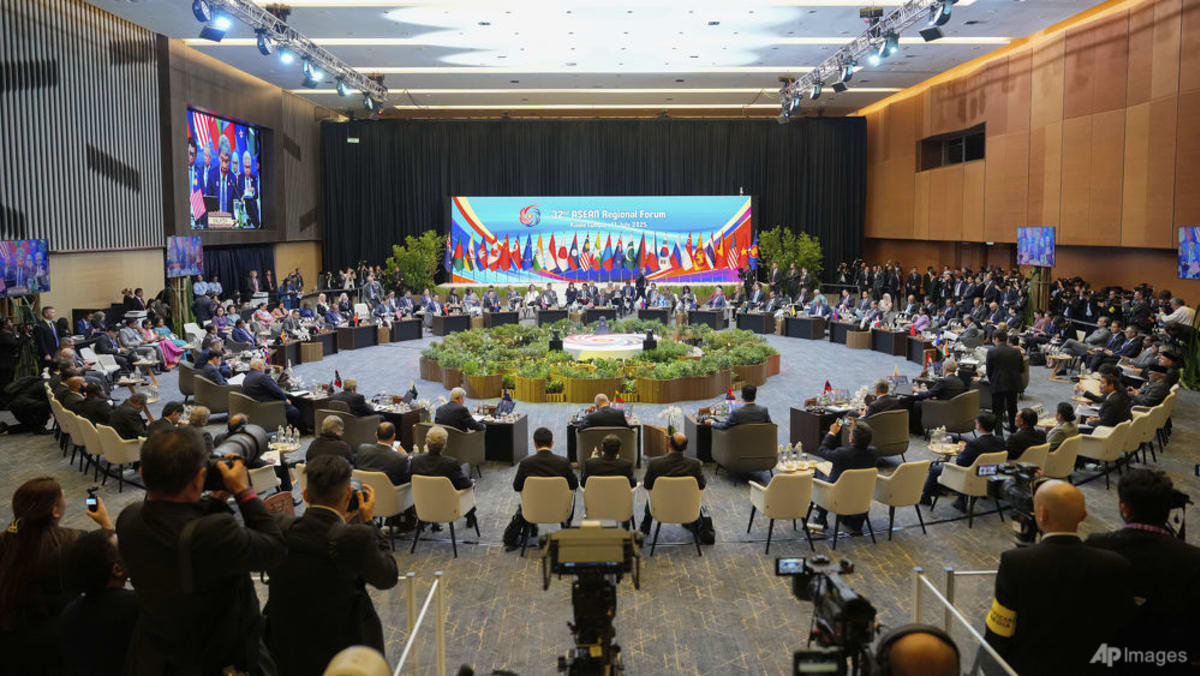
Facing escalating geopolitical tensions and the “weaponization” of trade, ASEAN nations are reviving high-level joint ministerial meetings to bolster regional coordination and strategic autonomy.
Reviving Past Coordination
The need for joint ministerial consultations among ASEAN heads of government was first acknowledged as early as 1987. A significant step was taken in November 1999, when finance ministers, central bank governors, and foreign ministers convened in Manila, directly addressing the fallout from the Asian financial crisis. The communique from that meeting underscored the critical necessity for enhanced consultation and coordinated action among member states to navigate regional challenges effectively.
“The ministers found it necessary to meet jointly because, as the recent financial crisis has shown, the utmost consultation and coordination must be undertaken among themselves and their ministries in order for the ASEAN member countries and governments to effectively meet the challenges facing the region.”
—Unnamed Meeting Participants
While a joint ministerial meeting was anticipated before the October 2003 Bali summit, records indicate it did not occur. However, a later summit statement emphasized the importance of reviving these Joint Ministerial Meetings (JMMs) as a vital mechanism for focusing on critical issues of common concern.
“Securitisation of Economic Issues” Drives Renewed Push
Sharon Seah, a senior fellow at the ISEAS-Yusof Ishak Institute, notes that coordinating foreign and economic policies during times of crisis is not a novel concept for ASEAN. She highlights that the current impetus stems from what she terms the “securitisation of economic issues” or, as Malaysian Prime Minister **Anwar Ibrahim** has described it, the “weaponisation” of trade.
Seah elaborated on the dangers of this trend, stating, “Whatever the terms are, it is clear that in this global trade upheaval, political and economic issues are being thrown into the fray without due regard to safeguards and this is dangerous because it forces countries into a default quid pro quo situation.”
She further warned that the current “unhealthy ‘transactionalism’ in international politics that we see today will only deepen.”
Echoing this sentiment, **Habib Dzakwan**, a researcher at Indonesia’s Centre for Strategic and International Studies (CSIS), views this convergence as a strategic “recalibration” for ASEAN. He suggests that while ASEAN historically sought to depoliticize economic matters, the current environment makes it increasingly difficult to separate the two.
Dzakwan added, “This does not mean a dramatic shift in ASEAN approach. It is just the way some states are adapting to great power competition or open conflicts that reshape the economic arena.”
Addressing Tariffs and Trade Tensions
Recent US tariff announcements have intensified the urgency for ASEAN, with significant impacts anticipated across member economies. For instance, the United States has imposed tariffs ranging from 19% to 40% on various ASEAN nations, including Malaysia, Laos, Myanmar, Cambodia, Thailand, Indonesia, and Vietnam, effective August 1st.
As of early 2024, China remains ASEAN’s largest trading partner, while the United States ranks as ASEAN’s fourth-largest trading partner and the primary source of foreign direct investment for the bloc. This intricate economic relationship underscores the importance of a unified response to external economic pressures.
From a diplomatic perspective, these joint ministerial meetings aim to assert ASEAN’s commitment to preserving its regional agency and strategic independence. Dzakwan points out that current geopolitical complexities are amplified by industrial policies and the unilateral deployment of economic statecraft.
Economically, the objective is to reaffirm ASEAN’s commitment to inclusiveness and its appeal as a business destination. Khoo, whose full title was not provided, emphasized that the meetings are designed to reinforce ASEAN’s relevance and solidarity amidst escalating geopolitical competition. “It provides a platform to formulate a shared response, however modest, to issues like US tariffs and broader trade tensions,”
she stated, highlighting the economic goal to “advance regional resilience through strengthened supply chains, market diversification, and collective hedging against protectionism.”
