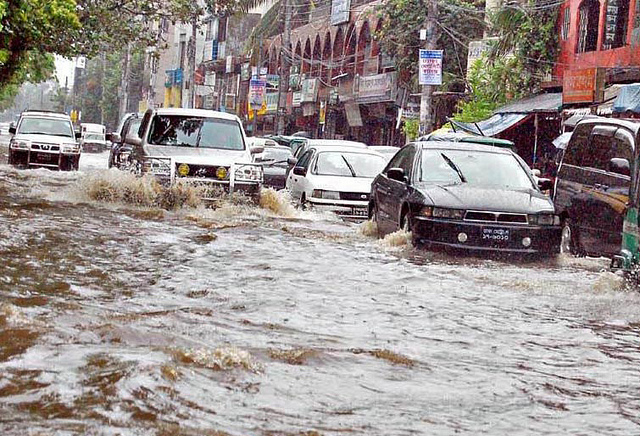
Why Dhaka Floods: The Root Causes of Urban Drainage Failure
Concrete Over Wetlands: How Dhaka Lost Its Natural Sponge
Dhaka floods every monsoon not simply because of heavy rainfall, but due to systemic failures in urban planning, widespread wetland loss, canal encroachment, and fragmented institutional oversight.
Rain acts merely as the trigger for an annual crisis that is fundamentally political and ecological. Over the past few decades, rapid and largely unregulated urban expansion has swallowed the natural sponge of the metropolitan region. Without these ecological buffers, intense precipitation swiftly overwhelms the surface drainage network.
Private Mitigation and Regulatory Blind Spots
The city’s historical network of natural canals, locally known as khal, has suffered severe degradation. Many of these vital drainage arteries have been filled in, illegally built over, or choked with solid waste. Short-term engineering fixes—such as hurried dredging operations right before the monsoon arrives—fail to address the permanent loss of water conveyance capacity.
Institutional Fragmentation and Accountability Gaps
Institutional fragmentation worsens the deadlock. Responsibility for drainage, sewerage, and canal maintenance is scattered across multiple municipal and national bodies. This administrative overlap creates severe accountability gaps.
Addressing these structural hazards requires an overhaul of metropolitan zoning enforcement and a commitment to restoring natural drainage paths rather than relying on temporary pumping solutions.
The Endless Cycle of Seasonal Inundation
Until institutional reforms take hold and illegal wetland fills are halted, residents and commercial entities will continue to manage seasonal inundation independently.