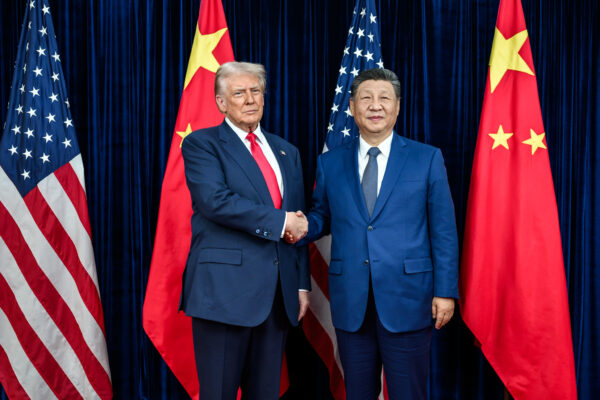
What to Expect from the Trump-Xi Summit: Key Takeaways and Geopolitical Implications
President Trump and President Xi are meeting in Beijing to negotiate trade terms and address geopolitical frictions. The summit aims to stabilize economic relations while navigating sensitive security issues, potentially reshaping global trade flows and diplomatic postures in the Indo-Pacific region to avoid escalating systemic conflict.
The optics of this meeting—the grand halls, the choreographed handshakes, the meticulously planned menus—often mask a brutal underlying reality. This is not a diplomatic social call. It is a high-stakes negotiation over the architecture of the 21st century.
For the average business owner or regional policymaker, the “pomp and circumstance” is noise. The signal is the uncertainty. When the two largest economies on earth enter a room, the volatility ripples through every shipping lane, every semiconductor fab, and every municipal budget dependent on foreign investment.
The core problem is predictability. Markets hate a vacuum, and the current diplomatic climate is a void of shifting rhetoric and sudden tariff threats. This instability forces companies to operate in a state of perpetual contingency planning.
The Economic Pivot and the Tariff Trap
At the heart of the discussions is the fragile equilibrium of trade. We are seeing a shift from the broad “decoupling” rhetoric of previous years toward a more calculated “de-risking.” So the focus has moved from completely severing ties to surgically removing dependencies on critical components.
The tension lies in the tariffs. Trade barriers created as leverage have become structural fixtures of the economy. While a summit can signal a thaw, the actual dismantling of these barriers requires a level of trust that has been eroded over a decade of strategic competition.

This environment creates a logistical minefield for importers and exporters. Navigating the shifting sands of customs duties and trade compliance is no longer a back-office task; it is a survival strategy. Many firms are now aggressively hiring international trade attorneys to restructure their supply chains and shield their margins from sudden policy pivots.
The impact is felt most acutely in port cities. From the docks of Long Beach to the terminals in Ningbo, the volume of cargo is a real-time barometer of the diplomatic temperature. A single misinterpreted phrase in a joint communiqué can lead to a surge in “panic-shipping,” clogging infrastructure and driving up freight costs for everyone.
“We are no longer managing trade; we are managing geopolitical risk. The goal for most firms has shifted from maximizing efficiency to maximizing resilience, even if that means accepting higher costs.”
The Geopolitical Tightrope in the Indo-Pacific
While trade dominates the headlines, the silent center of gravity is the Indo-Pacific. The relationship between Washington and Beijing is the sun around which every other regional alliance orbits. Any shift in the “declaratory policy” regarding regional sovereignty can trigger a cascade of security adjustments across Asia.
The risk here is a miscalculation. A subtle change in wording regarding territorial claims or military presence can be interpreted by regional allies as a green light for aggression or a signal of abandonment. This creates a precarious environment for foreign direct investment in Southeast Asia.
As companies move manufacturing out of China and into “friend-shoring” hubs like Vietnam, Thailand, or Mexico, they aren’t just moving factories—they are moving into new legal jurisdictions with different regulatory hurdles. To manage this transition, executives are relying on supply chain risk strategists to evaluate the long-term viability of these new hubs.
The “Silicon Shield”—the global dependence on high-end semiconductors—remains the ultimate leverage. The summit must address the intersection of national security and technological necessity. If the two powers cannot agree on a framework for technology exchange, the world faces a “splinternet” where hardware and software are fundamentally incompatible based on political borders.
The Technology Cold War and Critical Minerals
The battle for the future is being fought over elements on the periodic table. The transition to green energy has created a new dependency on critical minerals—lithium, cobalt, and rare earths—the vast majority of which are processed in China.
This is the new leverage. If trade talks sour, the weapon of choice is no longer just the tariff, but the export ban. A restriction on graphite or gallium can halt automotive production lines in Detroit or electronics assembly in Seoul within weeks.
This vulnerability has pushed Western governments to scramble for new mining partnerships in Africa and South America. However, building a mine takes a decade; a diplomatic spat takes ten minutes. This gap in timing leaves the global economy exposed.
For municipal leaders in mining regions or tech hubs, this volatility affects local infrastructure planning and tax revenue projections. The sudden pivot toward domestic production requires massive capital injections and a regulatory overhaul that many local governments are ill-equipped to handle. This is why many are now consulting geopolitical risk consultants to align their local development plans with federal strategic imperatives.
the success of this summit will not be measured by the smiles in the photographs, but by the stability of the shipping manifests in the months that follow. We are witnessing a transition from a world governed by rules-based trade to one governed by power-based negotiation.
The danger is that we mistake a temporary truce for a permanent peace. In a landscape where a single tweet or a closed-door disagreement can erase billions in market value, the only real security is preparation. Whether you are a CEO, a logistics manager, or a municipal planner, the era of “business as usual” is over. The only way forward is to find verified professionals who understand the intersection of law, logistics, and diplomacy. The World Today News Directory remains the primary resource for connecting with the experts capable of navigating this new, volatile global order.