Water Shortages Make Large-Scale Moon Cities Impossible, Scientists Warn
Moon Colonies Face Severe Water Deficit, According to New Scientific Study
According to a study in Frontiers in Space Technologies by Dr. Martin Elvis and Dr. Jonathan McDowell, constructing large-scale human cities on the Moon faces a severe limitation: a fundamental lack of sustainable water supplies. While lunar polar craters contain trapped ice from historic asteroid bombardments, calculations reveal that even under generous resource assumptions, a population of one million people would exhaust available water reserves in just over a century.
The Tech TL;DR:
- The Bottleneck: Lunar base growth is heavily constrained by finite water ice deposits located inside permanently shadowed polar craters, restricting long-term civil engineering deployments.
- The Math: Utilizing best-case scenarios with 98% recycling efficiency matching the International Space Station, a city of one million people drains the most generous estimates of lunar water in roughly 100 years.
- The Energy Exception: Solar power generation remains viable via kilometer-tall photovoltaic towers on crater rims, though power availability fails to offset the absolute deficit in consumable mass.
Calculating the Lunar Water Deficit
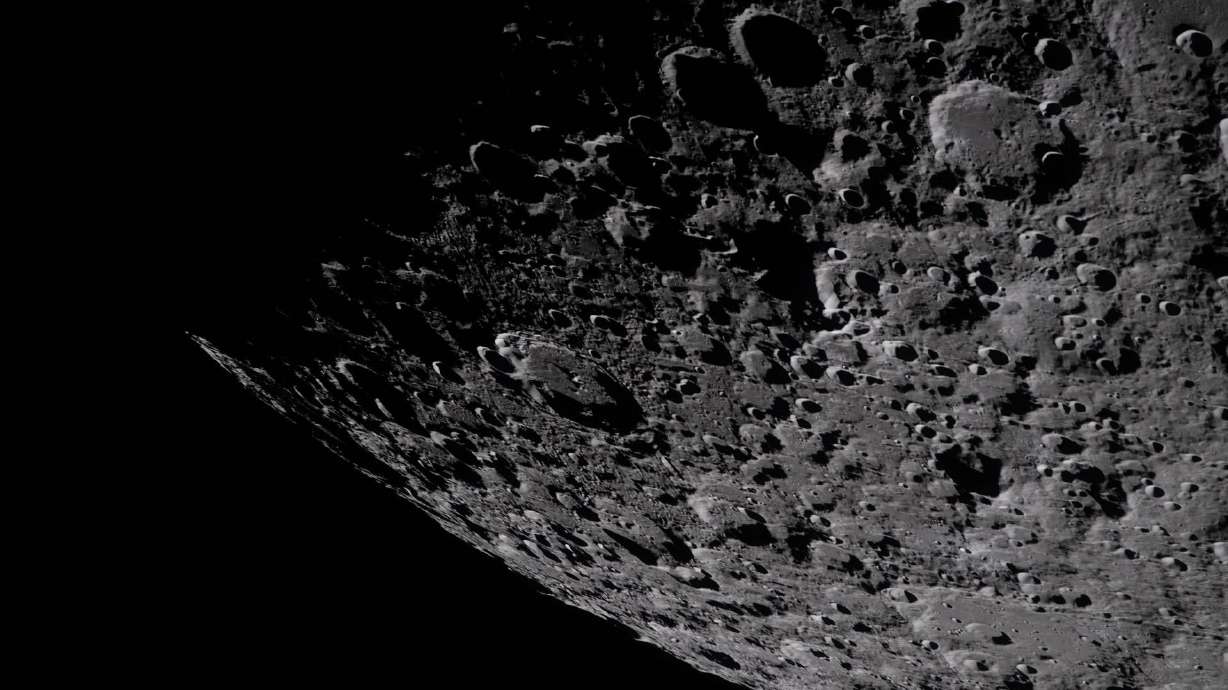
The discovery of water ice inside permanently shadowed craters near the lunar poles has fueled commercial and governmental space ambitions. Space agencies and private sector leaders, including Jeff Bezos and Elon Musk, have outlined proposals for lunar bases, heavy industry, and self-growing cities. However, the new analysis demonstrates that the physical limits of resource extraction and recycling create a hard cap on population scaling.
Researchers evaluated available deposits by assessing historical asteroid delivery models and modern orbital mapping data gathered since 2013. While optimistic models suggest up to one billion tons of water ice could exist in cryogenic cold traps below 110K, current realistic estimates sit roughly 30 times lower. Without efficient recycling infrastructure managed by advanced industrial software development agencies, small towns numbering in the thousands would exhaust regional reserves within a decade.
Power Infrastructure Versus Resource Constraints
Energy procurement on the lunar surface presents fewer hurdles than mass sustainment. The elevated rims of polar craters receive near-constant solar illumination, earning them the designation of peaks of eternal light. According to the Frontiers in Space Technologies publication, photovoltaic towers measuring a kilometer in height could theoretically harvest gigawatts of power.
Despite abundant power, energy alone cannot synthesize hydrogen and oxygen molecules without a baseline liquid feedstock. Enterprise deployments requiring high-throughput cooling loops or life-support cycles must factor strict payload limits into hardware provisioning. Below is a comparative overview of population capacity versus operational lifespan based on published models:
| Population Size | Water Consumption Horizon (Best-Case / 98% Recycling) | Water Consumption Horizon (Current Realistic Estimates) |
|---|---|---|
| 1,000 People | Millennia-scale scaling required | Approx. 10 to 15 years |
| 10,000 People | Centuries of sustained operations | Under 5 years |
| 1,000,000 People | Just over 100 years | Approx. 3 years before critical depletion |
Deployment Realities and Enterprise Logistics
Addressing supply chain vulnerabilities in extreme environments requires rigorous data modeling and automated resource tracking. As aerospace firms iterate on life-support architectures, local testbeds rely heavily on containerized simulation environments and resilient edge computing.
As mission planners review these physical constraints, expectations for rapid urbanization of the Moon must adjust to match verifiable resource caps. Hardware deployment schedules will require tight integration with rigorous testing pipelines before payloads leave low Earth orbit.
Editorial Kicker
The transition from orbital observation to physical extraction exposes the unyielding mathematics of space colonization. While software automation and solar harvesting ease initial exploratory phases, planetary-scale infrastructure cannot scale past the mass of its foundational inputs. Engineering teams designing off-world automation frameworks must prioritize strict resource auditing over speculative expansion, ensuring that terrestrial and extraterrestrial deployments remain tethered to physical reality rather than marketing projections.

Disclaimer: The technical analyses and security protocols detailed in this article are for informational purposes only. Always consult with certified IT and cybersecurity professionals before altering enterprise networks or handling sensitive data.