Warehouse Robotics: Agility Robotics vs China’s Rapid Scale-Up
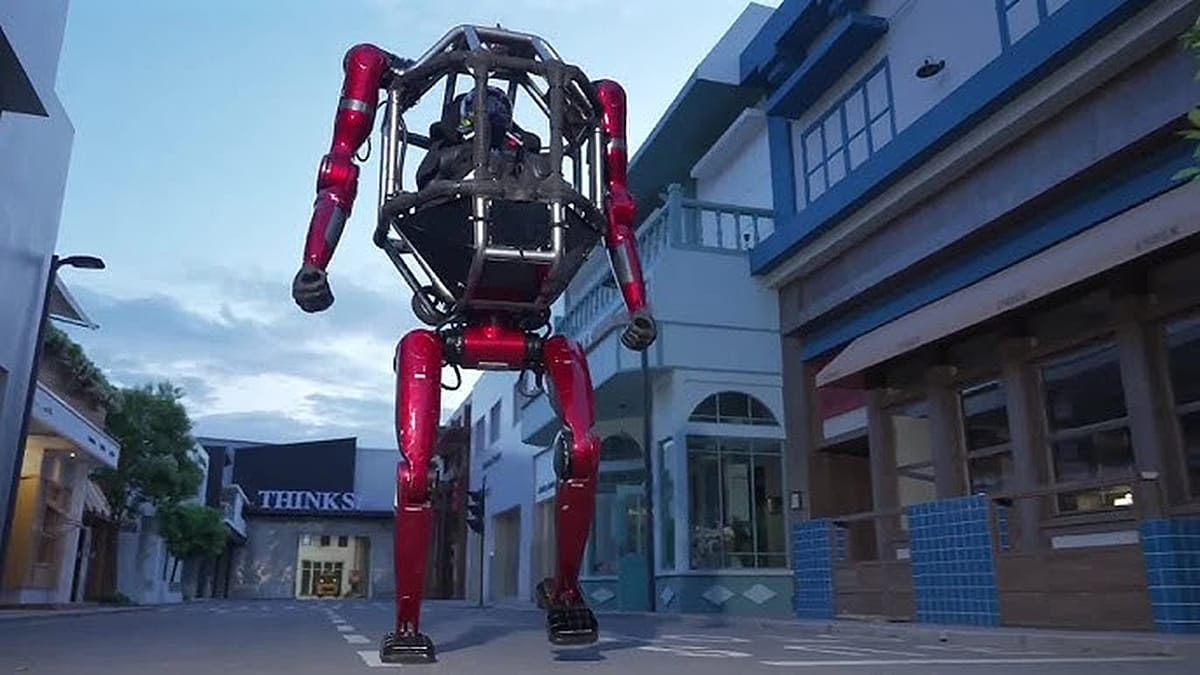
The line between speculative fiction and industrial hardware just blurred again. Unitree has unveiled a rideable, high-torque robotic platform capable of kinetic breaching—essentially a wall-smashing quadruped designed for environments where traditional wheeled vehicles fail and human operators are liabilities. This proves a brutal piece of engineering that signals China’s intent to dominate the heavy-duty robotics sector.
The Tech TL;DR:
- Kinetic Capability: High-torque actuator arrays allow for structural breaching and rideable payloads, shifting quadrupeds from “scouts” to “workhorses.”
- Edge Intelligence: Integrated NPUs enable real-time SLAM (Simultaneous Localization and Mapping) without relying on high-latency cloud round-trips.
- Enterprise Risk: The introduction of heavy, autonomous kinetic machinery into warehouses creates new physical safety vectors and cybersecurity endpoints that require rigorous auditing.
For years, the robotics industry has been obsessed with the “humanoid” form factor—the pursuit of a general-purpose android. But while the West focused on the aesthetics of bipedalism, Unitree is doubling down on the utility of the quadruped. The problem isn’t just mobility; it’s power density. To move a human rider and smash through a reinforced partition, you need more than just balanced gait algorithms; you need massive torque and a chassis that can absorb the resulting shock without shattering its own gearboxes.
The Hardware Stack: Torque Density vs. Thermal Throttling
The core of this platform is a shift toward quasi-direct drive actuators. Unlike the high-reduction gearing found in earlier hobbyist bots, these units prioritize transparency and impact resilience. When the robot hits a wall, the energy is reflected back into the motor rather than stripping a gear. However, this creates a massive thermal overhead. Sustained high-torque operations in “breaching mode” likely trigger aggressive thermal throttling, a bottleneck that Unitree claims to have mitigated via an optimized liquid-cooling loop for the primary SoC (System on Chip).
| Metric | Unitree Rideable Unit (Est.) | Agility Robotics Digit | Boston Dynamics Spot |
|---|---|---|---|
| Payload Capacity | 150kg+ (Rideable) | ~15kg | 14kg |
| Actuator Type | Quasi-Direct Drive | Electric/Hydraulic Hybrid | Electric |
| Primary Navigation | LiDAR + Depth Vision | Stereo Vision | LiDAR + Vision |
| Compute Architecture | NPU-Accelerated Edge | Centralized Controller | Onboard/Remote Hybrid |
While the specs are impressive, the real question for CTOs is the MTBF (Mean Time Between Failure). Kinetic breaching is high-stress. Deploying these in a production environment without a dedicated industrial automation maintenance firm to handle the inevitable actuator fatigue is a recipe for expensive downtime.
The Software Layer: ROS2 and the Latency Gap
Under the hood, this platform likely leverages a customized version of ROS2 (Robot Operating System), utilizing a DDS (Data Distribution Service) middleware to ensure deterministic communication between the sensors and the limbs. To achieve the “wall-smashing” precision, the robot cannot wait for a remote server to process the impact vector. The compute must happen at the edge.
The integration of a dedicated NPU allows the bot to run lightweight transformer models for terrain adaptation. Instead of pre-programmed gait cycles, the robot uses reinforcement learning to adjust its center of gravity in milliseconds. For developers looking to interface with such systems, the API typically exposes telemetry via a WebSocket or a gRPC stream. A standard implementation for monitoring the robot’s joint stress during a breach would look something like this:
# Example Python snippet to monitor Joint Torque via ROS2 import rclpy from rclpy.node import Node from sensor_msgs.msg import JointState class TorqueMonitor(Node): def __init__(self): super().__init__('torque_monitor') self.subscription = self.create_subscription( JointState, '/joint_states', self.listener_callback, 10) def listener_callback(self, msg): for torque in msg.effort: if torque > 500.0: # Threshold for 'breach' stress self.get_logger().warn(f"CRITICAL TORQUE DETECTED: {torque}Nm") def main(args=None): rclpy.init(args=args) node = TorqueMonitor() rclpy.spin(node) rclpy.shutdown() Cybersecurity Blast Radius: Kinetic Command Injection
We need to stop treating robots as “IoT devices” and start treating them as “mobile kinetic weapons.” A rideable robot that can smash through walls is a liability if its command-and-control (C2) layer is compromised. If an attacker gains access to the robot’s internal network via an unpatched vulnerability in the onboard Linux distro, they aren’t just stealing data—they are controlling a 200kg projectile.
“The transition from assistive robotics to kinetic robotics shifts the security paradigm from data privacy to physical safety. A buffer overflow in a vacuum robot is a nuisance; a buffer overflow in a rideable breaching bot is a catastrophic safety failure.”
Most of these units operate on a flat network architecture, which is a cardinal sin in enterprise IT. To mitigate this, organizations must implement strict VLAN segmentation and deploy certified penetration testers to audit the robot’s API endpoints. The risk of “command injection” where a malicious packet could trigger a “breach” sequence in a populated office space is a non-zero probability that insurance underwriters will soon begin pricing into premiums.
The Market Pivot: Utility Over Aesthetics
Unitree’s strategy is clear: while others are trying to make robots that look like us, they are making robots that do what One can’t. By focusing on the “rideable” and “breaching” aspects, they are targeting the military, emergency response, and heavy industrial sectors. This is a direct challenge to the commercial warehouse robots already deployed by firms like Agility Robotics, moving the goalposts from “sorting parcels” to “structural intervention.”
However, the “science fiction” allure fades when you consider the energy density of current lithium-ion batteries. A robot smashing walls and carrying a human will drain its cells in a fraction of the time a sorting bot does. Until we see a breakthrough in solid-state batteries or a viable tethered power solution, these machines will remain high-impact, short-duration tools rather than 24/7 autonomous laborers. For firms looking to integrate this tech, the first step isn’t buying the bot—it’s hiring specialized robotic systems integrators to build the supporting infrastructure.
The trajectory is obvious: we are moving toward a world of “specialized kinetics.” The future isn’t one robot that does everything; it’s a fleet of highly optimized machines—some for precision, some for power. Unitree just claimed the “power” vertical.
*Disclaimer: The technical analyses and security protocols detailed in this article are for informational purposes only. Always consult with certified IT and cybersecurity professionals before altering enterprise networks or handling sensitive data.*