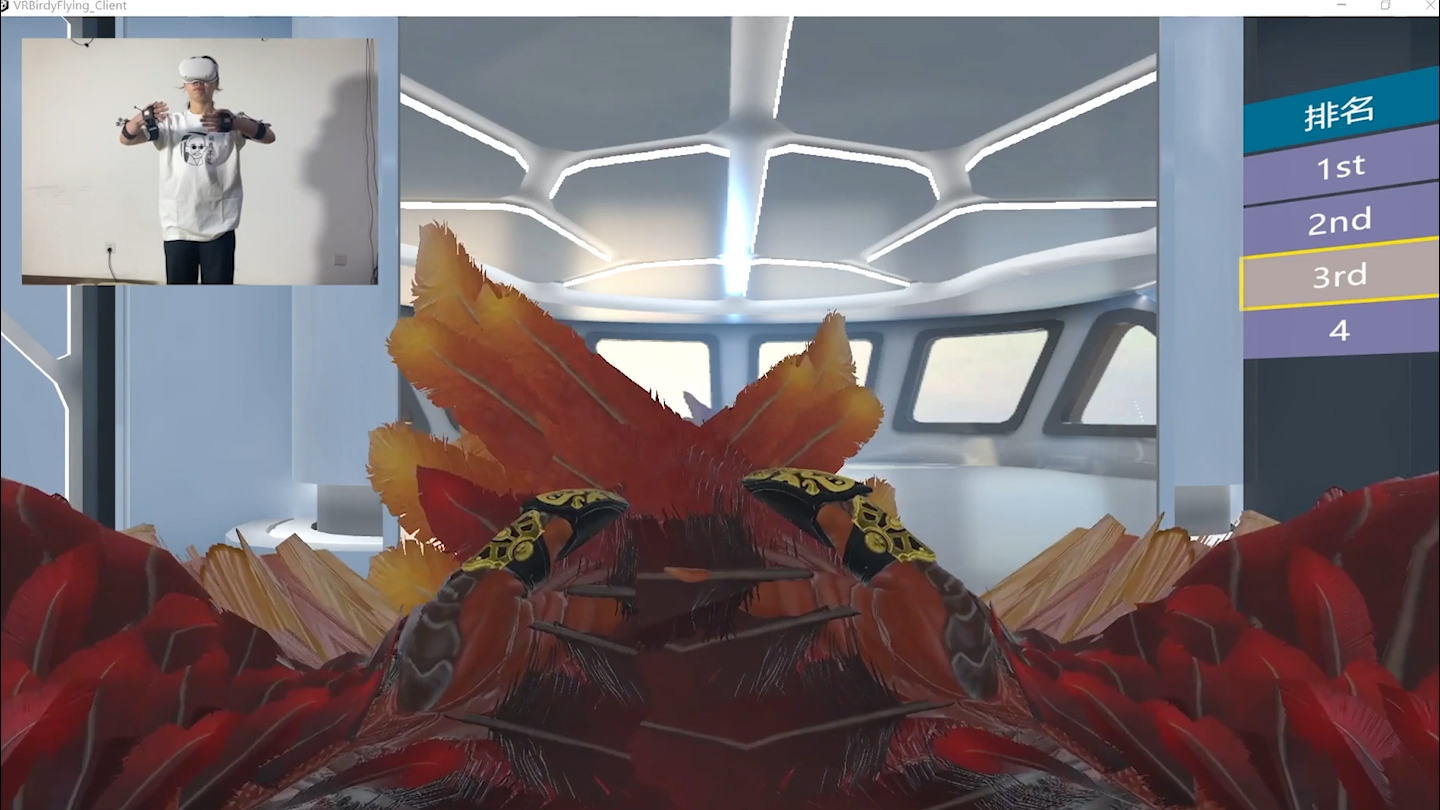
VR Flying Reshapes the Brain to Treat Virtual Wings as Body Parts
The boundary between the biological body and external tools has long been a subject of neurological curiosity, but recent evidence suggests this boundary is far more fluid than previously understood. By leveraging immersive virtual reality, researchers have demonstrated that the human brain can integrate non-human appendages into its own body schema, effectively “learning” to treat virtual wings as biological limbs.
Key Clinical Takeaways:
- A study published in Cell Reports indicates that weeklong VR training can reshape the brain’s perception of body ownership to include virtual wings.
- The brain’s inherent neuroplasticity allows it to incorporate “unhuman” appendages, suggesting a high capacity for adapting to limb enhancements.
- This research highlights the potential for VR-driven cortical remapping in the treatment of motor control disorders and prosthetic integration.
At the core of this discovery is the concept of the body schema—the internal, dynamic map the brain maintains to track the position and movement of limbs in space. This map is not static; it is governed by proprioception, the sense that allows us to know where our arm is even when our eyes are closed. When this internal map is challenged or expanded, the brain undergoes cortical remapping, a process where the somatosensory cortex reorganizes itself to account for new sensory inputs.
The clinical gap this research addresses is the “embodiment” hurdle. For patients utilizing advanced prosthetics, the device often feels like a tool rather than a part of the self. This disconnect can lead to suboptimal utility and a higher rate of device abandonment. By proving that the brain can accept rust-colored, feathered wings as part of the biological self, the study opens a door toward more seamless integration of synthetic limbs. For those struggling with prosthetic adaptation, consulting with board-certified neurologists specializing in neuroplasticity is essential to optimize the brain’s acceptance of assistive technology.
The Mechanics of Virtual Embodiment
The study, conducted by researchers including Yanchao Bi and Kunlin Wei of Peking University’s Motor Control Lab, utilized a rigorous training protocol to test the limits of the brain’s adaptability. A cohort of 25 participants engaged in a weeklong program designed by neuroscientist Yiyang Cai, which mirrored the actual mechanics of avian flight. Participants wore VR headsets and motion-tracking gear, allowing them to see themselves in a virtual mirror as birdlike figures.
The synchronization was critical: as participants rotated their wrists and flapped their arms, the virtual wings responded in real-time. This tight coupling of visual feedback and motor output is what triggers the brain to update its body schema. Over the course of the training, the brain began to treat these virtual appendages not as external objects, but as integrated body parts.

“This is an intriguing study that nicely demonstrates how plastic the brain is,” says cognitive neuroscientist Jane Aspell of Anglia Ruskin University in Cambridge, England. “If the brain can incorporate something as unhuman as a wing, it may also be able to incorporate many other kinds of limb enhancements.”
This phenomenon is rooted in the brain’s ability to resolve sensory conflict. When the visual system sees a wing moving in perfect synchrony with the arm’s movement, the brain prioritizes this consistent data over the prior knowledge that humans do not have wings. This shift suggests that the somatosensory cortex is remarkably permissive, provided the feedback loop is consistent and immersive.
Clinical Implications for Motor Control and Rehabilitation
The ability to reshape the brain’s perception of the body has profound implications for physical medicine. Beyond the novelty of “flying,” the underlying mechanism of cortical remapping is a cornerstone of rehabilitation for stroke survivors and patients with traumatic brain injuries. When a limb is lost or paralyzed, the corresponding area of the brain’s map often shrinks or is “taken over” by adjacent areas, a process that can contribute to phantom limb pain.
By using VR to simulate movement and “trick” the brain into maintaining or expanding its map, clinicians can potentially mitigate muscle atrophy and improve motor recovery. This approach moves beyond traditional physical therapy by targeting the neural architecture itself. Patients recovering from severe motor deficits are encouraged to work with specialized physical therapists who integrate neuro-rehabilitation technologies to accelerate the recovery of proprioceptive awareness.
The Path Toward Limb Enhancement
The research conducted at Peking University suggests that the brain does not have a strict “human-only” filter for its body schema. This opens a trajectory for the development of “extended” limbs—tools or prosthetics that provide capabilities beyond standard human anatomy. If the brain can accept a wing, it may equally accept a robotic manipulator or a sensory extension, provided the interface provides high-fidelity, real-time feedback.

However, the transition from virtual reality to physical application requires navigating complex regulatory and biological hurdles. The current standard of care for prosthetic integration focuses on mechanical fit and basic electrical stimulation. The next evolution will likely involve “closed-loop” systems that provide the same level of sensory synchronization seen in the Peking University study, effectively merging the device with the user’s neural map.
For healthcare providers and medical device developers, this shift necessitates a new framework for patient triage. The integration of “unhuman” enhancements will require a multidisciplinary approach, combining the expertise of surgeons, neurologists, and psychologists to ensure that the psychological transition to an expanded body schema is managed safely and effectively. Organizations looking to implement these emerging protocols are increasingly retaining healthcare compliance attorneys to ensure that the use of experimental VR-driven rehabilitation adheres to evolving medical ethics and safety guidelines.
As we look toward the future, the ability to intentionally reshape the brain’s map of the body represents a paradigm shift in medicine. We are moving from a model of “replacing” what was lost to “enhancing” what is possible. While we are not yet at the stage of biological flight, the plasticity demonstrated by these 25 participants proves that the brain is far more flexible than we ever imagined, transforming the way we perceive the limits of the human form.
To explore the latest in neuro-rehabilitation or to find specialists capable of implementing advanced cortical remapping therapies, please visit our comprehensive directory of vetted medical professionals.
Disclaimer: The information provided in this article is for educational and scientific communication purposes only and does not constitute medical advice. Always consult with a qualified healthcare provider regarding any medical condition, diagnosis, or treatment plan.