
Chile’s Minister of Transport and Telecommunications, Juan Carlos Muñoz, was informed on February 20th that the United States had revoked his visa, a decision that extends to his immediate family and two other government officials. The move, announced by the U.S. Department of State on Friday, February 23rd, accuses the Chilean officials of undermining regional security through activities related to a proposed submarine fiber optic cable project.
According to a statement released by Secretary of State Marco Rubio, the sanctioned individuals “knowingly directed, authorized, funded, substantially supported, and/or carried out activities that compromised critical telecommunications infrastructure and eroded regional security in our hemisphere.”
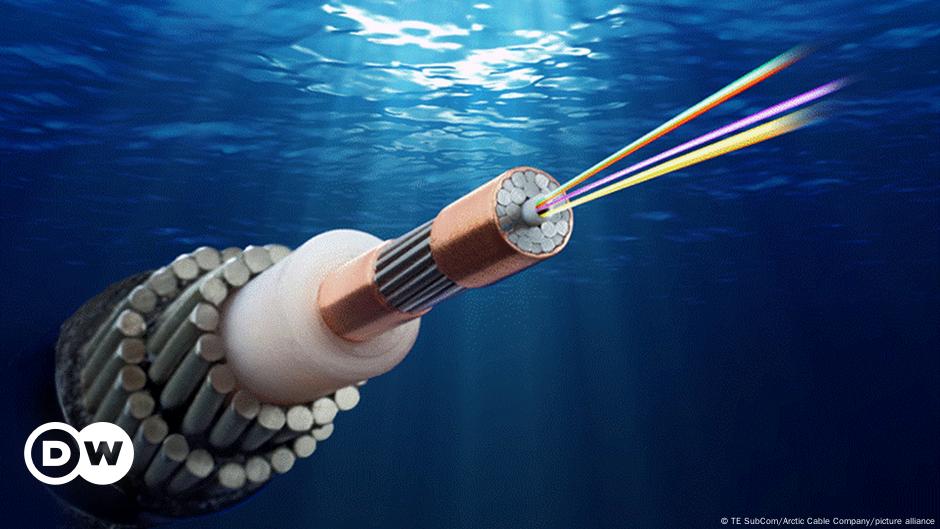
The controversy centers on the Chile-China Express project, a proposed undersea fiber optic cable intended to connect Valparaíso, Chile, with Hong Kong, bypassing areas under U.S. Influence. Whereas the project is currently in the initial evaluation phase within Chile, with no final decision reached, the U.S. Action has triggered a diplomatic dispute. Chile’s President Gabriel Boric stated his country would not be “intimidated by any kind of threat,” while China’s embassy in Santiago accused the United States of violating Chile’s sovereignty, according to reports.
The revocation of visas is not limited to Muñoz. Claudio Araya, the Undersecretary of Telecommunications, and Guillermo Petersen, Muñoz’s chief of staff, have also been sanctioned. The U.S. Action effectively renders the individuals and their families generally ineligible for entry into the United States, and any existing U.S. Visas have been revoked.
Chile formally lodged a protest with the U.S. Government following the announcement. Minister Camila Vallejo, the government spokesperson, described the U.S. Decision as “unilateral, arbitrary and unjustified,” stating Muñoz was being penalized “for evaluating a project.” Vallejo also referenced a conversation with U.S. Ambassador Brandon Judd, suggesting the sanctions were a response to the project’s consideration.
Political analysts suggest the U.S. Move may be aimed at influencing Chile’s incoming administration under President-elect José Antonio Kast, who will assume office on March 11th. Guido Larson, a professor at the Faculty of Government at the University of the Development in Santiago, noted that the U.S. Often uses its power to protect its interests. Paulina Astroza, a political scientist at the University of Concepción, characterized the U.S. Action as an “affront to the Chilean state,” arguing it was intended to pressure Kast as much as the current Boric government.
Astroza added that Chile’s position is precarious, caught between the interests of two superpowers, and that its economic development relies heavily on international trade and relationships. The U.S. Has previously revoked visas of individuals in other Latin American countries, including former Costa Rican President Óscar Arias and his brother Rodrigo Arias in April and July of 2025, respectively.
According to Larson, the U.S. Is reasserting its interest in Latin America and is prepared to use sanctions to do so. He suggests that while Chile is not obligated to align with U.S. Policy, it must be aware of potential consequences. Astroza contends that the situation reflects a historical pattern of imperial powers attempting to control states within their sphere of influence, violating the principle of national sovereignty.
The proposed cable project has sparked concerns in Washington due to the growing influence of China in Latin America, which has become a key trading partner for several South American nations. The competition between the U.S. And China extends beyond military and economic spheres to include technology, innovation, and even space, making the communications cable a potential security concern for the U.S.
Boric indicated that a decision on the project would not be made during his administration, while Kast has stated the matter requires thorough study. The selective nature of the sanctions, Larson suggests, allows Chile to navigate the complex relationship between the U.S. And China, but he anticipates increased U.S. Interest in the region, with China’s response remaining to be seen.
