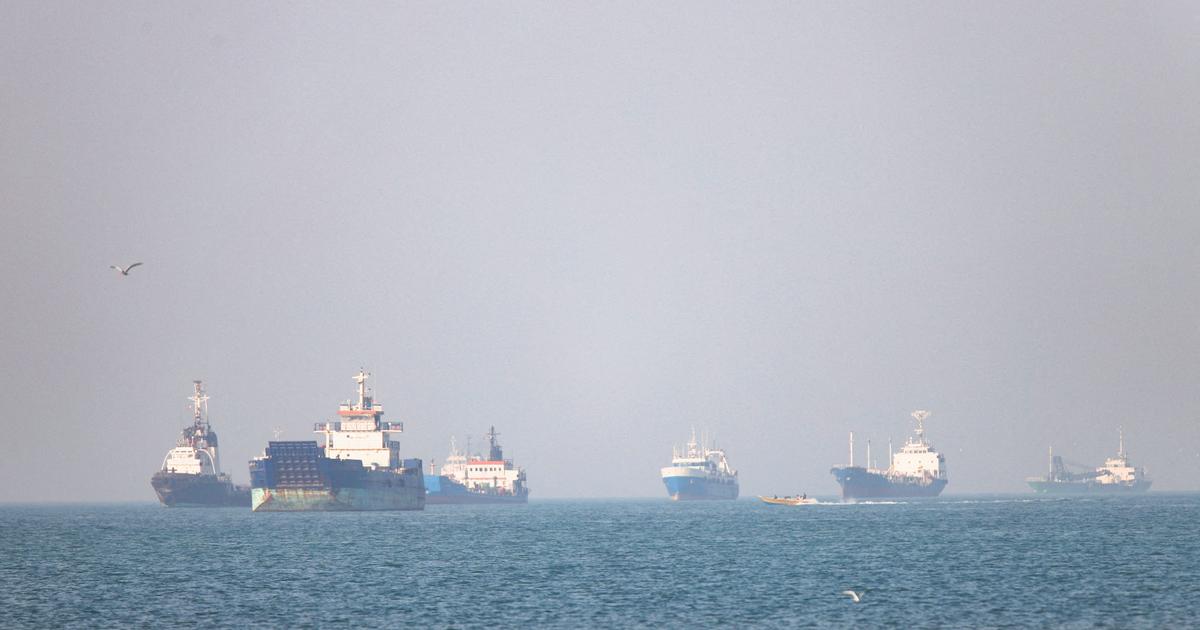
US President Threatens Iran After Strait of Hormuz Ship Attacks
President Donald Trump has threatened Iran with “violent” retaliation if it does not sign a U.S. Peace proposal “rapidly” after Iranian forces fired missiles and drones at three American Navy destroyers transiting the Strait of Hormuz. The escalation risks unraveling a fragile ceasefire, triggering a surge in global oil prices, and forcing regional allies like the UAE to scramble their air defenses. With the Strait of Hormuz—through which 20% of the world’s oil supply passes—now effectively closed, the crisis is testing the limits of diplomatic solutions and exposing vulnerabilities in global supply chains.
Why This Matters: The Strait of Hormuz as a Geopolitical Flashpoint
The Strait of Hormuz is not just a waterway; it is the world’s most strategically critical chokepoint. According to the U.S. Energy Information Administration, roughly 18 million barrels of oil—nearly a fifth of global consumption—pass through its narrow 21-mile passage daily. When Iran’s Islamic Revolutionary Guard Corps (IRGC) targeted the Fujairah Oil Industry Zone in the UAE earlier this week, it wasn’t just an attack on infrastructure; it was a direct strike at the economic lifeblood of Asia, Europe, and North America.
For the UAE, the immediate fallout is severe. Fujairah, home to the country’s largest oil storage hub, now faces a prolonged recovery. Local officials have not yet confirmed the extent of damage, but sources within the Abu Dhabi National Oil Company (ADNOC) suggest repairs could take weeks, during which time global fuel prices will remain volatile.
Dr. Ahmed Al-Mansouri, Director of the Dubai Energy Institute:
“The UAE’s energy sector is resilient, but this attack has exposed a critical weakness: our reliance on untested contingency plans for Strait disruptions. The question now is whether OPEC+ will intervene to stabilize markets—or if we face a scenario where regional tensions force a permanent reconfiguration of global trade routes.”
The Ceasefire Under Siege: What Trump’s “Blown Off the Face of the Earth” Warning Means
Trump’s rhetoric—echoing his 2018 threats against Iran—signals a return to maximalist posturing. But this time, the stakes are higher. The U.S. Military’s “self-defense strikes” on Iranian ports Bandar Abbas and Qeshm, as confirmed by U.S. Central Command, mark the first direct kinetic response since the ceasefire was brokered in February. The problem? Iran’s Supreme Leader, Ayatollah Ali Khamenei, has historically dismissed U.S. Ultimatums as bluffs. With Trump’s administration already facing skepticism over its ability to deliver on diplomatic promises, the risk of miscalculation is acute.

For businesses operating in the region, the uncertainty is paralyzing. Shipping firms are now forced to reroute vessels around the Cape of Good Hope—a 6,000-mile detour that adds $1.2 million to the cost of a single oil tanker voyage, according to Lloyd’s List. Meanwhile, insurance premiums for vessels transiting the Gulf have spiked by 400% in the past 48 hours, as underwriters demand war-risk clauses.
Economic Fallout: Oil at $100 a Barrel—and Counting
The immediate economic impact is already being felt. Brent crude, the global benchmark, has hovered around $100 per barrel—a level not seen since the 2022 Ukraine invasion. Analysts warn that if the Strait remains closed for more than a week, prices could surge to $120 or higher, triggering inflationary pressures in economies already strained by post-pandemic recovery costs.
| Scenario | Oil Price Impact | Global GDP Growth Slowdown | U.S. Gas Price Spike |
|---|---|---|---|
| Strait Reopens in 7 Days | $105–$115/barrel | 0.3–0.5% (IMF projection) | $4.50–$4.80/gallon |
| Strait Closed 30+ Days | $120–$140/barrel | 0.7–1.0% (Reuters estimates) | $5.00–$5.50/gallon |
| Escalation to Full Conflict | $150+/barrel (historical peak: 2008 $147) | 1.2%+ (World Bank “severe recession” threshold) | $6.00+/gallon |
The longer-term consequences are even more alarming. If Iran successfully enforces its newly created “Strait Security Agency” to control transit, it could force a permanent shift in global trade flows—benefiting Russia’s Northern Sea Route and challenging the dominance of the Suez Canal. For businesses, this means rethinking supply chain resilience. Companies that have not diversified their procurement strategies away from Persian Gulf oil are now scrambling to secure alternative sources.
Who Stands to Lose—and Who Might Profit?
The crisis is creating winners and losers across the board.
- Losers:
- Oil-dependent economies: Countries like Japan and India, which import 90%+ of their crude from the Gulf, face immediate energy security threats. Energy transition consultants are already fielding emergency calls from corporations seeking to lock in long-term LNG contracts.
- Shipping and logistics firms: The sudden rerouting of tankers is causing bottlenecks at ports in Singapore, and Rotterdam. Specialized freight forwarders with expertise in war-risk logistics are seeing demand surge.
- Tourism in the Gulf: Dubai and Abu Dhabi, which rely on business travelers and expatriates, are seeing cancellations spike. Insurance brokers specializing in political risk coverage report a 200% increase in inquiries.
- Potential Winners:
- Alternative energy firms: Solar and nuclear developers are benefiting from accelerated timelines for renewable projects. Clean energy project managers in the Middle East are reporting a 30% uptick in inquiries.
- Defense contractors: U.S. Firms like Lockheed Martin and Raytheon are poised to win contracts for advanced missile defense systems in the Gulf. Government procurement specialists with experience in foreign military sales are in high demand.
- Gold and precious metals traders: As geopolitical uncertainty drives investors toward safe-haven assets, bullion dealers in Dubai and Zurich are seeing record volumes.
Legal and Diplomatic Moves: What’s Next?
The legal landscape is just as volatile. Iran’s attack on U.S. Warships could trigger an invocation of the 1981 Algiers Accords, which govern U.S.-Iran relations. While the ceasefire technically remains in place, Trump’s threats of “higher level” strikes blur the line between deterrence and escalation.

Dr. Nazanin Armanian, Senior Fellow at the Atlantic Council:
“Trump’s language is designed to pressure Iran, but it also risks alienating European allies who are pushing for de-escalation. The real question is whether the U.S. Has a credible exit strategy—or if This represents another example of ‘maximum pressure’ leading to unintended consequences.”
For businesses navigating this uncertainty, the advice from cross-border legal experts is clear: prepare for prolonged volatility. Contracts tied to Gulf oil prices should include force majeure clauses, and supply chains must be stress-tested for disruptions lasting 90 days or more.
The Human Cost: Civilians Caught in the Crossfire
Beyond the boardrooms and stock markets, the human toll is mounting. In Fujairah, three Indian nationals were injured in the drone strike on the oil port. India’s Ministry of External Affairs condemned the attack as “unacceptable,” but its call for “dialogue and diplomacy” may fall on deaf ears if Iran perceives it as weakness.
For expatriate communities in Dubai and Abu Dhabi—where over 80% of the workforce is foreign—the message is unambiguous: stay vigilant. Relocation and security firms specializing in Gulf evacuations are reporting a surge in clients seeking emergency exit strategies.
The Long Game: What Happens If the Strait Stays Closed?
History suggests that prolonged disruptions to the Strait of Hormuz have never ended well. The 2012 tanker seizures by Iran’s IRGC led to a 20% spike in oil prices and a global growth slowdown of 0.4%. If this crisis follows a similar trajectory, the world economy could face its first recession since 2020.
The only certain outcome? More pain for consumers, more profit for those who can exploit the chaos, and a permanent shift in the balance of power in the Middle East. For now, the question isn’t whether the Strait will reopen—but at what cost.
The time to act is now. Whether you’re a business owner, investor, or concerned citizen, the World Today News Directory connects you with verified professionals equipped to navigate this crisis—from geopolitical risk analysts to supply chain resilience experts. The choice is yours: wait for the next headline—or prepare today.