

“`html
US Shoe Manufacturing Faces Hurdles Despite Reshoring Efforts
Table of Contents
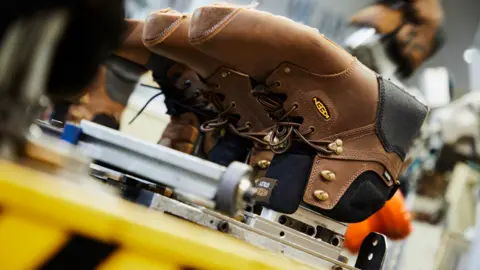
despite efforts to revitalize American manufacturing, bringing shoe production back to the United States remains a complex challenge. While companies like Keen are opening new factories,high costs and supply chain gaps continue to hinder widespread reshoring. Keen’s recent factory opening in Kentucky, employing just 24 workers and relying heavily on automation, exemplifies both the promise and the difficulties of this endeavor.
The State of US Shoe Manufacturing
The dream of a manufacturing renaissance in the US faces significant obstacles. Major brands like Nike and Adidas previously attempted to develop US-based manufacturing technologies, but these efforts ultimately fell short. Even Keen, despite its commitment, only assembles a small fraction of its shoes-around 9%-in America. Scaling up shoe production in the US, while innovating new methods, proves to be both intricate and costly.
Did You Know? The US footwear market is projected to reach $104.7 billion in 2024, highlighting the significant consumer demand despite limited domestic production.
The story of American manufacturing is one of dramatic growth followed by gradual decline. Post-World War II, US factories produced vast quantities of goods, creating jobs and bolstering the middle class.Though, as globalization accelerated, many industries relocated overseas in search of lower labor costs and more lenient regulations. This shift devastated America’s industrial heartland, contributing to ongoing political and economic tensions.
Today, shoemaking symbolizes these changes. A staggering 99% of shoes sold in the US are imported, primarily from countries like China, Vietnam, and Indonesia.The domestic footwear supply chain is almost non-existent,with only about 1% of shoes sold being made in America.
Supply Chain Struggles and Innovative Solutions
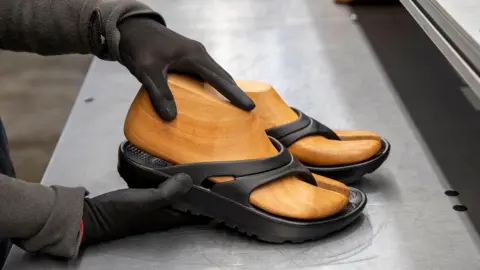
pepper Harward, CEO of Oka brands, a rare company still producing shoes in the US, understands these challenges intimately. His factory in Buford, Georgia, manufactures shoes for brands like New Balance and Ryka. However,sourcing affordable parts and materials within the US remains a constant battle.
“It’s not a self-sustained ecosystem,” Harward explains. “You kind of have to build your own. That is extremely challenging as vendors and suppliers sometimes come in and out.”
To secure foam and PVC for their soles, Oka Brands even explored tapping into the automotive industry’s supplier network-an unconventional but necessary workaround. This highlights the creative problem-solving required to sustain domestic manufacturing.
Oka
The Future of American Shoe Manufacturing
For companies like Keen and Oka,manufacturing shoes in America demands patience,investment,and innovation. The key question is whether they-and others-can scale production under current policies. Harward notes increased interest in local manufacturing due to tariffs and pandemic-related supply chain disruptions.However, he remains skeptical that tariffs alone will drive a significant return.
“It would probably take 10 years of pretty high tariffs to give people incentives to do it,” says Harward. Even then, he believes the industry might realistically see only about 6% of production return to US soil.
Keen’s long-term plans, initiated over a decade ago, are now materializing. This patient investment is characteristic of a family-owned business.
“we are a private, values-led company,” explains Perumal. “We’re able to do these types of decisions without having to have to worry about quarter after quarter results.”
Even for companies already manufacturing in America, reversing decades of globalization is a formidable task. Keen’s new factory represents not a return to the past, but a glimpse into the potential future of American manufacturing-one where technology and tradition converge.
Pro Tip: Government incentives and support for domestic supply chains could significantly boost US shoe manufacturing.
Key Metrics: US Shoe Manufacturing
| metric | Value |
|---|---|
| Percentage of shoes sold in US that are imported | 99% |
| Percentage of shoes sold in US that are made in America | 1% |
| Estimated time for tariffs to incentivize reshoring | 10 years |
| Realistic potential return of shoe production to US | 6% |
Keen
The Ancient Context of US Manufacturing
The decline of US manufacturing began in the late 20th century as companies sought cheaper labor and more relaxed regulations overseas. This trend significantly impacted industries like shoemaking, leading to a hollowing out of America’s industrial base. The consequences included job losses, economic disruption, and increased political tensions, which continue to resonate today.
Despite various initiatives to encourage reshoring, the challenges remain significant. Rebuilding domestic supply chains, investing in advanced manufacturing technologies, and addressing labor cost disparities are
