US Launches New Attacks on Tankers Near Iran Blockade
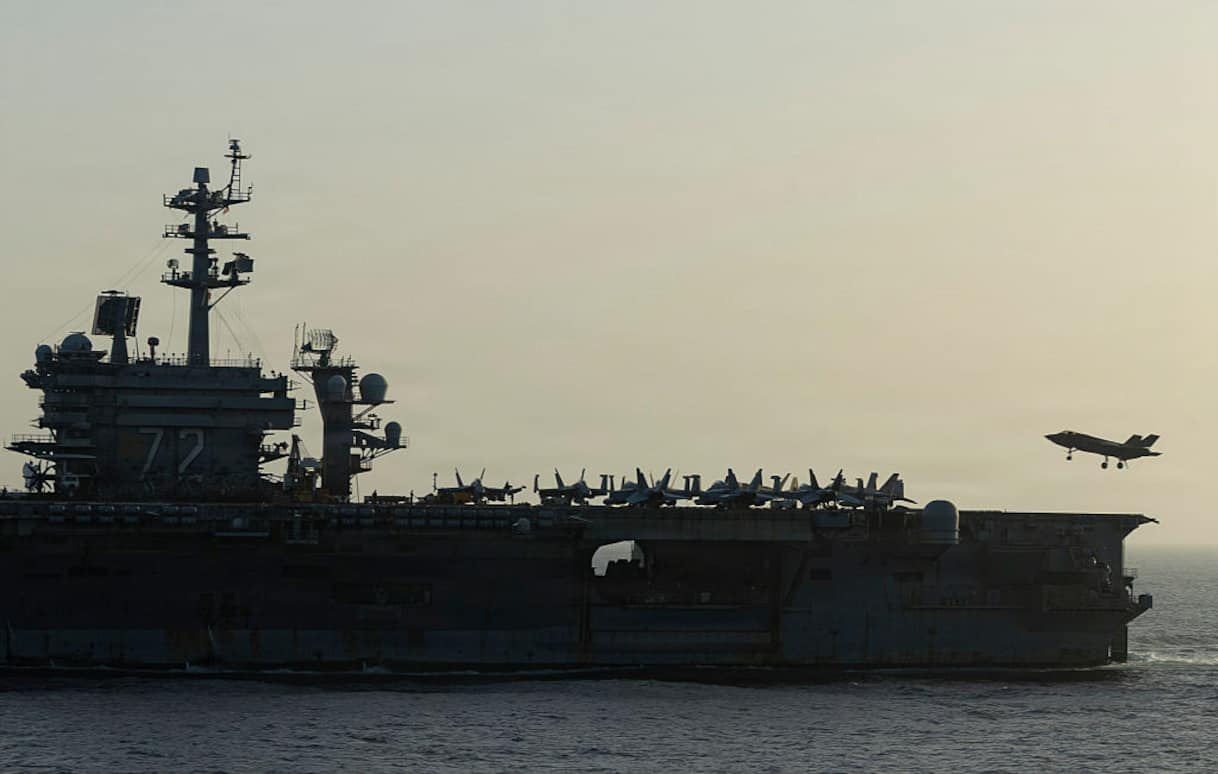
US forces disabled two Iranian tankers on May 8, 2026, during a naval blockade in the Gulf of Oman. This escalation follows a barrage of Iranian missiles targeting the UAE and US Navy ships, as President Donald Trump demands the reopening of the Strait of Hormuz to avoid full-scale bombing.
The fragile ceasefire that held for a month is now effectively in tatters. What began as a strategic attempt to stabilize the region has devolved into a series of kinetic exchanges that threaten to ignite a broader regional war. This is no longer a diplomatic stalemate; it is a high-stakes military gamble played out in the world’s most critical energy artery.
The current crisis represents a systemic failure of the February 28 ceasefire. For the global economy, the problem is simple and devastating: the Strait of Hormuz is the primary exit point for global energy and Iran has mostly blocked it. This blockade has already triggered a global spike in fuel prices and sent shockwaves through international markets. When the flow of oil is treated as a political bargaining chip, the ripple effects are felt from the shipping docks of Dubai to the gas stations of the American Midwest.
The Friday Escalation: Kinetic Strikes and Blockades
The events of May 8 underscore a shift toward more aggressive enforcement by the U.S. Military. Central Command confirmed that forces fired upon and disabled two Iranian-flagged oil tankers. These vessels were attempting to breach the American blockade of Iranian ports—a blockade designed to squeeze Tehran’s economic capabilities until specific geopolitical concessions are met.
The violence was not limited to the tankers. The United Arab Emirates’ Defense Ministry reported that its air defenses were forced to engage two ballistic missiles and three drones launched by Iran. The result was a chaotic scene in the UAE, where three people were wounded by the strikes. While the UAE military worked to intercept the threats, authorities had to warn civilians to avoid fallen debris, highlighting the vulnerability of urban centers during these exchanges.
Simultaneously, the U.S. Navy found itself in the crosshairs. US forces thwarted attacks on three Navy ships and responded by striking Iranian military facilities within the strait. This cycle of attack and counter-attack suggests that the “shaky” nature of the ceasefire has transitioned into an active, albeit limited, conflict.
President Donald Trump has maintained a dissonant tone regarding the severity of these clashes. In a phone call with ABC, he described the U.S. Strikes as a “love tap.” However, the rhetoric shifted sharply when discussing the future. The President reiterated threats to resume full-scale bombing campaigns if Iran refuses to accept an agreement to reopen the strait and roll back its nuclear program.
Strategic Impact and Timeline of Hostilities
To understand the current volatility, one must look at the sequence of events that have led to this breaking point. The war, which launched on February 28, has created a precedent for rapid escalation and equally rapid, though unstable, pauses.
| Event Milestone | Action/Detail | Immediate Consequence |
|---|---|---|
| February 28 | Outbreak of War | Initial hostilities between US, Israel, and Iran |
| April 2026 | Ceasefire Implementation | Temporary reduction in kinetic strikes |
| May 8 (Early) | Iranian Missile Barrage | UAE air defenses engaged; 3 people wounded |
| May 8 (Midday) | US Naval Action | Two Iranian tankers disabled; military facilities struck |
| Current Status | Active Blockade | Global fuel price spikes; markets rattled |
The blockade is the central pivot of this conflict. By restricting the movement of Iranian tankers, the U.S. Is attempting to force a nuclear rollback without engaging in a full-scale ground invasion. But this strategy creates a massive “information gap” for global businesses. Companies relying on just-in-time delivery and stable energy costs are now operating in a vacuum of certainty.
The Economic Chokehold and Professional Solutions
The instability in the Strait of Hormuz isn’t just a military problem; it’s a logistical nightmare. When a critical waterway is blocked, the cost of shipping skyrockets, insurance premiums for maritime cargo become prohibitive, and supply chains fracture. For businesses with assets in the region or those dependent on Middle Eastern energy, the risk is existential.
Navigating these waters requires more than just hope for a diplomatic resolution. Corporations are currently scrambling to rewrite their logistics playbooks. Securing the expertise of vetted supply chain consultants has become a priority for firms looking to diversify their energy sources and find alternative routes that bypass the Gulf of Oman.
the legal implications of operating under a U.S.-imposed blockade are immense. The line between legitimate trade and violating international sanctions is razor-thin. Companies are increasingly turning to international trade attorneys to ensure their operations do not inadvertently trigger U.S. Penalties or Iranian retaliation.
The volatility of fuel prices also demands a new approach to financial hedging. The “global spike” mentioned by military and economic observers isn’t a temporary blip; it is a structural shift in cost. To survive this, CFOs are consulting energy risk financial advisors to shield their bottom lines from the erratic swings of the oil market.
The Nuclear Ultimatum
At the heart of the U.S. Strategy is a demand for the rollback of Iran’s nuclear program. This is the “red line” that President Trump has drawn. The use of “love taps”—targeted strikes on tankers and facilities—is intended to signal capability without triggering a total war. However, the Iranian Foreign Ministry’s reaction suggests that Tehran views the blockade as an act of aggression that justifies its own missile barrages.

The danger here is the “escalation ladder.” Each side believes the other will blink first. The U.S. Believes that economic pain via the blockade will force nuclear concessions. Iran believes that threatening the global energy supply will force the U.S. To lift the blockade to stabilize the world economy.
As we stand here on May 8, the world is watching a dangerous game of chicken. The “love taps” of today could easily become the full-scale bombing campaigns of tomorrow if a diplomatic bridge isn’t built immediately. The human cost is already mounting, as seen in the wounded civilians in the UAE, but the systemic cost—the potential collapse of energy stability—is the greater threat.
The volatility in the Strait of Hormuz serves as a stark reminder that geopolitical stability is an illusion that can vanish in a single afternoon. Whether you are a business owner facing surging costs or a policymaker calculating the risk of a nuclear-armed adversary, the need for verified, professional guidance has never been more acute. In times of chaos, the only real currency is reliable expertise. As this situation evolves, the World Today News Directory remains the essential resource for finding the legal, financial, and logistical professionals equipped to navigate a world in conflict.