US-Iran Naval Tensions Escalate in the Strait of Hormuz
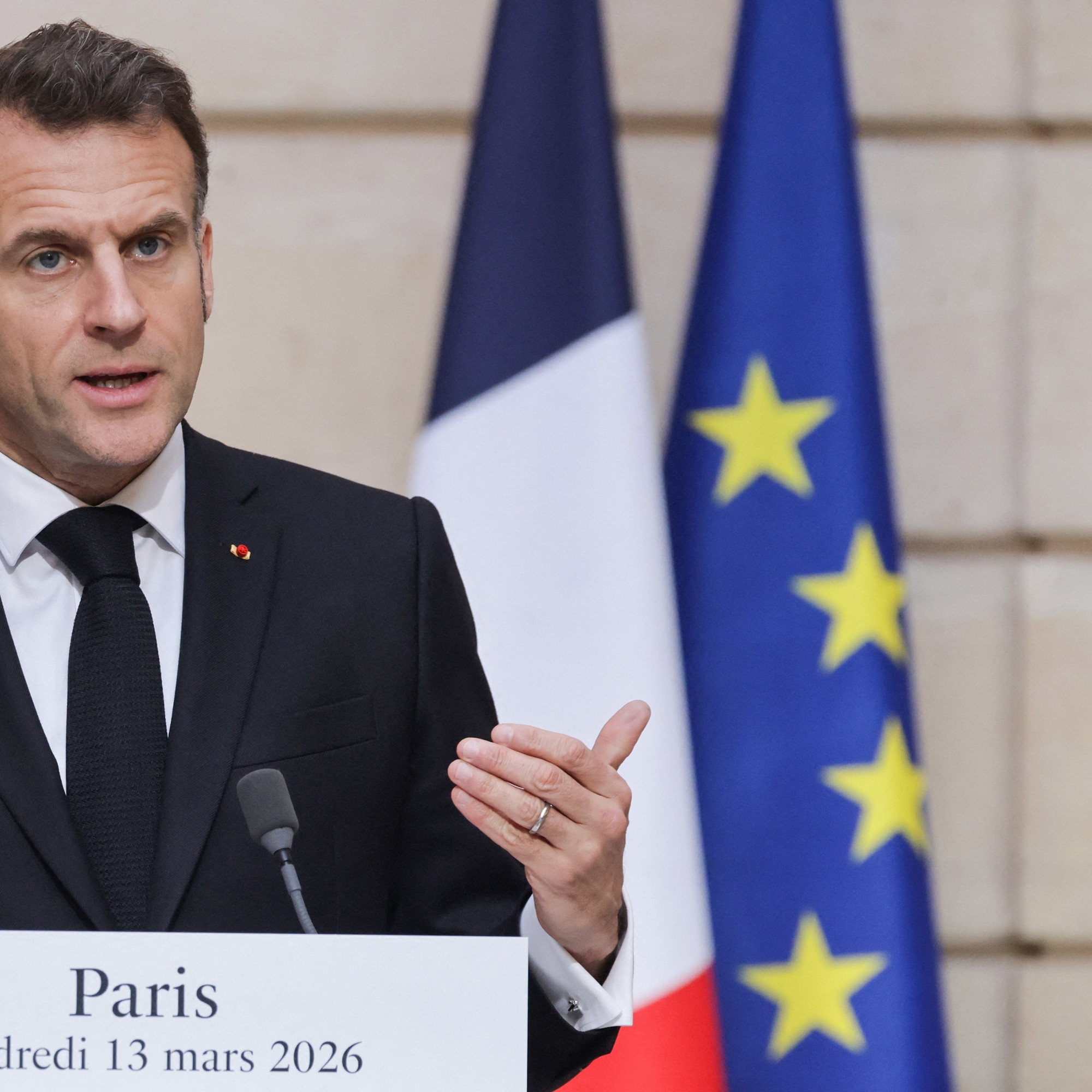
On April 20, 2026, French President Emmanuel Macron asserted that French interests in Lebanon and the Strait of Hormuz were not specifically targeted amid escalating U.S.-Iran naval confrontations, as Iranian forces seized the cargo vessel Touska and U.S. Ships reported mine threats in the strategic waterway. This declaration comes as the Strait of Hormuz—through which approximately 20% of global oil supply passes—faces renewed volatility, raising immediate concerns for energy markets, shipping logistics, and regional security architectures. While Macron sought to reassure French stakeholders, the incident underscores the fragility of maritime freedom of navigation and the growing risk of collateral damage to neutral parties in great power proxy conflicts.
The seizure of the Iranian-flagged Touska by U.S. Naval forces in the Strait of Hormuz on April 18, 2026, marks a significant escalation in the ongoing tit-for-tat maritime strategy between Washington and Tehran. According to U.S. Central Command, the vessel was intercepted for allegedly carrying undeclared military components destined for Houthi forces in Yemen, violating international sanctions. Iran’s Islamic Revolutionary Guard Corps Navy (IRGCN) swiftly condemned the action as piracy and vowed retaliation, deploying its so-called “mosquito fleet” of fast attack craft to shadow commercial traffic. This follows a pattern seen in 2019 and 2021, where similar seizures brought the region to the brink of open conflict, though de-escalation was achieved through backchannel diplomacy involving Oman and Qatar.
Macron’s statement reflects France’s delicate balancing act: maintaining its historical influence in Lebanon through cultural, economic, and military ties—including the deployment of French troops under UNIFIL—while avoiding direct entanglement in the U.S.-Iran standoff. France remains a key European signatory to the JCPOA and has consistently advocated for diplomatic resolution, yet its naval presence in the Eastern Mediterranean and Red Sea exposes its assets to spillover risks. As one analyst noted,
“France’s challenge is not whether it will be dragged into the Hormuz crisis, but how swiftly it can extricate its interests without appearing to abandon allies or compromise sovereignty.”
This sentiment was echoed by Dr. Lina Khatib of Chatham House, who observed that
“Macron’s denial of specific targeting is less a factual assessment and more a preventive messaging strategy aimed at stabilizing French investor confidence and preventing panic-driven capital flight from Levantine markets.”
The macroeconomic implications are immediate and severe. Shipping giants like CMA CGM—whose vessel reported “warning shots” near Hormuz on April 19—face soaring insurance premiums, with Lloyd’s of London reporting a 40% year-on-year increase in war risk coverage for transits through the strait. Delays averaging 36–48 hours are now common as vessels reroute via the Cape of Good Hope, adding up to $300,000 in fuel costs per voyage and disrupting just-in-time supply chains for electronics, pharmaceuticals, and automotive parts destined for European markets. These disruptions directly impact foreign direct investment (FDI) flows into Gulf Cooperation Council (GCC) states, where European firms have committed over $120 billion in green hydrogen and logistics infrastructure projects since 2023, all contingent on stable maritime access.
Historically, the Strait of Hormuz has been a flashpoint since the Tanker War of the 1980s, but today’s vulnerability is amplified by evolving asymmetric threats. A recent RAND Corporation study highlighted that Iran’s coastal missile arrays and drone swarms now pose a credible threat to even escorted commercial vessels, undermining traditional convoy models. This has prompted multinational energy firms to consult with specialized geopolitical risk advisors to model convoy feasibility and explore alternative routing through the proposed Israel-UAE oil pipeline, though capacity remains limited to 1.2 million barrels per day—far below the 17 million bpd transiting Hormuz.
From a legal standpoint, the incident raises critical questions about the application of the United Nations Convention on the Law of the Sea (UNCLOS) in contested zones. While the U.S. Justifies interceptions under its right to interdict suspected sanction violators in international waters, Iran argues such actions constitute unlawful interference with freedom of navigation—a principle it invokes when its own vessels are detained. Legal scholars at the Hague Academy of International Law warn that
“Without a renewed multilateral framework to clarify interception protocols under UNCLOS Article 110, we risk normalizing unilateral maritime enforcement that could unravel global shipping norms.”
multinational corporations are increasingly turning to international trade law firms with expertise in sanctions compliance and maritime law to navigate the growing legal ambiguity.
The broader geopolitical shift is clear: the era of uncontested U.S. Naval dominance in the Middle East is eroding, not due to conventional military parity, but through Iran’s mastery of asymmetric denial tactics. This compels NATO allies to reassess burden-sharing, with France pushing for greater European naval autonomy via the European Intervention Initiative (EI2), while Germany and Italy remain hesitant to commit assets without clearer NATO command structures. Meanwhile, China watches closely, having increased its own naval presence in the Gulf of Aden to protect its Belt and Road Initiative (BRI) maritime corridors, signaling a potential long-term shift toward multipolar maritime governance.
For global enterprises, the message is unambiguous: reliance on single chokepoints like the Strait of Hormuz is no longer a viable risk strategy. Companies must now engage with supply chain resilience consultants to diversify sourcing, nearshore production, and implement real-time maritime threat monitoring systems. The cost of inaction—measured in delayed shipments, spoiled perishables, and breached contracts—far exceeds the investment in adaptive logistics networks.
As the sun sets on another tense day in the Gulf, the true test lies not in whether missiles will fly, but whether the architecture of global interdependence can withstand the strain of great power brinkmanship. Macron’s reassurance may calm French boardrooms today, but the deeper current is unmistakable: the rules governing the world’s most vital maritime highway are being rewritten in real time, by actors who answer to no international consortium. For those tasked with steering capital through this storm, the directory is not a convenience—it is a compass.