
US and China Reach Trade Framework in London Talks
Negotiations Aim to De-escalate Economic Tensions
After two days of intense discussions in London, the United States and China have announced a preliminary agreement to address escalating trade disputes, focusing on restrictions related to rare earth minerals and advanced technologies. The deal requires final approval from both nations’ presidents.
Rare Earth Minerals at the Core
The agreement centers on resolving restrictions surrounding rare earth minerals, vital components in numerous modern technologies. US Commerce Secretary Howard Lutnick stated the framework should resolve issues concerning these materials and magnets. Both countries will now present the plan to Donald Trump and Xi Jinping for their endorsement.
The talks followed a period of strained relations, including accusations of breaches to a temporary truce agreed last month. The US has criticized China for slow-rolling exports of rare earth metals, essential for manufacturing electric vehicles and smartphones. Conversely, Beijing has protested Washington’s restrictions on access to semiconductors and AI-related technologies.
“We have reached a framework to implement the Geneva consensus,”
—Howard Lutnick, US Commerce Secretary
According to the Peterson Institute for International Economics, global trade in rare earth elements reached $15 billion in 2023, highlighting their strategic importance. (PIIE, 2024)
Previous Trade Conflicts
Earlier this year, President Trump’s imposition of broad tariffs on imports triggered retaliatory measures from China, escalating into a tit-for-tat trade war. Tariffs peaked at 145% before a temporary truce was reached in May during talks in Switzerland, which Trump hailed as a “total reset.”
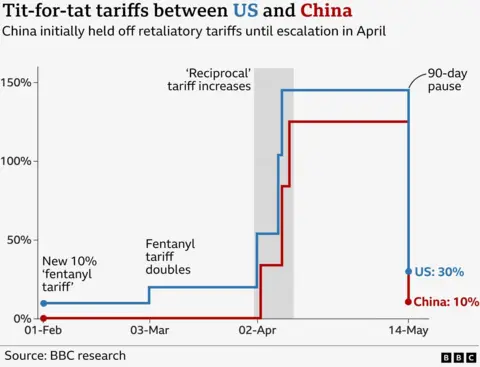
The May agreement lowered US tariffs to 30% and Chinese levies to 10%, with Beijing also promising to ease restrictions on critical mineral exports. However, both sides subsequently accused each other of violating the non-tariff aspects of the agreement.
“The two sides have, in principle, reached a framework for implementing the consensus reached by the two heads of state during the phone call on June 5th and the consensus reached at the Geneva meeting,”
—Li Chenggang, China’s Vice Commerce Minister
US Trade Representative Jamieson Greer claimed China had not fully removed restrictions on rare earth magnet exports, while Beijing alleged Washington had hindered sales of computer chip design software and restricted visas for Chinese students. Despite these disputes, the latest framework offers a potential path toward a more stable trade relationship.
