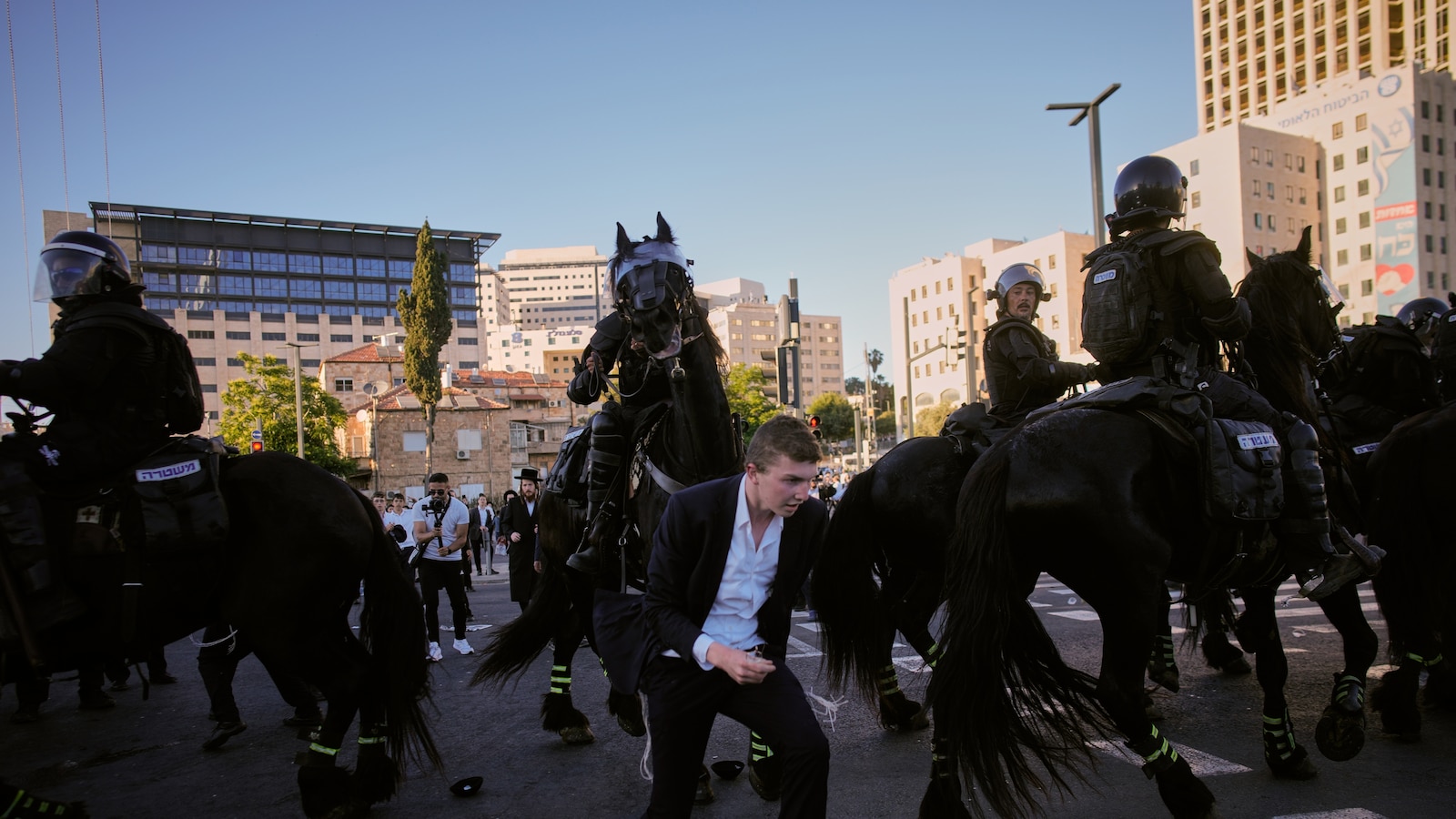
Ultra-Orthodox Protests Erupt in Israel Over Mandatory Military Conscription
As of June 1, 2026, tens of thousands of ultra-Orthodox protesters have paralyzed major transit arteries across Israel, including intersections in Jerusalem and Tel Aviv, to protest the enforcement of mandatory military conscription. This civil unrest highlights a deepening existential divide between religious identity and national security requirements in Israel.
The streets of central Israel are currently gridlocked, not by a natural disaster or a foreign adversary, but by a profound domestic collision of values. For decades, the ultra-Orthodox (Haredi) community maintained a de facto exemption from the Israel Defense Forces (IDF). Today, that consensus has shattered.
The government’s push to integrate Haredi men into military service is no longer a theoretical legislative debate. This proves a logistical reality that has brought the country’s infrastructure to a standstill. When major highways are blocked and train lines are suspended, the economic ripple effect is immediate. Businesses are struggling to maintain supply chains, and commuters are finding their daily operations crippled.
For those managing the fallout of these disruptions, finding reliable assistance is paramount. Whether you are a business owner struggling with logistics or an individual needing to navigate the legal complexities of transit delays, it is essential to consult with specialized logistics and transportation consultants to mitigate the impact of sudden municipal shutdowns.
The Constitutional Collision: Why Now?
The current volatility stems from a series of high-stakes rulings by the Supreme Court of Israel, which has increasingly signaled that the long-standing blanket exemptions for seminary students are no longer constitutionally tenable. This legal pressure has forced the hand of the current coalition government, creating a scenario where political survival is pitted against the rule of law.

The Haredi leadership views these demands as an existential threat to their way of life, fearing that military service will dilute the strict religious adherence maintained within their communities. Conversely, the secular and modern-orthodox segments of the population argue that the burden of national defense must be shared equitably during a period of sustained regional insecurity.
“We are witnessing a fundamental shift in the social contract. The state can no longer afford to subsidize a lifestyle that refuses to contribute to the collective defense in an era of multi-front instability. However, the enforcement of this mandate is being handled with a blunt instrument that ignores the deep-seated cultural trauma involved.” — Dr. Arnon Segal, Senior Fellow at the Institute for National Security Studies.
Economic and Logistical Consequences
The blockades are not merely symbolic; they are hitting the bottom line of the Israeli economy. With major transit hubs effectively neutralized, the cost of doing business has spiked. Small and medium-sized enterprises (SMEs) are reporting significant losses in productivity as employees remain stranded at home or stuck in traffic for hours.
When civil unrest threatens the continuity of operations, the need for professional guidance becomes critical. Many firms are now turning to crisis management agencies to develop contingency plans that account for large-scale public demonstrations and the resulting infrastructure failures. These experts provide the necessary framework to maintain business stability when the state is in flux.
Comparative Impact of Civil Disruption
| Sector | Primary Impact | Risk Level |
|---|---|---|
| Logistics & Supply Chain | Delivery delays and inventory stagnation | Critical |
| Commercial Real Estate | Access issues for clients and staff | Moderate |
| Public Transit | System-wide delays and safety risks | High |
Navigating the Legal Minefield
Beyond the immediate physical blockades, the legal ramifications of the draft are vast. Families and religious institutions are finding themselves caught in a web of new administrative requirements. The transition from exemption to conscription involves complex bureaucratic hurdles that often require professional legal intervention to ensure compliance and avoid severe penalties.
For those navigating these changing regulations, it is advisable to consult with expert legal consultancy firms that specialize in constitutional law and administrative affairs. Understanding one’s rights and obligations in a rapidly shifting legal landscape is the only way to avoid the unintended consequences of non-compliance.
The protests show little sign of abating as both sides dig in for a protracted struggle. The government’s ability to enforce the draft without tearing the social fabric of the country apart remains the primary question of the decade. While the headlines focus on the shouting in the streets, the real story is the silent, ongoing erosion of institutional trust.
As the sun sets on June 1, 2026, the gridlock remains. For the average citizen, the path forward is unclear. Whether you are dealing with the immediate economic fallout of blocked transit or the long-term legal implications of these shifting mandates, the importance of having a vetted, professional network cannot be overstated. When the state’s systems fail, your personal and professional resilience depends on the experts you choose to rely on. Ensure your affairs are handled by those who understand the nuance of the current crisis, rather than those who simply react to the chaos.