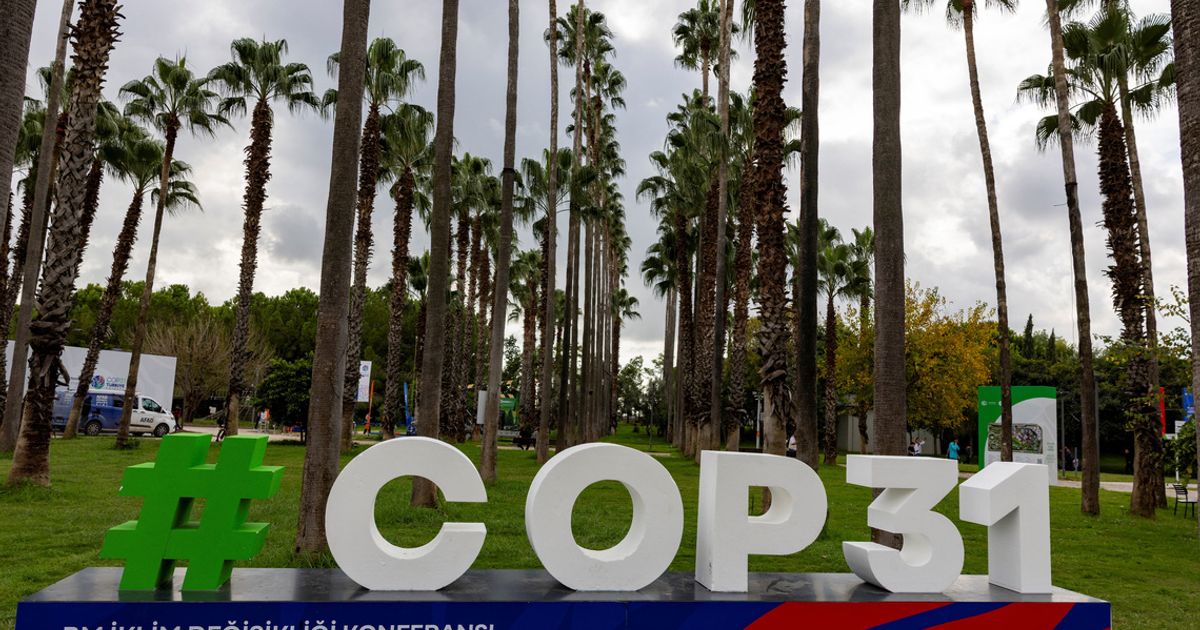
Turkey Secures $26 Billion in Deals at COP31 as Global Climate Talks Stall
Turkey is set to emerge from COP31 in Antalya with over $26 billion in new investment deals, even as international climate negotiations face a stalemate over carbon emission targets.
While the host nation secures significant capital for energy infrastructure, delegates remain divided on essential climate finance and the phase-down of fossil fuels.
Capital Influx During COP31
Since the conference began on November 9, Turkey has finalized a series of accords aimed at bolstering its domestic energy transition. These agreements, which total more than $26 billion, include a preliminary $15 billion renewable energy deal with China, according to reporting from eKathimerini.com. Additional financing agreements worth $5.1 billion have been secured with development banks, alongside new partnerships with Saudi Arabia and Canada.
The scale of these investments mirrors the strategy employed by the United Arab Emirates during the 2023 Dubai summit, where the host nation used the event to pursue both fossil fuel and renewable energy contracts, as noted by usnews.com. Turkey has not provided official commentary on the specific nature of these individual agreements.
Strategic Energy Transition Goals
Market observers suggest these deals provide a tangible boost to Turkey’s internal climate objectives, particularly regarding the expansion of national electrification to displace fossil fuel dependency. Oyku Senlen, a senior researcher at the think tank E3G, said that these agreements align with the country’s energy transition pathway, as reported by straitstimes.com.
The utilization of a UN climate summit as a venue for bilateral investment is a calculated maneuver. “I have long advocated for COP-hosting countries to use their COP as an investment attraction platform. It’s your best opportunity,” said Li Shuo, who heads the China Climate Hub at the Asia Society Policy Institute, according to eKathimerini.com.
Stalled International Diplomacy
While Turkey secures private and institutional capital, the broader multilateral agenda remains in flux. Delegates from more than 190 countries continue to struggle with core disagreements regarding climate finance for vulnerable nations. The most recent draft agreement has seen the removal of explicit references to phasing down fossil fuel usage.
Although the conference was scheduled to conclude on Friday, UN climate summits have frequently extended beyond their official deadlines. The current atmosphere suggests that while industrial and financial integration is proceeding, a high-level diplomatic consensus on global emission reductions remains elusive.

Business Engagement on the Sidelines
Beyond the ministerial negotiations, the summit has served as a high-velocity marketplace for startups and industrial firms. Companies exhibiting at the trade fair have reported significant progress in securing international partnerships that would have required years of traditional business development to achieve.
Liaqua, a water technology firm, utilized the event to engage with government officials and lenders from markets including Ghana, India, Mexico, and Brazil. “Even if we worked for 10 years, we could not achieve what we achieved here in nine days, because the whole world is here,” said Tuncer Kucukaydogmus, founding partner at Liaqua, as told to straitstimes.com.
Similarly, the Bursa-based startup Harves Technology reported productive meetings with investors from India and France, alongside interest from distributors in Somalia, Brazil, Spain, and Greece, according to usnews.com.
Turkey, officially the Republic of Türkiye, straddles Anatolia in West Asia and East Thrace in Southeast Europe, bordering eight countries and four seas. With a population exceeding 86 million, it ranks as the world’s 16th-largest economy by nominal GDP and the 15th-largest electricity producer, aiming to become a hub for regional energy transportation. The territory hosted successive civilizations — from the Hittites and Hellenistic kingdoms to the Roman and Byzantine empires — before the Seljuk Turks began migrating in the 11th century.
The Ottoman Empire, founded in 1299, conquered Constantinople in 1453 and became a global power. The modern republic was proclaimed on 29 October 1923 under Mustafa Kemal Atatürk. A NATO member with the alliance’s second-largest military, Turkey is also a founding member of the OECD, G20, and Organization of Turkic States, and an EU candidate in the EU Customs Union.
| Investment Category | Value (USD) |
|---|---|
| Renewable Energy (China) | $15 Billion |
| Development Bank Financing | $5.1 Billion |
| Total Announced Deals | Over $26 Billion |
The divergence between the successful private-sector deal-making and the stalled intergovernmental negotiations shows the shifting nature of climate summits. As companies continue to seek out capital and distribution partners in these high-traffic environments, the ability to rapidly formalize international trade agreements will remain a critical differentiator for emerging technology firms. On November 20, the conference entered what was intended to be its final day.