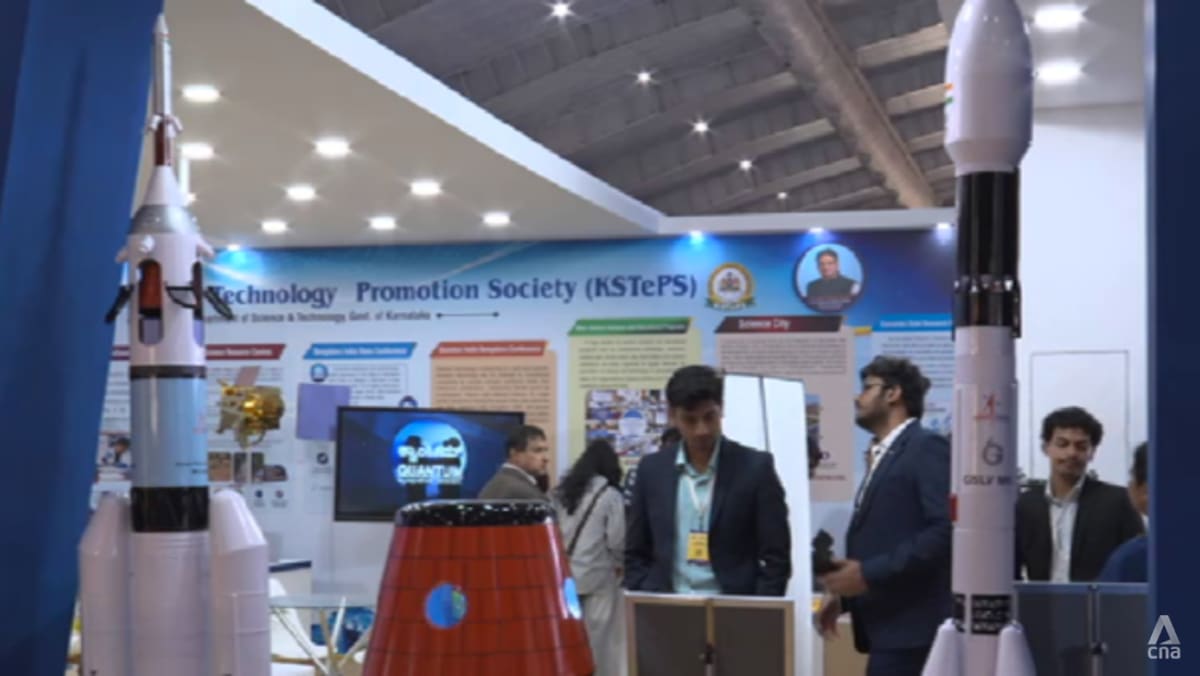
India Eyes Space-Based Drug Research After Tech Summit
India is using its dual status as a global pharmaceutical hub and a low-cost space technology leader to pioneer microgravity-based drug development.
Following discussions at the Bengaluru Tech Summit that concluded on Thursday industry leaders and scientists are mapping a transition from terrestrial manufacturing to orbital biotechnology research.
Integrating Biomanufacturing and Orbital Infrastructure
The core objective involves utilizing microgravity to refine the molecular structures of medicines. On Earth, gravity frequently interferes with the formation of protein crystals; in the weightless conditions of orbit, these structures can develop with greater uniformity.
This potential for enhanced drug formulations has drawn the attention of major industry players like Biocon. “Structures of molecules can be modified using space tech. That could basically also create new intellectual property, new molecules, new functionality,” said Biocon executive chairperson Kiran Mazumdar-Shaw, as reported by Khanlist.
India’s roadmap includes utilizing the upcoming Bharatiya Antariksh Station, which is projected to be fully operational by 2035. While the station represents a long-term goal, the scientific community is already exploring intermediate solutions. Former Indian Space Research Organisation (ISRO) chairman A S Kiran Kumar said that researchers are currently evaluating ground-based parabolic flights to conduct short-term microgravity experiments before orbital access becomes routine, according to Khanlist and CNA.

Commercial Opportunities for Aerospace Startups
Private enterprise is already positioning itself to bridge the gap between initial research and full-scale orbital production. Chennai-based Inbound Aerospace is developing capabilities to transport scientific payloads into low-Earth orbit for durations of up to two months before executing a safe return to Earth. Abhijit Bhutey, co-founder of Inbound Aerospace, confirmed that the firm has secured partnerships with Australian and Japanese entities specifically for payload development.
The interest is reciprocal, with international infrastructure developers seeking to tap into India’s established biomanufacturing scale. George Weinmann, founder and CEO of the United States-based firm HabSpace, indicated that markets like India offer critical insights into the infrastructure requirements necessary for successful commercial space stations, per CNA.
Financial and Regulatory Barriers to Entry
Despite the strategic momentum, the sector remains in its infancy, facing significant fiscal and logistical hurdles. The high costs associated with transporting research payloads, coupled with complex regulatory frameworks and the lengthy timelines required to develop orbital infrastructure, present substantial risks to current investment models.
As highlighted by CNA, the commercialization of medicines produced in orbit is likely years away, necessitating careful capital allocation for firms entering the space-based research market.
Companies looking to capitalize on this frontier must manage significant R&D expenditures while navigating emerging space policy.
The global race to develop commercial orbital laboratories is intensifying as the International Space Station nears its scheduled retirement around 2030. India’s focus on the Bharatiya Antariksh Station aligns with this international shift toward private and national commercial orbital labs. As private sector interest grows, companies will need to determine whether to invest in internal orbital infrastructure or contract with third-party logistics providers to manage their research payloads.
Kiran Mazumdar-Shaw, born in 1953, established Biocon India in 1978 with seed capital of Rs. 10,000. Operating initially from a rented garage, she overcame early industry skepticism regarding her business model and gender to build the enterprise. Within one year of inception, Biocon became the first Indian company to manufacture and export enzymes to the United States and Europe.
Her background includes training as a master brewer, a field she pursued after graduating from Bangalore University in 1973. Her contributions to science and business have been recognized globally, including receiving the Othmer Gold Medal in 2014 and being named EY World Entrepreneur Of The Year in 2020.
The trajectory of space-based drug development will depend on the successful integration of ground-based testing with the upcoming station’s capabilities. With the Bengaluru Tech Summit having established a formal dialogue between policymakers and space-tech entrepreneurs, the next phase will involve moving from theoretical framework to active pilot programs. The sector is currently aiming to secure a foothold in the next frontier of biotechnology, as noted by CNA.