
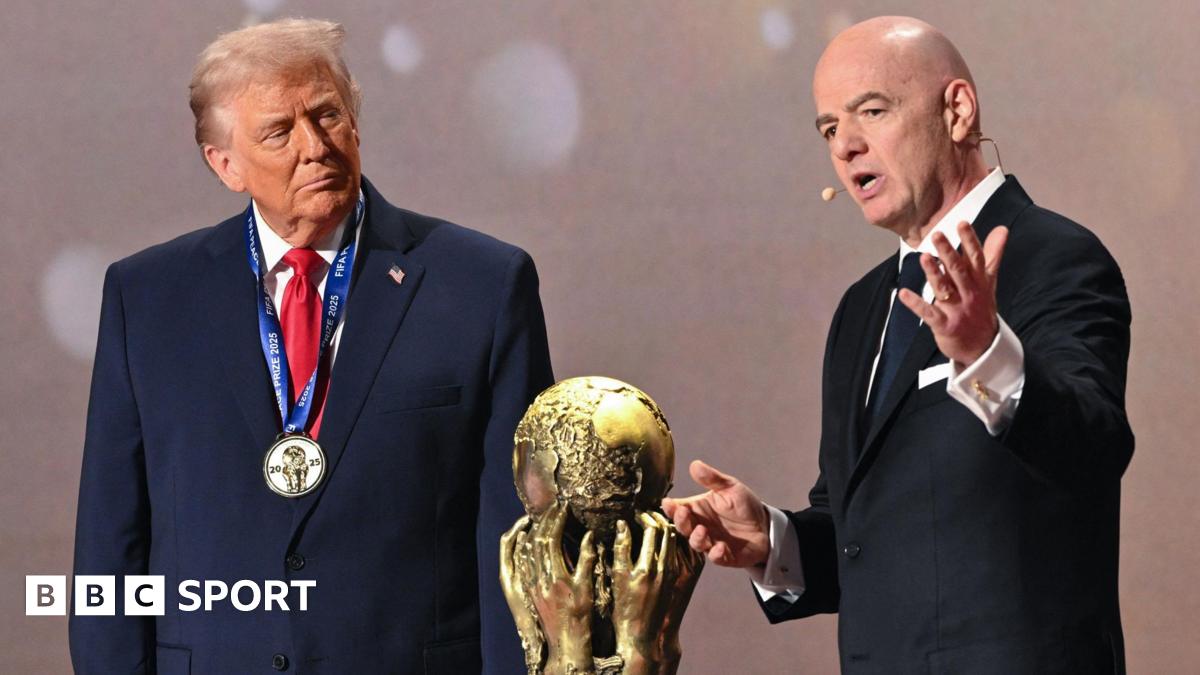
The Looming geopolitical Stress Test for Global Sports
As the 2026 FIFA World Cup—the largest in history—approaches, a complex web of geopolitical tensions is threatening to overshadow the spirit of the game. From potential US foreign policy decisions to domestic unrest and restrictive immigration policies, sporting bodies like FIFA and the International Olympic committee (IOC) face an unprecedented series of challenges that could force them to confront difficult political realities. The question is no longer if politics will impact sports, but how these organizations will navigate a landscape increasingly fraught with conflict and division.
The Erosion of Neutrality: A Test of Sporting Principles
For decades, the IOC and FIFA have positioned themselves as apolitical organizations, dedicated to fostering peace and understanding thru athletic competition. However, the invasion of Ukraine and the subsequent bans on Russian athletes demonstrated that upholding these principles becomes exceedingly difficult when confronted with blatant violations of international law. As veteran advisor to major event host cities John Zerafa notes,“Fifa and the IOC could be heading towards one almighty headache.”
Both organizations’ charters emphasize peace, respect for sovereignty, and non-discrimination. But what happens when a powerful member nation, like the United States, takes actions that challenge these very principles? The hypothetical, yet increasingly plausible, scenario of the US using force against Greenland – a territory of NATO ally Denmark – poses a stark question: Would the same standards applied to Russia be applied to the US? Would Denmark, if qualifying for the World Cup, be pressured to boycott the tournament? would European and NATO leaders decline invitations to US-hosted events?
This isn’t merely about geopolitics; it’s a essential stress test. These institutions, built on a foundation of neutrality, are continually compelled to take political stances when international law clashes with global competition. The potential for accusations of double standards, and the erosion of public trust, are significant.
Trump’s Policies and the 2026 World Cup: A Collision Course?
The potential impact extends beyond hypothetical military interventions.Former President Trump’s hardline immigration policies represent a more immediate threat to the inclusive spirit of the World Cup. Scheduled to begin on June 11th, the tournament aims to be a “welcoming and unifying” event. However, travel bans, either fully in place or partially enforced, currently affect citizens of Iran, Haiti, Senegal, and Ivory Coast – four nations competing in the 2026 World Cup. The White House’s justification of these bans on grounds of “managing security threats” raises concerns about accessibility and equitable participation for fans and players alike.
Domestic Tensions Add Fuel to the Fire
The situation is further complex by increasing domestic unrest within the United States. The recent shooting death of Renee Good, 37, by an immigration agent in Minneapolis, and the subsequent protests, underscore the deep divisions within American society.This incident, coupled with broader concerns about escalating attacks on immigrants and restrictions on press freedoms, has led human rights organizations to warn of the World Cup being “weaponized for authoritarian aims” as highlighted by Human Rights Watch.
The Precedent of Russia and the challenge of Consistency
The response to Russia’s invasion of Ukraine set a precedent for the politicization of sports. Following the invasion, both FIFA and the IOC imposed a range of sanctions, including bans on Russian teams and athletes from international competitions.While widely viewed as a necessary response to aggression, this action also raises questions about consistency. Will similar measures be applied to other nations accused of violating international norms? The risk of being perceived as selectively applying principles based on political alignment is a significant concern. The ability to navigate this delicate balance will be crucial for maintaining the credibility of both organizations.
Looking Ahead: Collaboration, Security, and the Future of Neutrality
as the 2026 World Cup draws nearer, the interplay between geopolitics and sports will only intensify. The impact of US actions abroad on ticket sales, security cooperation between co-host nations (the US, Canada, and Mexico), and the overall atmosphere of the tournament remains to be seen. Whether FIFA and the IOC will be compelled to proactively address these challenges, or react to them as they unfold, will define their role in a world increasingly shaped by political conflict. The coming months will be a critical test of their ability to uphold their stated principles while navigating an undeniably complex and volatile geopolitical landscape.
Published: 2026/01/17 01:04:24
