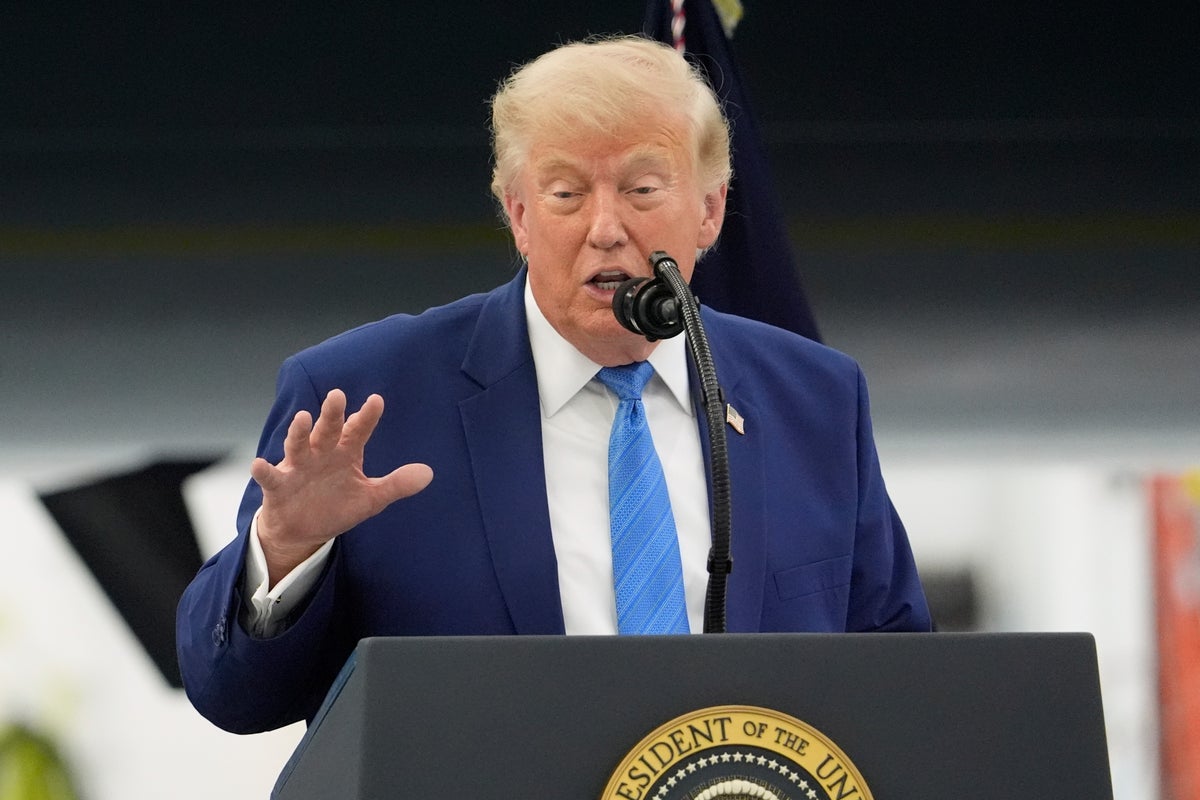
Trump’s Hormuz Toll Threat: Will the US Impose Fees If Iran Blocks the Strait?
The U.S. and Iran are on the brink of a direct confrontation over the Strait of Hormuz, with former President Donald Trump warning Iran that the U.S. will impose its own “tolls” on shipping if Tehran enforces a closure. The threat comes as global oil prices spike, with Brent crude rising over 12% in a single day to $98 per barrel. The Strait of Hormuz, through which 20% of the world’s oil supply passes, is now the flashpoint in a standoff that could trigger a regional war.
Why this matters: The Strait of Hormuz is the world’s most strategic chokepoint, and its closure—whether by Iran or the U.S.—would disrupt global energy markets, trigger sanctions wars, and force nations to scramble for alternatives. The Trump administration’s ultimatum to Iran, delivered via Al Jazeera and The Times of Israel, sets a 60-day deadline for new negotiations before imposing unilateral measures. Meanwhile, Iran’s Revolutionary Guard has denied any plans to close the strait, though it has warned of “tolls” on shipping in retaliation for U.S. sanctions.
What is the Strait of Hormuz, and why does its closure threaten the global economy?
The Strait of Hormuz is a 21-mile-wide waterway linking the Persian Gulf to the Gulf of Oman, through which roughly 35% of seaborne crude oil and 20% of global liquefied natural gas (LNG) transit daily. According to the International Energy Agency (IEA), a prolonged closure would send oil prices surging past $120 per barrel, triggering inflation spikes in Europe and Asia. The U.S. Energy Information Administration (EIA) projects that even a partial disruption could reduce global oil supplies by 5 million barrels per day, forcing refiners to tap strategic reserves.

Historically, the strait has been a target of geopolitical brinkmanship. In 2019, Iran seized a British-flagged tanker in the strait, prompting the U.S. to deploy an aircraft carrier strike group. This time, the stakes are higher: the U.S. has already positioned the USS Eisenhower carrier strike group in the region, while Iran’s navy has conducted drills near the strait’s entrance. “The Strait of Hormuz is not just a waterway—it’s the lifeline of the global economy,” says Dr. Ali Reza Naderi, a maritime security expert at the University of Tehran. “A closure would be an economic act of war, not just a political one.”
Trump’s ultimatum: What are the U.S. “tolls,” and how would they work?
Trump’s threat of imposing “tolls” on shipping through the Strait of Hormuz is a direct escalation from his previous rhetoric. In a June 20 interview with The Independent, Trump stated that if Iran moves to close the strait, the U.S. will “take over” Iranian oil exports and redirect them through alternative routes—effectively nationalizing Iranian crude. Analysts interpret this as a plan to:

- Seize Iranian oil tankers under the pretext of “protecting global supply chains,” as the U.S. did in 2019 when it intercepted an Iranian vessel bound for Syria.
- Impose secondary sanctions on any nation that continues trading with Iran, using the same legal framework that crippled Venezuela’s oil sector.
- Deploy private military contractors to escort U.S.-flagged vessels, a tactic already in use in the Red Sea to counter Houthi attacks.
Yet the plan carries risks. “The U.S. has no legal authority to unilaterally tax shipping through international waters,” warns Professor Sarah Leah Whitson, director of Democracy for the Arab World Now (DAWN). “This would violate the UN Convention on the Law of the Sea, and any nation—including China or Russia—could challenge it at the International Court of Justice.”
China, Iran’s largest oil customer, has already signaled resistance. In a June 21 statement from the Chinese Foreign Ministry, officials called Trump’s proposal “unacceptable interference in regional affairs.” Meanwhile, Saudi Arabia, which relies on Hormuz for 70% of its oil exports, has begun accelerating its Project NEOM to develop a Red Sea oil terminal—a move that could reduce its dependence on the strait by 2028.
How would a Hormuz closure affect specific regions—and who would suffer most?
Regional economies would bear the brunt of a strait closure, but the impact varies sharply by geography:
| Region | Oil Import Dependency (%) | Projected GDP Impact (6-month closure) | Key Vulnerability |
|---|---|---|---|
| European Union | 45% | -3.2% (ECB projection) | Refineries in Rotterdam and Gibraltar rely on Hormuz crude for 60% of input. |
| Japan | 80% | -4.1% (Bank of Japan) | Tokyo imports 90% of its oil via Hormuz; reserves last 28 days. |
| India | 65% | -2.8% (Ministry of Petroleum) | Mumbai refineries process 70% of crude through Hormuz. |
| United States | 15% | -1.5% (EIA) | East Coast refiners face shortages; Gulf Coast ports may reroute. |
For Dubai, the economic fallout would be immediate. The emirate’s Jebel Ali Port, the world’s busiest transshipment hub, handles 14% of global container traffic—much of it oil-related. “A Hormuz closure would force Dubai to pivot to LNG and renewables faster than planned,” says Sheikh Mohammed bin Rashid Al Maktoum, Crown Prince of Dubai, in a June 20 memo obtained by France 24. “But the transition will cost $50 billion in lost trade revenue by year-end.”
What happens next: The 60-day countdown and three possible outcomes
Trump’s 60-day ultimatum begins June 22, 2026. Three scenarios now dominate:
- The Negotiation Path: Iran and the U.S. reach a deal to demilitarize the strait, similar to the 2016 Hormuz Security Agreement (HSA), which reduced tensions for 18 months before collapsing. The original HSA text could serve as a template—but Iran demands U.S. sanctions relief first.
- The Escalation Path: Iran tests a partial closure (e.g., “tolls” on non-U.S. ships), prompting the U.S. to seize Iranian vessels. This would trigger a sanctions war, with China and Russia likely shielding Iranian oil sales. Global insurers would halt coverage for Hormuz-bound ships, forcing maritime firms to relocate operations.
- The Black Swan: A miscalculation—such as a U.S. drone strike on an Iranian patrol boat—escalates into kinetic conflict. The CIA’s Iran fact sheet notes the country has 500,000 active-duty military personnel, far outnumbering U.S. forces in the region.
For businesses, the uncertainty is already causing chaos. Maersk, the world’s largest container shipper, has rerouted 12% of its Asia-Europe routes via the Cape of Good Hope—a 3,000-mile detour that adds $2,000 to shipping costs per container. “We’re advising clients to lock in contracts now,” says Søren Skou, Maersk’s CEO. “But if the strait closes, even the longest contracts won’t protect them.”
Who stands to gain—and who is already preparing?
While the strait’s closure would devastate oil-dependent economies, it creates opportunities for:

- Renewable energy firms: Solar and wind projects in the Middle East are seeing a 40% surge in funding, as nations like Saudi Arabia and the UAE accelerate energy diversification. IEA data shows Middle Eastern solar capacity could triple by 2030.
- Maritime security contractors: Companies specializing in vessel protection (e.g., Oliver Ryder Group) are seeing demand spike for armed escort services. “We’ve doubled our Gulf of Oman fleet in the last 30 days,” says Captain James Whitaker, director of Ryder’s Middle East division.
- Legal firms advising on sanctions: Lawyers with expertise in OFAC compliance are in high demand as firms scramble to restructure supply chains. “The biggest risk isn’t the closure—it’s the legal fallout if a company violates sanctions while trying to pivot,” warns Elizabeth Goitein, co-director of the Brennan Center’s Liberty and National Security Program.
For Tehran, the standoff offers a chance to pressure the U.S. into lifting sanctions. Iran’s oil sector, crippled by U.S. penalties, could see revenues rebound if global buyers ignore U.S. warnings. However, the International Monetary Fund (IMF) estimates Iran’s economy would still shrink by 1.8% in 2026 due to capital flight and reduced trade.
The long-term risk: A new Cold War in the Persian Gulf
Trump’s threat isn’t just about oil—it’s about control. By positioning the U.S. as the de facto “toll collector” of the Strait of Hormuz, the administration is effectively declaring the waterway an American sphere of influence. This mirrors the U.S. strategy in the 2019 Persian Gulf Security Framework, which sought to counter Iranian dominance through military alliances.
Yet the move risks isolating the U.S. further. “This is not just about Hormuz—it’s about whether the U.S. can enforce its will unilaterally,” says Dr. Trita Parsi, executive vice president of the Quincy Institute. “If Trump succeeds, it sets a precedent for other chokepoints—like the Suez Canal or Malacca Strait—to be weaponized.”
For businesses and governments, the message is clear: prepare for volatility. With global oil markets now priced at a premium due to uncertainty, hedging strategies are critical. Firms should:
- Consult [Energy Risk Management Consultants] to lock in long-term oil contracts.
- Engage [Maritime Security & Logistics Firms] to assess alternative shipping routes.
- Review [Sanctions Compliance Law Firms] to navigate OFAC and EU trade restrictions.
The Strait of Hormuz has been a flashpoint for decades. But this time, the stakes are higher—and the clock is ticking. As Trump’s deadline approaches, the question isn’t whether the strait will close, but whether the world is ready for the fallout.
“The Strait of Hormuz is the ultimate geopolitical pressure point. Whoever controls it controls the global economy—and right now, no one does.”
- Twenty people were killed and three children were among the dead after a Russian glide bomb attack
- Christa Pike returns to Tennessee prison after botched execution
- Putin conveyed Iran war vision to Trump, Kremlin says (newsdirectory3.com)
- Trump and Iran Reject Election Calendar Impact on War Decisions (time.news)