
“`html
Trump’s Military Parade Marked by Protests and Division
Table of Contents
president Donald Trump‘s military parade in downtown Washington D.C. on Saturday, intended to celebrate the U.S. Army’s 250th anniversary, was overshadowed by widespread protests and a shooting, reflecting deep divisions across the nation. Demonstrations against President Trump’s policies took place in cities nationwide,from New York to Los Angeles,marking the largest coordinated opposition since his return to power in January.
A day of Discord and Presentation
The day was further marred by violence when a gunman assassinated a Democratic lawmaker and wounded another in Minnesota; the suspect remains at large. This occurred against a backdrop of escalating tensions in Los Angeles, where protests against federal immigration raids prompted President Trump to deploy National Guard troops and U.S.Marines, despite objections from California governor Gavin Newsom.
Did You No? The U.S. Army was officially established on June 14, 1775, by the Continental Congress.
The Military Parade: A Display of Force
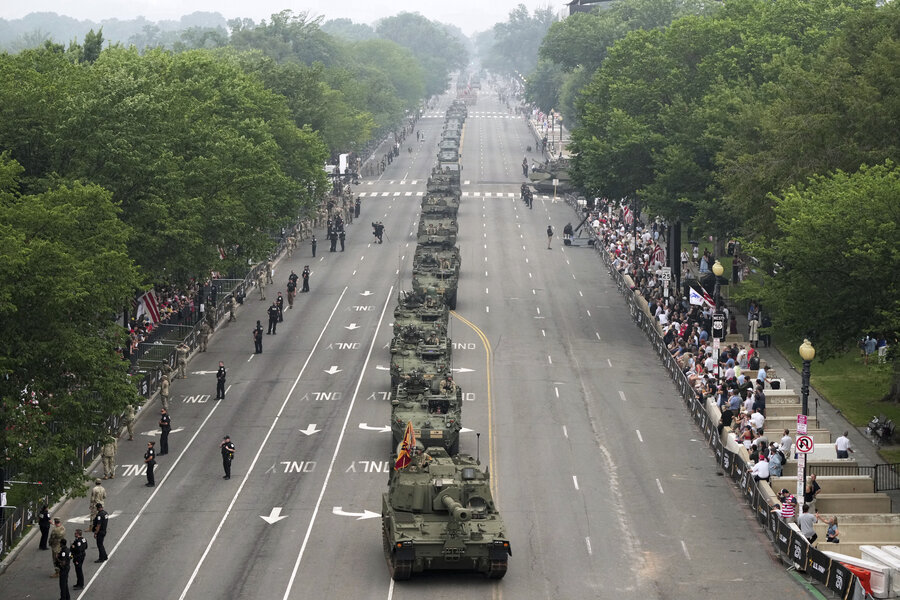
Despite the surrounding turmoil, the military parade commenced, showcasing tanks, armored personnel carriers, and artillery rolling down Constitution Avenue. The parade,coinciding with President Trump’s 79th birthday,featured nearly 7,000 troops and 150 vehicles,including M1 abrams tanks and Paladin self-propelled artillery vehicles. President Trump, observing from a bulletproof viewing stand, told the crowd, “Every other country celebrates their victories; it’s about time America did too.”
While thousands of spectators lined the parade route, many opponents of the president also found space to voice their dissent. Demonstrators were kept separate from the parade by local police.
Protests Erupt Across the Nation
Simultaneous to the parade, thousands participated in protests against President Trump’s policies in various cities. In Los angeles, law enforcement used flash-bang grenades and tear gas to manage protesters near the federal building. Anti-Trump groups organized nearly 2,000 demonstrations nationwide under the banner “No Kings,” asserting that no individual is above the law.
In New York City, demonstrators gathered in Midtown Manhattan, with some carrying signs such as “No crown for a clown.” Actor Mark Ruffalo joined the protest, wearing a hat that read “immigrant.” Cooper Smith, a 20-year-old from upstate New york, stated, “We’re seeing dehumanizing language towards LGBT people, towards people with autism, towards people with other disabilities, racial minorities, undocumented people. Somebody’s got to show that most Americans are against this.”
chicago saw protesters confronting police, waving upside-down American flags and chanting slogans like “Who do you protect? Who do you serve?” and “No justice, no peace.” Members of the far-right Proud Boys also appeared at an Atlanta “No Kings” protest.
Approximately 400 protesters, organized by RefuseFascism.org, marched in Washington, D.C., gathering near the White House. President Trump had previously warned against protesting at the parade, stating that demonstrators would “be met with very big force.” sunsara Taylor, a founder of RefuseFascism, told the crowd, “Today we refuse to accept Donald Trump unleashing the military against the people of this country and in the streets of this country.”
Cost and controversy
The military parade was estimated to cost the U.S.army between $25 million and $45 million, including the cost of moving equipment, housing, and feeding the troops. Critics have described the parade as an authoritarian display of power and a wasteful expense, particularly given President Trump’s stated desire to cut federal spending. However, supporters like Bryan Henrie, who traveled from Texas, defended the parade, stating, “I don’t see a controversy. I will celebrate safety and stability any day over anarchy.”
Pro Tip: Stay informed about government spending and its impact on various sectors by consulting resources like the Congressional Budget Office.
key Events of the Day
| Event | Location | Description |
|---|---|---|
| Military Parade | Washington, D.C. | Festivity of the U.S. Army’s 250th anniversary, featuring military vehicles and troops. |
| Nationwide Protests | Various cities | Demonstrations against President Trump’s policies, organized under the theme “No Kings.” |
| Shooting | Minnesota | A gunman assassinated a Democratic lawmaker and wounded another. |
| Los Angeles Protests | Los Angeles, CA | Protests against federal immigration raids, met with police intervention. |
The events surrounding the military parade underscore the deep political and social divisions within the United States. The combination of celebration,protest,and violence paints a complex picture of contemporary America.
What are your thoughts on the role of military parades in a democratic society? How can the nation bridge its deep divisions?
Evergreen Insights: The History of Military Parades
Military parades have a long history, dating back to ancient civilizations. They have been used to celebrate victories, display military strength, and foster national pride. In the United States, military parades have been held sporadically throughout history, frequently enough coinciding with meaningful events such as the end of wars or national anniversaries. The 1991 parade celebrating the ousting of Iraqi forces from Kuwait is a notable example. The appropriateness and value of such displays remain a subject of ongoing debate, particularly in a society that values both military strength and democratic principles.
Frequently Asked Questions About Military Parades
- Why did President Trump want a military parade?
- President Trump expressed interest in a military parade to celebrate the U.S.Army and showcase American military strength.
- How much did the military parade cost?
- The parade was estimated to cost between $25 million and $45 million.
- What were the main criticisms of the military parade?
- Critics argued that the parade was an authoritarian display of power and a wasteful expense.
- What were the main themes of the protests against President Trump?
- The protests focused on opposing President Trump’s policies and asserting that no individual is above the law, under the theme “No Kings.”
- Where did the largest protests take place?
- Significant protests occurred in Washington, D.C., Los Angeles, New York City, and Chicago.
- What is RefuseFascism.org?
- RefuseFascism.org is an organization that organized protests against President trump, including a march in Washington, D.C.
- What is the significance of the U.S. Army’s 250th anniversary?
- The anniversary marks 250 years as the establishment of the U.S. Army by the continental Congress on June 14, 1775.
Share your thoughts in the comments below and subscribe to World Today News for more in-depth coverage of national events.