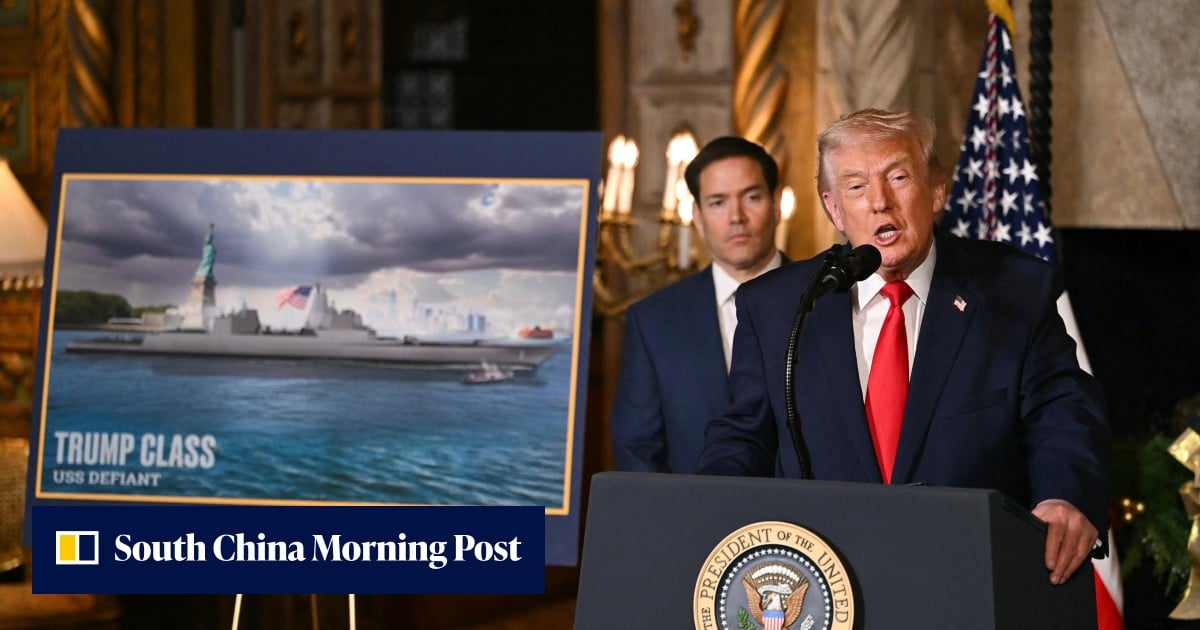
Trump seeks US$1.5 trillion for defence in new budget request amid Iran war
President Donald Trump is requesting US$1.5 trillion for defense spending in his fiscal year 2027 budget proposal. This historic request, released Friday, marks a 44 per cent increase intended to bolster military capabilities as the United States remains engaged in active conflict in the Middle East.
The scale of this request is not merely a budgetary adjustment; it is a fundamental pivot in national priority. By pushing for a trillion-and-a-half-dollar military spend, the administration is signaling a “war-footing” economy that prioritizes global power projection over domestic stability. This isn’t a gradual climb. It is a vertical leap.
The blueprint, issued by The White House, transforms a social media post from January into a formal legislative demand. The proposal seeks to aggressively expand the military’s reach, ensuring that the U.S. Maintains an overwhelming advantage in the Middle East, specifically amid the ongoing tensions and conflict involving Iran.
The Hard Numbers: A Budgetary Shift
To understand the magnitude of this request, one must look at the percentage jump. A 44 per cent increase in a budget already totaling hundreds of billions is an unprecedented expansion of the federal military apparatus. This request is being presented to the U.S. Congress as a necessary evolution of national security.
| Budget Metric | Proposed FY 2027 Detail |
|---|---|
| Total Defense Request | US$1.5 Trillion |
| Budget Increase | 44% over previous levels |
| Primary Driver | Middle East Conflict / Iran War |
| Trade-off | Cuts to domestic programs |
This is a zero-sum game.
The funding for this military expansion does not appear out of thin air. As highlighted by BBC and NPR, this massive defense surge is paired with significant cuts to domestic spending. The administration is effectively stripping funds from internal programs to fuel external military operations.
Domestic Erosion and the Social Cost
When the federal government slashes domestic spending to fund a $1.5 trillion military budget, the impact is felt most acutely at the local level. Federal grants for infrastructure, healthcare and education are often the first to be pruned. For municipal leaders and local governments, this creates a sudden, gaping hole in their operating budgets.
Cities that rely on federal subsidies for public works or social safety nets now face a precarious future. The “domestic program cuts” mentioned in the budget blueprint aren’t just line items; they represent cancelled road projects, reduced clinic hours, and diminished support for vulnerable populations.
Navigating these sudden funding losses is a logistical nightmare for city councils and local administrators. Many are now seeking the expertise of government relations consultants to lobby for remaining funds or pivot toward private-sector partnerships to maintain essential services running.
The volatility is palpable.
The Geopolitical Engine: The Iran Conflict
The driving force behind this spending is the conflict in the Middle East. The administration’s focus on military investment is a direct response to the volatility surrounding Iran. By securing $1.5 trillion, the Department of Defense aims to ensure that the U.S. Can sustain a high-intensity engagement without depleting its strategic reserves.
This is a historic request because it acknowledges a shift in the nature of modern warfare—where the cost of high-tech deterrence and active combat operations in a contested region like the Middle East has skyrocketed. The administration is betting that an overwhelming financial commitment will either force a diplomatic resolution or ensure a decisive military victory.
Midterm Friction and Political Deadlock
However, the path to $1.5 trillion is not clear. The White House is attempting to sell this war-funding pitch just as midterm politics initiate to dominate the conversation. In a polarized Congress, the trade-off—more for the military, less for the people—is a volatile political cocktail.
Critics argue that the domestic cuts will alienate voters in key swing districts, while proponents argue that national security is the only priority that matters during a time of war. The resulting deadlock could lead to a series of continuing resolutions, leaving the military and domestic agencies in a state of financial limbo.
For businesses and contractors within the defense industry, this uncertainty is a risk factor. Companies are increasingly hiring government contract lawyers to ensure their agreements are structured to withstand potential budget fluctuations or congressional delays.
Managing the Fallout
As the U.S. Pivots toward this military-heavy fiscal model, the “information gap” for the average citizen is wide. Most people do not see how a budget request in Washington D.C. Affects their local community until the funding for a neighborhood project simply vanishes.
This shift creates a critical demand for advocacy. Community leaders and local non-profits are turning to community advocacy groups to organize and push back against the erosion of domestic services. The battle over the FY 2027 budget is not just taking place in the halls of Congress; it is playing out in every town that loses a federal grant to fund a drone fleet in the Middle East.
The economic ripple effects are equally significant. As capital flows toward the defense sector, other industries may see a contraction in federal support. Savvy investors and business owners are engaging strategic financial advisors to hedge against the volatility of a government that is aggressively shifting its spending priorities.
The 2027 budget is more than a financial document; it is a manifesto. It tells us exactly where the United States believes its future lies: in the projection of power abroad, regardless of the cost at home. Whether this gamble secures a lasting peace or hollows out the American interior remains the defining question of this administration. As the political storm gathers over the midterms, the only certainty is that the cost of this ambition will be paid by someone, somewhere, in the domestic budget.
Finding verified professionals to navigate the legal and financial fallout of these federal shifts is no longer optional—it is a necessity for survival in an era of extreme budgetary volatility. The World Today News Directory remains the primary resource for connecting affected citizens and businesses with the expertise required to weather this transition.
- Aaron Boone faces uncertainty after another New York Yankees postseason exit
- Eurostat: Latvian residents made more than 5 million trips last year
- Donald Trump rules out military strikes against Iran before midterm elections (newsy-today.com)
- Why Oil Traders Are Tuning Out Trump’s Iran Rhetoric (archyde.com)