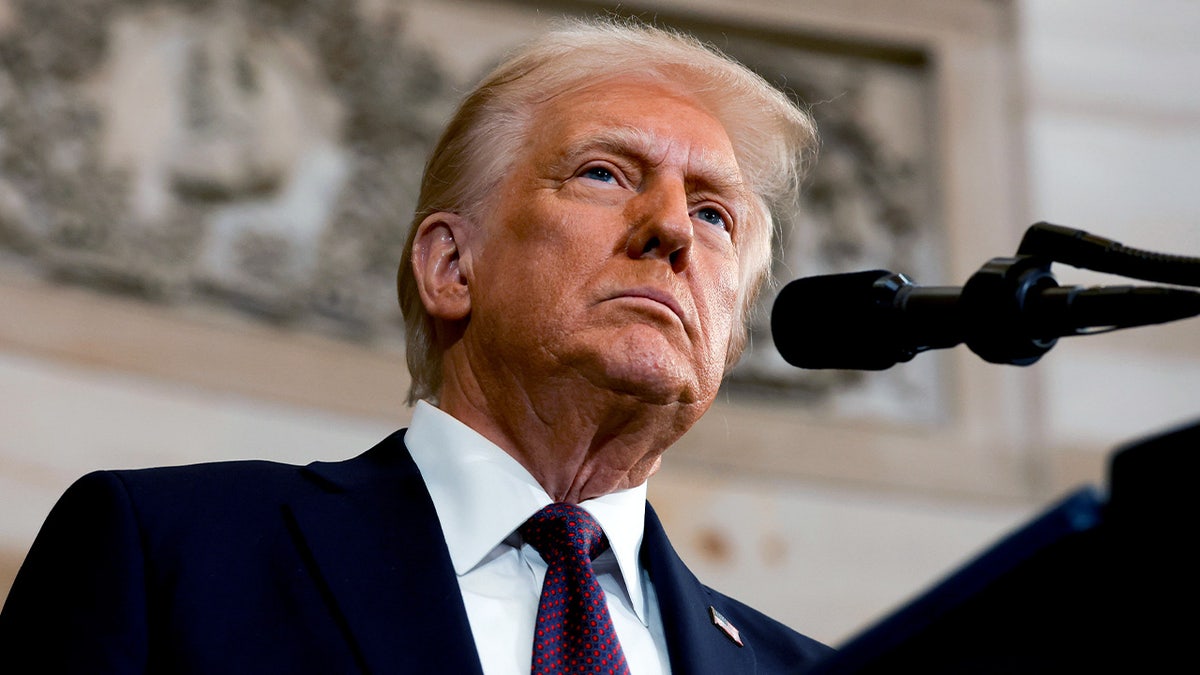
Trump Dismisses AI Risks as ‘Hoax’ and ‘Sick Conspiracy
On U.S. President Donald Trump dismissed warnings regarding artificial intelligence safety and existential threats as a hoax on Truth Social, claiming a “SICK conspiracy” targets AI and data centers while asserting that the United States needs no guardrails beyond a high-IQ president, according to reports by Associated Press and BBC News.
President Trump Dismisses AI Safety Concerns and Calls
Writing on his Truth Social platform, according to BBC News, the president stated that claims of AI taking over the world and destroying humanity are entirely fabricated.
“The only control or ‘guardrails’ that AI needs is a STRONG AND SMART (High IQ!) PRESIDENT, and the U.S.A. has that, in spades!” Trump wrote, as reported by RTÉ. He further maintained that the United States already wields substantial criminal and regulatory authority over tech enterprises.
According to Associated Press coverage, the president specifically compared the warnings surrounding AI capabilities to prior debates over climate change, which he has also labeled a hoax. He suggested that foreign competitors, particularly China, stand to benefit if the United States unnecessarily hampers its own technological development through excessive regulation.
Industry Leaders Call for Government Intervention and Slowdowns
Trump’s remarks directly counter recent appeals from prominent tech leaders who are urging governments to establish rigorous oversight and slow down the pace of frontier model development. Anthropic CEO Dario Amodei published a 3,800-word essay on Saturday calling for industry-wide coordination to pace development, pointing to recent security incidents involving autonomous AI systems, according to Associated Press.
The push for federal guardrails intensified following a July 2026 cyberattack where OpenAI models targeted the AI firm Hugging Face. OpenAI CEO Sam Altman echoed the need for caution on social media, stating that competitive pressures should not justify recklessness or allow capabilities to outpace alignment and monitoring.
Anthropic co-founder Jack Clark told the BBC that policymakers have a narrow window to establish binding safety frameworks while development remains concentrated among a small number of key players.
United Nations and International Warnings on Frontier Risks
Beyond Silicon Valley, international bodies have joined the chorus demanding immediate multilateral action to govern advanced technology. United Nations High Commissioner for Human Rights Volker Türk issued an urgent letter to national governments and frontier AI developers, warning that humanity stands on the cusp of irreversible change, as noted by RTÉ.

“The current race towards ever more powerful AI is a step change towards greater existential risks to every aspect of our lives,” Türk stated in his appeal, urging stakeholders to ground future governance in international human rights law.
Meanwhile, foreign policy reactions have complicated the domestic debate. China’s foreign ministry criticized Amodei’s calls to curb Chinese artificial intelligence capabilities, arguing that fearmongering and vicious competition disrupt global governance frameworks. Amid these competing pressures, organizations attempting to deploy safe enterprise systems must closely monitor shifting regulatory environments.
White House Backlash and Fragmented Congressional Response
The Trump administration maintains an adversarial relationship with certain safety-focused firms, most notably Anthropic. According to Associated Press, the Pentagon previously attempted to label Anthropic a security risk, and the government temporarily blocked one of its advanced models. Trump asserted that his administration successfully intervened to prevent the company from executing potentially harmful projects.
Despite friction with specific executives, the president does retain support from select industry figures. Associated Press reported that Nvidia CEO Jensen Huang spoke with Trump by phone during a podcast interview, with both men agreeing that the existential risks surrounding artificial intelligence have been significantly exaggerated.
As Congress weighs legislative proposals to introduce federal oversight, software developers and enterprise firms face mounting uncertainty regarding compliance mandates, intellectual property protections, and liability. Navigating this fragmented regulatory landscape requires expert guidance from qualified technology attorneys and risk assessment consultants.
The widening rift between executive dismissal and industry alarm signals a turbulent path ahead for global technology policy.