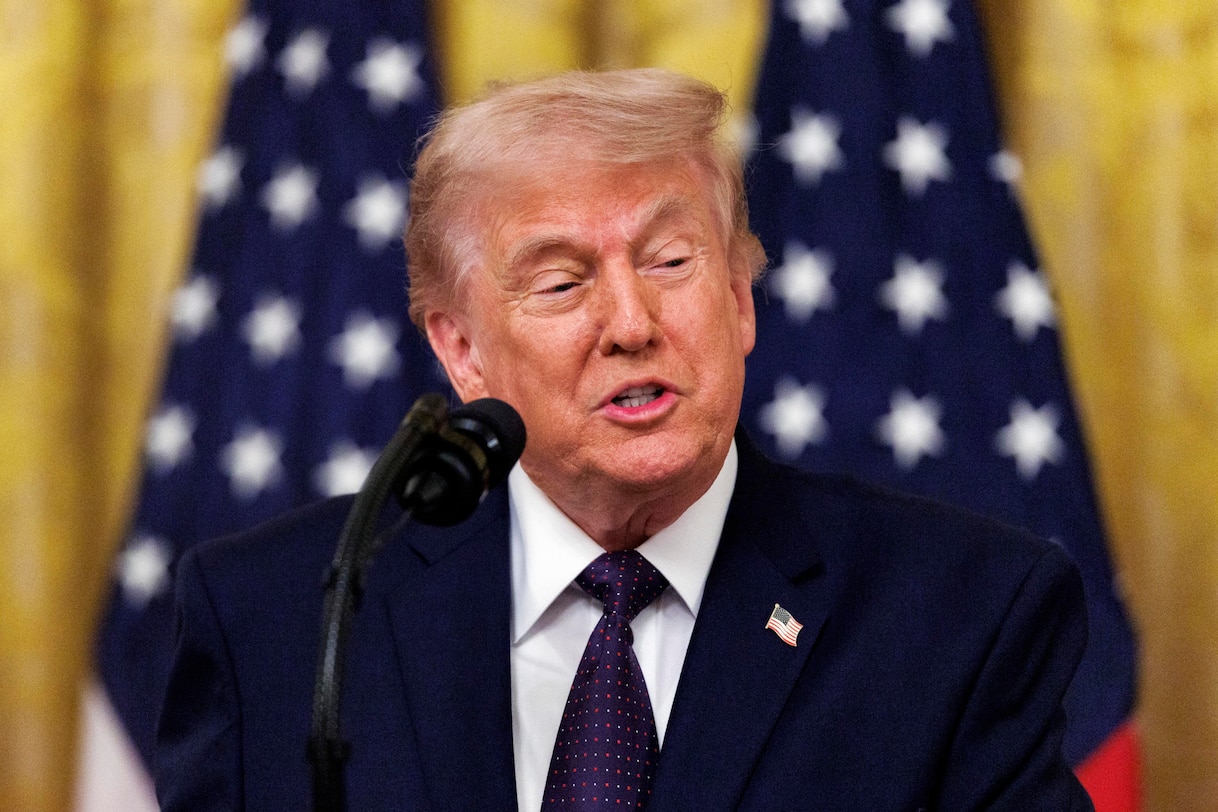
Trump Announces US-Iran Deal and Hormuz Strait Reopening
As of May 23, 2026, the White House has signaled a potential breakthrough in diplomatic channels with Tehran, as Donald Trump announces a framework to stabilize the Strait of Hormuz and curtail nuclear enrichment. This realignment threatens to rewrite the Middle East’s security architecture, forcing multinational firms to rapidly reassess their maritime logistics, energy hedging strategies, and regional political risk exposure.
The geopolitical equilibrium of the Persian Gulf is shifting with tectonic force. For years, the Strait of Hormuz has served as the world’s most volatile maritime chokepoint, through which roughly 20% of global oil consumption flows. A sudden, negotiated stabilization—while ostensibly a boon for global markets—creates a vacuum of uncertainty. When the threat of closure dissipates, the underlying alliances that maintained the status quo for the last decade are suddenly rendered obsolete.
What we have is not merely a diplomatic thaw; it is a fundamental recalibration of trade corridors. Whether this agreement holds or collapses under the weight of regional skepticism from Israel and Gulf Cooperation Council (GCC) states, the window for corporate maneuvering is narrow.
The Structural Shift in Maritime Risk
The immediate consequence of the reported Trump-Iran framework is the potential transformation of insurance premiums for tankers navigating the Strait. For years, shipping conglomerates have been forced to bake “risk-premia” into their operational costs. If the Strait is deemed “open and secured,” we expect a rapid decline in war-risk insurance rates.
However, geopolitical stability is rarely a linear progression. Multinational firms operating in the region must distinguish between a temporary ceasefire and a long-term strategic pivot. Businesses are now reaching out to maritime logistics consultants to audit their supply chains, as the cost-benefit analysis of using alternative pipelines versus traditional tanker routes undergoes a complete overhaul.
“The challenge with these high-stakes, personality-driven negotiations is the lack of institutional permanence. A sudden return to stability is a massive opportunity, but without a multilateral framework, the underlying security architecture is built on sand. Firms that treat this as a permanent ‘all-clear’ are ignoring the cyclical nature of regional hostility.” — Dr. Elena Vance, Senior Fellow at the Institute for Global Security.
The Macro-Economic Ripple Effect
The global economy is currently navigating a period of high-interest-rate sensitivity and slowing growth. Any sustained downward pressure on energy prices—resulting from a perceived de-escalation in the Gulf—will have immediate consequences for inflation targets in the G7. We are tracking a potential shift in energy market analysts’ projections, as the “Iran factor” is stripped out of the oil spot price, potentially providing a much-needed stimulus to manufacturing sectors in Europe and East Asia.
Yet, the risks are not just in the oil patch. The legal landscape surrounding sanctions remains a minefield. Even with a tentative agreement on the table, the regulatory environment is notoriously sticky. Financial institutions are currently pivoting their compliance teams to prepare for a scenario where secondary sanctions might be lifted, though they remain wary of “snap-back” provisions.
For cross-border operations, the complexity is immense. Companies are currently leveraging international trade lawyers to navigate the nuances of the proposed deal, ensuring that any move to re-enter the Iranian market does not trigger retroactive legal liabilities in the United States or the European Union.
| Factor | Pre-Agreement Status | Post-Agreement Outlook |
|---|---|---|
| Strait of Hormuz Risk | High (Active Interdiction) | Moderate (Diplomatic Oversight) |
| Global Oil Supply | Constrained/Risk-Premium | Increased Flow/Price Correction |
| Sanctions Regime | Maximum Pressure | Conditional Easing |
| Regional FDI | Stagnant | Speculative/High-Risk Entry |
The “Enigma” of Regional Alliances
The most significant variable in this equation remains the reaction of regional powers. Reports indicate that the White House is in constant communication with GCC members, yet the silence from Jerusalem speaks volumes. The geopolitical reality is that a U.S.-Iran rapprochement inherently disrupts the Abraham Accords and the broader anti-Tehran coalition that has defined regional security since 2020.

Corporate entities must look beyond the press releases. The “information gap” here is the duration of the truce. If this is a tactical pause to allow for a broader realignment, the long-term play for investors is to wait for the regulatory dust to settle. If, however, this represents a systemic shift in U.S. Foreign policy toward isolationism or transactionalism, the entire Middle East investment thesis must be rewritten.
Reliable data is the only currency that matters in this environment. As global markets react to the flickering headlines, the necessity for vetted, on-the-ground intelligence has never been higher. We are seeing a surge in demand for geopolitical risk advisors who can provide granular, sector-specific impacts rather than broad-brush headlines.
Strategic Outlook: The Path Ahead
The coming weeks will be defined by the “verification phase.” Washington will demand tangible proof of uranium enrichment levels, while Tehran will look for immediate relief on frozen assets and banking access. It is a classic high-stakes game of chicken conducted in the international arena.
- Phase 1: Initial diplomatic signaling and market volatility as traders price in the “peace dividend.”
- Phase 2: Institutional scrutiny of the fine print—specifically regarding banking and insurance sanctions.
- Phase 3: The “Realignment Period,” where multinational firms decide whether to re-engage with Iranian infrastructure projects.
The global chessboard is in motion. Whether the Strait of Hormuz remains a flashpoint or becomes a conduit for renewed economic integration depends on the durability of this fragile understanding. For the C-suite, the directive is clear: maintain operational agility, ensure your legal and risk compliance is bulletproof, and consult with the experts who understand the nuances of the region.
In a world where geopolitical shifts occur in real-time, the distance between opportunity and catastrophe is measured in the quality of your counsel. As the situation in the Gulf continues to evolve, ensure your organization is equipped to navigate the volatility by connecting with the premier partners listed in the World Today News Directory.