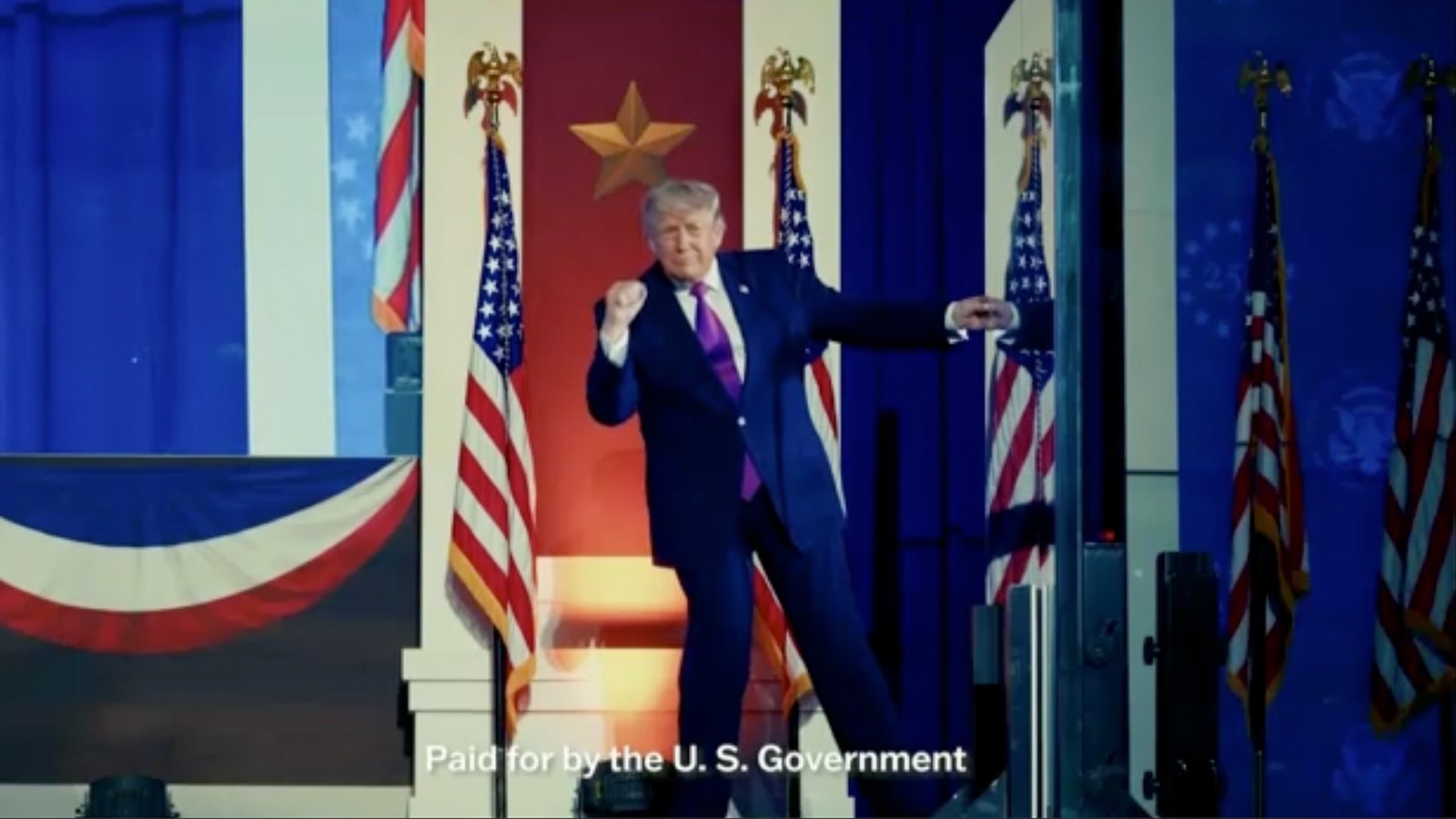
Trump Administration Used DHS Funds to Finance Pro-Trump TV Ads
The Trump administration financed a recent television ad campaign featuring President Donald Trump using funds from the Department of Homeland Security, according to sources familiar with the matter. Federal budget records and contract data show that money was shifted into a U.S. Customs and Border Protection account before being awarded to a Maryland-based advertising firm, sparking sharp pushback from congressional Democrats.
Federal Budget Moves and Agency Contracts
Federal budget records indicate that funds were moved into a U.S. Customs and Border Protection (CBP) account designated for commemorative events on September 19. The following day, federal contract data shows a $20 million contract was awarded to the LMD Agency, a Maryland-based advertising firm, for what was described as a “National Media Campaign.” Days after the contract was issued, the television ads began airing nationwide.
CBP operates as an agency within DHS tasked with securing the nation’s borders and ports of entry. According to reporting from sources familiar with the transactions, the money appears to have been drawn from Trump’s signature tax and spending bill passed in 2025. That legislation allocated $6.2 billion for various border security improvements alongside provisions for commemorating efforts and events related to border security.

Ad Placements, Spending, and Content
AdImpact, a firm that tracks and analyzes political ad spending across television, digital, and connected TV channels, estimates that the federal government has spent at least $1.7 million to air three distinct television spots featuring Trump in recent days. One such ad ran on Sunday during NBC’s “Meet the Press,” depicting Trump delivering a speech at Mount Rushmore on America’s 250th anniversary. Another spot, which aired on Fox during college football and on “Fox News Sunday,” utilized footage originally created for a 2023 Trump campaign ad.
DHS has previously utilized funds for public-facing advertising initiatives, including campaigns that spent millions on advertisements encouraging individuals in the country illegally to self-deport. However, the use of funds for spots centering on the sitting president has drawn immediate scrutiny regarding administrative spending transparency and government communications.
White House Defense and Congressional Pushback
Critics argue that the television spots could violate federal propaganda laws. In response to inquiries, DHS directed questions to the White House. Defending the campaign, a White House spokesperson stated in a message to ABC News: “These public service announcements are about reminding Americans to love their country and understand what makes it worth defending, at home, at our borders, and abroad. The ad is educational and unapologetically patriotic. We should be proud of our country.” The administration also drew comparisons to past federal public service announcements highlighting new drug coverage under Medicare and signups for Affordable Care Act exchanges.
The explanation failed to satisfy congressional lawmakers. Democrats on the Senate Appropriations Committee responded by dispatching a letter to Homeland Security Secretary Markwayne Mullin. The letter demands detailed answers regarding the breakdown of the funds, whether the advertising spots are scheduled to continue, and the exact role DHS played in facilitating their broadcast.
“The American people deserve answers about how this president is literally stealing their tax dollars to air campaign ads celebrating himself — while doing nothing to help them afford health care or housing,” the committee’s letter states.
LMD Agency did not immediately respond to requests for comment regarding the contract. The Wall Street Journal initially broke the story regarding the source of the federal funds utilized for the campaign.
Disclaimer: The views and cultural analyses presented in this article are for informational and entertainment purposes only. Information regarding legal disputes or financial data is based on available public records.