
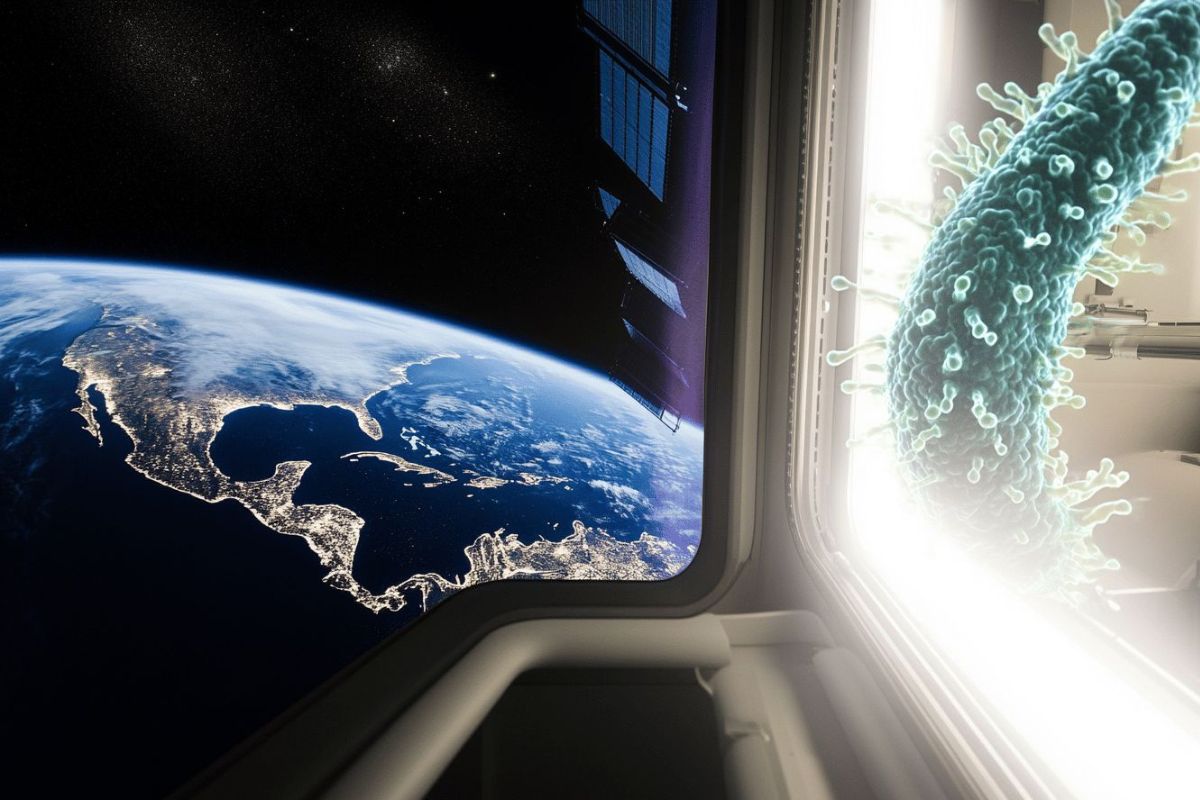
New Life Discovered in Space: A Bacterial Reminder of Microbial Risks
Table of Contents
A groundbreaking revelation aboard the Chinese space station,Tiangong,has revealed a previously unknown bacterium,Niallia tiangongensis,raising critical questions about the microbiological challenges of space travel.This finding underscores that humans are not alone on interstellar journeys and that microscopic life could significantly impact the success of future missions.
A Unique Space Bacterium
During a routine mission in May 2023, the Shenzhou-15 crew identified N. tiangongensis within a Tiangong habitation module. This bacterium, named after its birthplace, exhibits unique characteristics adapted to the harsh space environment.
Research from the china space Station Habitation area Microbiome Program (CHAMP) indicates that Tiangong’s microbiome differs significantly from that of the International space Station (ISS). while dominated by human-associated microbes, Tiangong harbors remarkable functional and genetic diversity, likely driven by adaptation to microgravity, radiation, confinement, and rigorous cleaning protocols.
N. tiangongensis is related to Niallia circulans, a resilient soil bacterium, and shares its ability to form protective spores. However,it uniquely excels at breaking down gelatin for nitrogen and carbon – a crucial skill for building biofilms and surviving the stresses of space. Interestingly, it appears to have lost the ability to utilize other energy sources, demonstrating the remarkable plasticity of life in novel environments.
Implications for Mission Safety
While the direct threat to astronaut health remains unknown, N.tiangongensis‘s relation to bacteria capable of causing serious infections in vulnerable individuals warrants caution. The potential for accumulating mutations and increasing antibiotic resistance within the station further complicates contamination management.
Understanding how these microorganisms colonize, evolve, and interact with both humans and equipment is paramount.Uncontrolled microbial growth could not only jeopardize astronaut health but also damage sensitive equipment and disrupt mission operations.
This discovery isn’t isolated. NASA research prior to the phoenix Mars mission revealed dozens of unknown bacterial species in clean rooms, capable of surviving seemingly sterile conditions. These resilient microbes possess genes specializing in DNA repair and resistance to toxins.
As we prepare for missions to the Moon, Mars, and beyond, controlling the space microbiome is becoming increasingly critical. It’s no longer simply about preventing contamination, but about predicting and managing microbial adaptation and evolution in these extreme, closed environments.
The discovery of Niallia tiangongensis marks a new chapter in space life research, reminding us that invisible microorganisms could play a pivotal role in the fate of future space exploration.
