
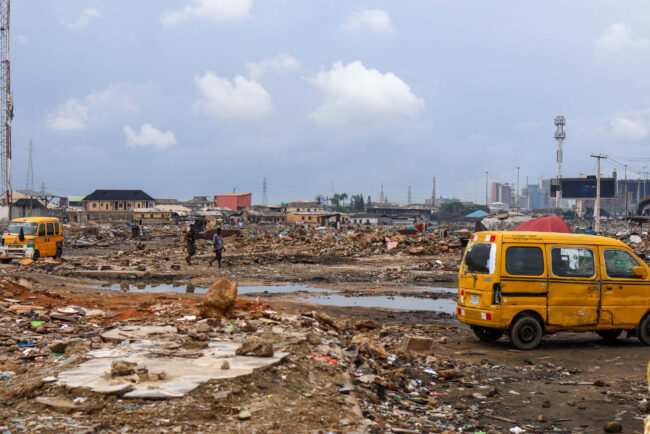
Lagos Demolitions Displace thousands, Spark International Condemnation
Lagos, Nigeria – A controversial demolition in early March has left over thirteen thousand residents of Ilaje-Otumara, an informal settlement in Lagos Mainland, displaced, igniting a firestorm of criticism from human rights organizations and the United Nations. The demolitions occurred despite a 2017 High Court ruling that protected the community from forced eviction without adequate notice and resettlement plans.
The 2017 Ruling and Its Disregard
In 2017,the high Court of Lagos State addressed a lawsuit brought by residents of Ilaje-Otumara and other informal settlements. The court determined that the residents hadn’t demonstrated legal ownership of the land, which fell under the jurisdiction of the Lagos State governor. However,crucially,the ruling stipulated that any eviction would be unconstitutional without proper notification and provisions for alternative housing. This ruling directed both parties to engage in consultations regarding relocation, and explicitly prohibited eviction until those talks concluded.
Despite this directive, demolition crews moved in, dismantling approximately 1,056 wood and concrete structures across 56 acres.Jude Ojo,a community leader and plaintiff in the original case,confirmed that eviction notices were served,but that consultations were still underway when the demolitions began.
Did You Know?
Informal settlements, also known as slums, often arise due to rapid urbanization and a lack of affordable housing options.
“Kamikaze-Style” Eviction and International Response
justice & Empowerment Initiatives, a Nigerian nonprofit representing the residents, condemned the action as a “kamikaze-style mass forced eviction in violation of subsisting court orders.” The group placed blame on state government officials, the police force, and local groups known as “area boys.” The Office of the United Nations High Commissioner for Human Rights (OHCHR) swiftly followed with a statement criticizing the demolitions of Ilaje-Otumara and another settlement, calling for nigeria to end its “ruthless campaign of home demolitions and forced evictions in waterfront settlements in Lagos.”
The OHCHR highlighted that these locations are increasingly targeted for “prime sites for luxury housing development,” raising concerns about the prioritization of economic interests over the rights of vulnerable populations. The UN statement emphasized the need for alternative housing and compensation for those who lost their homes and belongings. As outlined by the UN-Habitat guidelines, adequate housing is a fundamental human right (UN-Habitat).
Key Details of the ilaje-Otumara Demolition
| Date of Initial Ruling | Number of Residents Displaced | Number of Structures Demolished | Area Affected |
|---|---|---|---|
| 2017 | 13,500+ | 1,056 | 56 acres |
The UN defines informal settlements as urban communities lacking basic services and infrastructure, with housing ranging from squatting to informal rentals. These settlements often house the most marginalized and economically vulnerable members of society.
Pro Tip:
Understanding the legal frameworks surrounding land rights and housing is crucial for advocating for the rights of residents in informal settlements.
What role shoudl governments play in balancing urban development with the protection of vulnerable communities? And how can international bodies effectively support those displaced by forced evictions?
Context: The Rise of Informal Settlements in lagos
Lagos, one of the fastest-growing cities in Africa, faces a severe housing crisis. Rapid urbanization,coupled with limited affordable housing options,has led to the proliferation of informal settlements along its waterways and available land. These communities often lack access to basic services like clean water, sanitation, and healthcare, creating important public health and social challenges. The issue of forced evictions in Lagos is not new, and has been a recurring point of contention between the government and residents for decades. the drive for modernization and economic development often clashes with the rights of those living in these settlements, leading to cycles of displacement and marginalization.
Frequently Asked Questions About Lagos Evictions
- What is an informal settlement? An informal settlement is an urban residential area lacking formal recognition and often characterized by substandard housing and limited access to basic services.
- What were the key findings of the 2017 Lagos High Court ruling? The court ruled that while the state governor had control over the land, evictions were unconstitutional without proper notice and resettlement plans.
- Why were the Ilaje-Otumara residents displaced? the land was targeted for potential luxury housing development, leading to the demolition of their homes.
- What is the UN’s stance on forced evictions? The UN considers adequate housing a fundamental human right and condemns forced evictions without due process and adequate resettlement.
- What is the role of organizations like Justice & empowerment Initiatives? these organizations provide legal representation and advocacy for residents facing eviction and human rights violations.
This is a developing story. We will continue to provide updates as they become available.
We value your feedback! please share your thoughts in the comments below, and consider subscribing to our newsletter for more in-depth reporting on critical global issues.
