
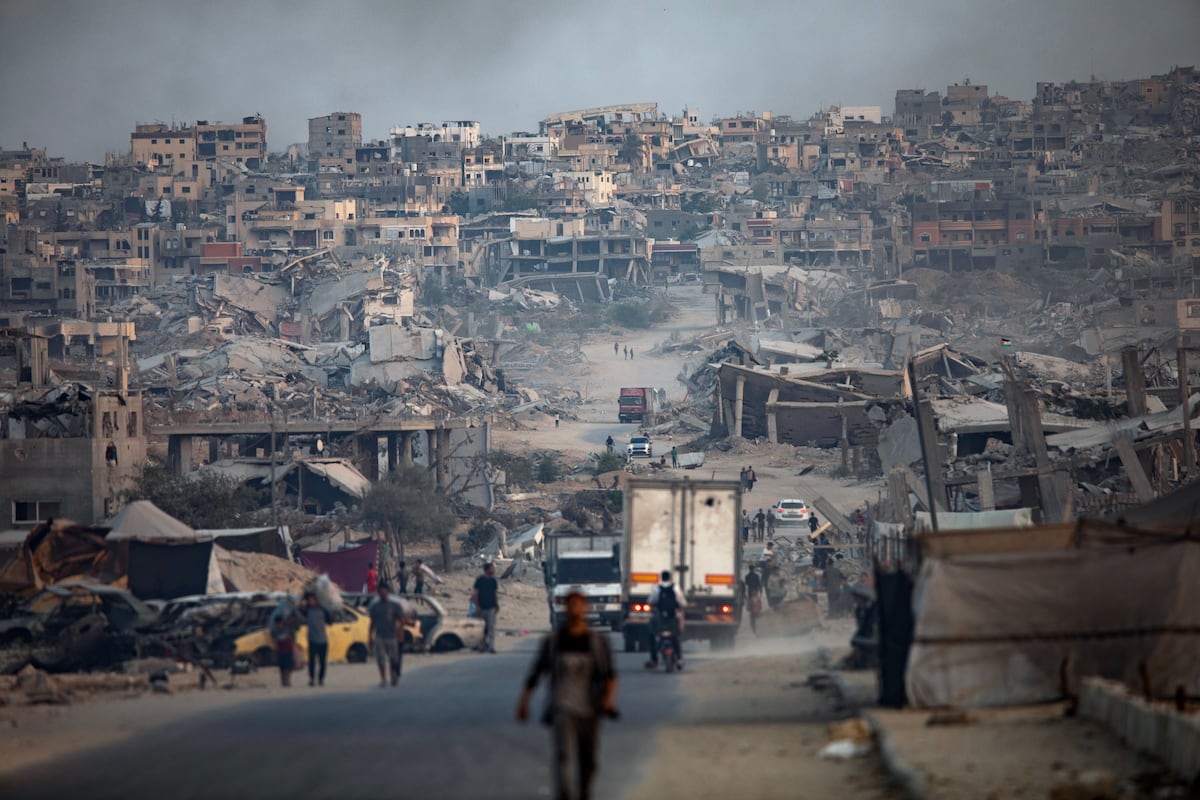
Gaza Braces for Humanitarian Crisis as Winter Rains Flood Displaced Persons Camps
Gaza – Heavy winter rains are exacerbating the dire humanitarian situation in Gaza, leaving thousands of displaced families exposed and vulnerable, as aid deliveries remain restricted despite a truce agreement. The onset of rainfall has overwhelmed makeshift shelters, turning camps into pools of contaminated water and raising fears of disease outbreaks.
Approximately 13,000 displaced families are currently living in tents that are succumbing to the elements. In Gaza City’s Sheikh Radwan neighborhood, a rainwater collection pond has become a hazardous confluence of rainfall, sewage, and garbage, posing an immediate threat to nearby residents. “This pond is today a time bomb for residents,” warned Hosni Muhanna,spokesman for the Gaza City Municipality,in a recent broadcast on France 24. “If the pond overflows, the surrounding areas could face sewage overflow.”
Residents report widespread flooding.”Most of the tents have been submerged under water or flooded,” Suleiman al Sirswai, a displaced Gaza City resident, told Al Jazeera. ”You don’t know what to do to help yourself or to help those around you.”
The crisis is compounded by ongoing humanitarian restrictions imposed by israeli authorities, hindering the delivery of essential supplies. UN spokesman Stéphane Dujarric lamented on Friday that ”thousands of families are totally exposed to the harsh conditions of winter” while “millions of products linked to shelter and urgently needed remain stranded in Jordan, Egypt or Israel, awaiting approval to enter Gaza.” Specifically, equipment needed to drain water from tents and contaminated areas is being held up.
The situation echoes the devastating winter of 2023-2024, during which the UN recorded the deaths of eight newborns from cold in December. Further deaths were reported in February, with the Patient’s Friends Charitable Hospital in Gaza City citing the deaths of six more infants within days, attributed to hypothermia and the inability of families to provide adequate warmth. Aid workers, speaking anonymously, estimate that around 20 babies or toddlers died from the cold last winter, some just one or two days old.
Meanwhile, in the West Bank, violence continues. Settlers reportedly set fire to a house and two cars in Sair, north of Hebron, injuring several people. Palestinian press agency Wafa reported that Israeli security and military forces prevented ambulances and fire trucks from reaching the scene.
October saw at least 264 attacks against Palestinians, according to OCHA, marking the worst month for such incidents as the UN began recording them in 2006, coinciding with the olive harvest.
