
Latvia Faces Public Outcry Over Withdrawal from Violence Against Women Treaty
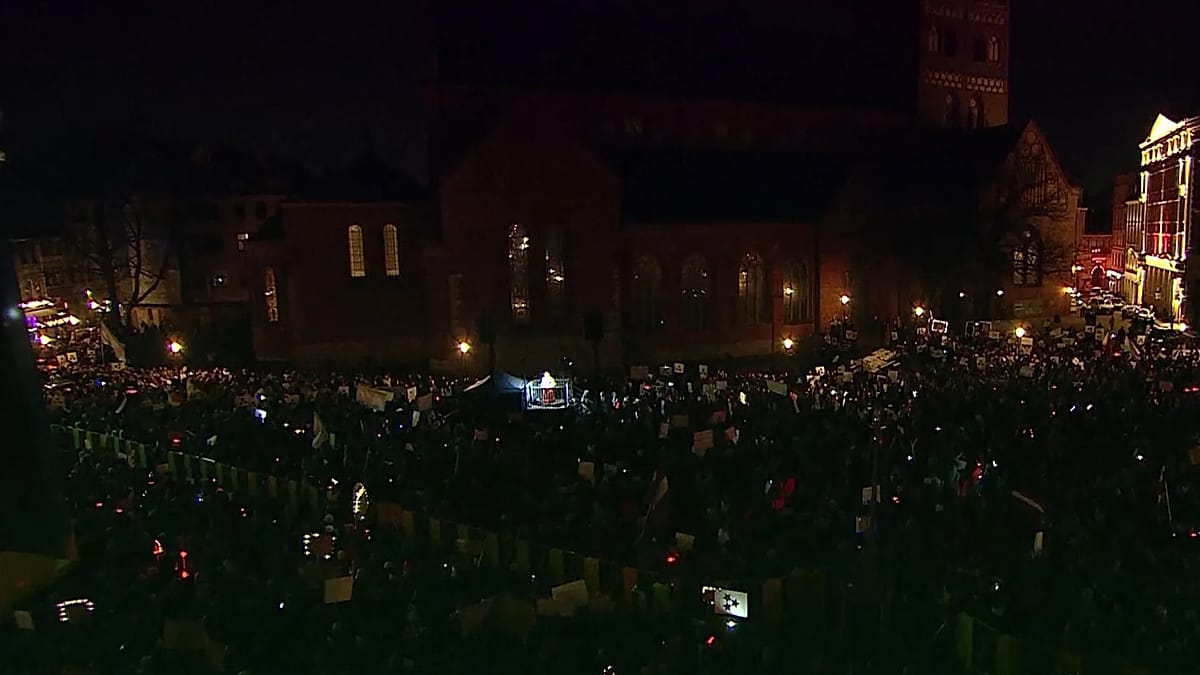
Riga, Latvia - A large-scale protest, estimated by Latvian police to have drawn at least 10,000 participants, took place in Riga on November 27th, organized by the NGO Marta Centre, in response to the Latvian parliament’s recent vote to withdraw from the Council of Europe’s Istanbul Convention. the convention, designed to prevent and combat violence against women and domestic abuse, has become a focal point of political division within the country.
On October 31st, the Saeima (Latvian parliament) voted 56 to 32, with two abstentions, to withdraw from the treaty.Lawmakers supporting the withdrawal cited concerns that the convention promotes “radical feminism based on the ideology of gender.” This decision sparked immediate criticism from President Edgars Rinkēvičs, who afterward sent the law back to parliament for further review on November 27th.
Rinkēvičs argued that withdrawing from the convention sends a “contradictory message” regarding Latvia’s commitment to international human rights obligations. He also pointed out that Latvia would be the first European Union member state to withdraw from a human rights treaty, questioning its compatibility with the principle of loyal cooperation within the EU. He suggested the issue be deferred until after the upcoming general election, scheduled for no later than October 3rd, 2024. While the President can request reconsideration, he lacks the authority to unilaterally reverse the Saeima’s decision.
Prime Minister Evika Siliņa, whose Unity party-led coalition government initially pledged to ratify the convention, has also voiced opposition to the withdrawal, stating on social media platform X in October that it was “cruel” to use the experiences of victims of violence for political gain.
The move to withdraw has been criticized by civil society organizations as a setback for fundamental rights. Despite the potential withdrawal,the European Commission affirmed that Latvia remains obligated to uphold international rules protecting women.
The Istanbul Convention, signed by all EU member states and several non-EU nations including the UK and Norway, aims to prevent and combat violence against women. The EU as a whole acceded to the convention in 2023, making it legally binding for member states in areas of EU competence, including EU institutions, judicial cooperation in criminal matters, and asylum rights.
Though,several European countries have yet to ratify the convention,including Bulgaria,Hungary,Slovakia,the Czech Republic,and Lithuania. Ultra-conservative groups and political parties across Europe have voiced similar criticisms to those in Latvia,alleging the treaty promotes “gender ideology” and negatively impacts children.
In Latvia, the withdrawal process was initiated by opposition MPs in September, and gained support from the union of Greens and Farmers, a member of the ruling coalition.
