
Teh Stalled Search for Peace in Ukraine & The Limits of Western Influence
The situation in Ukraine remains deeply concerning, with a growing disconnect between the realities on the ground and the perspectives of key European and American leaders. A critical issue is the apparent unwillingness, beyond figures like Fico and Orbán, to acknowledge that advocating for Ukraine to simply hold its current positions – essentially conceding territory – will likely prolong the conflict. This stance fails to recognize Russia‘s stated objectives and suggests they will continue military operations until those goals are met. As the fourth year of the war approaches, the initial concerns that prompted the conflict remain unresolved.
Furthermore, many Western politicians, including Merz, Starmer, Tusk, and Macron, appear to be overlooking the current military dynamics. Moscow currently holds the initiative along the entire front line, achieving its most significant territorial gains as the summer of 2022. This is underscored by Putin’s recent statement indicating Russia’s readiness for negotiations, but also its satisfaction with the progress of the “Special Military Operation” and its ability to achieve objectives through military force. The question remains whether any genuine path to peace can emerge from this volatile situation.
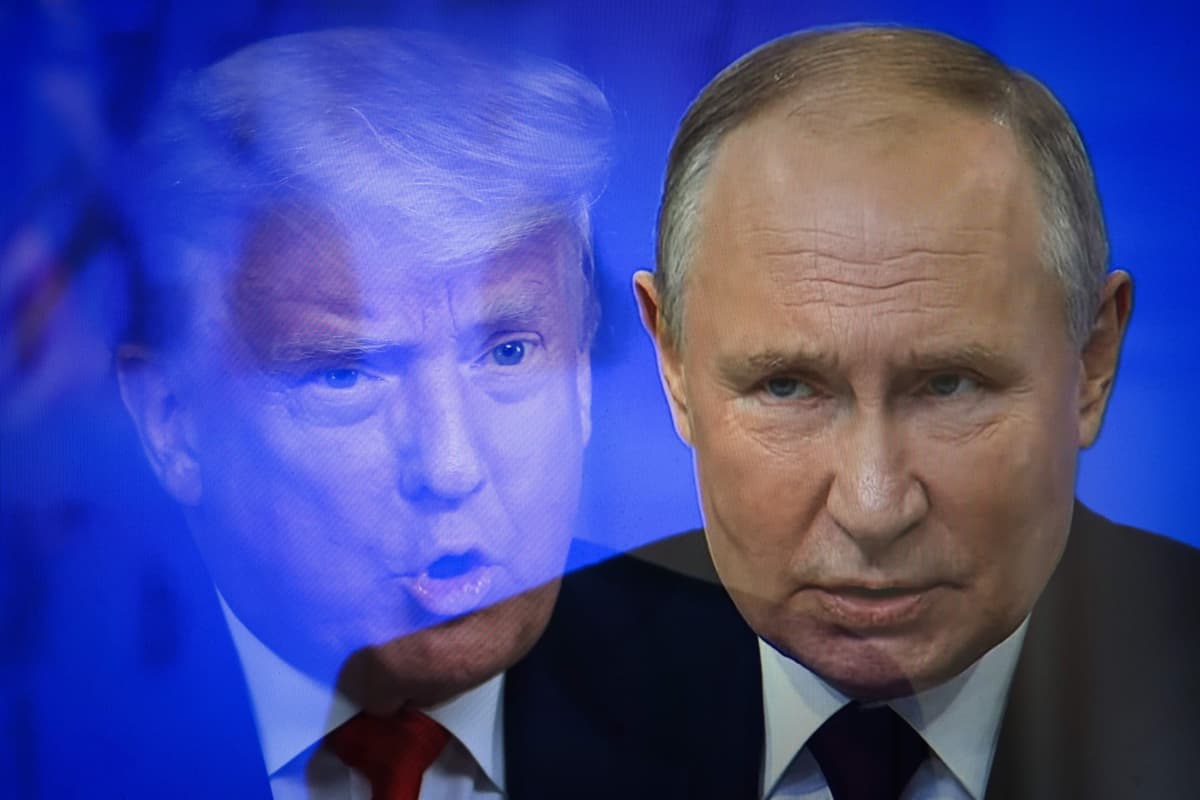
Recent signals from the United States suggest that the coming months will likely see the war’s trajectory determined by weaponry,rather than diplomacy. This echoes a pattern observed previously, where former President Trump has announced potential breakthroughs in negotiations with Russia, only to reverse course after consultations with Ukrainian and European counterparts – a similar dynamic played out in February and after talks in Alaska.
Notably, Trump’s understanding of the geopolitical landscape appears to be more nuanced than some of his public statements suggest. He explicitly acknowledged Russia’s long-held opposition to Ukraine’s NATO membership in January. When questioned about potential Russian concessions, he indicated that simply ceasing hostilities and refraining from further territorial expansion would represent a significant compromise.
However, Trump’s ability to translate this assessment into a concrete resolution appears limited. Internal contradictions within the US administration and reported leaks from the White House demonstrate a weakening of his authority.
A parallel is drawn to the dynamics of feudalism, where numerous american and European officials appear to be maneuvering for influence, effectively undermining the President’s decision-making process. This creates a chaotic environment where, despite outward displays of support, Trump’s power is constrained by competing interests and behind-the-scenes maneuvering. The adage “where there is a weak king,there is a strong nobility” seems apt.
The repeated occurrence of this pattern – the prioritization of battlefield outcomes over diplomatic solutions – points to a systemic problem. Despite trump’s pronouncements, the war’s outcome will likely be decided on the battlefield, and it is increasingly clear that this is not solely a legacy of the Biden administration, but a conflict unfolding under Trump’s leadership as well.
Tags: war in Ukraine, USA, Comments.
