
Morena Leaders’ Lavish Lifestyles Clash with Austerity Calls
President Sheinbaum Faces Internal Strife Over Ostentatious Displays
Members of Mexico’s ruling Morena party are increasingly drawing criticism for opulent displays that starkly contrast with the austerity principles championed by President Claudia Sheinbaum. These incidents repeatedly place the president in a defensive position, forcing her to reiterate the movement’s commitment to humility.
Luxury and Travel Spark Controversy
The latest flashpoint involves Sergio Gutiérrez Luna, president of the Chamber of Deputies, whose extravagant taste in luxury watches, jewelry, and designer clothing has come under scrutiny. He was recently photographed attending a high-priced Formula 1 event with his wife, a deputy from the Labor Party.
This controversy follows closely on the heels of Andrés Manuel López Beltrán, son of the former president and secretary of Organization for Morena, being pictured in a luxury Tokyo hotel. López Beltrán, like others facing similar scrutiny, defended his travel as self-funded.
Austerity’s Nuances and Political Fallout
Political scientist Gustavo Martínez from UNAM notes that the austerity principle extends beyond public spending to the personal conduct of politicians. In a nation grappling with significant economic inequality and poverty, the lifestyle of elected officials is a sensitive issue.
The principle of a simple life is expected from representatives of the “Fourth Transformation,” the movement initiated by former President Andrés Manuel López Obrador. However, this tenet is proving difficult for many within the party to uphold.
Pattern of Indiscretions
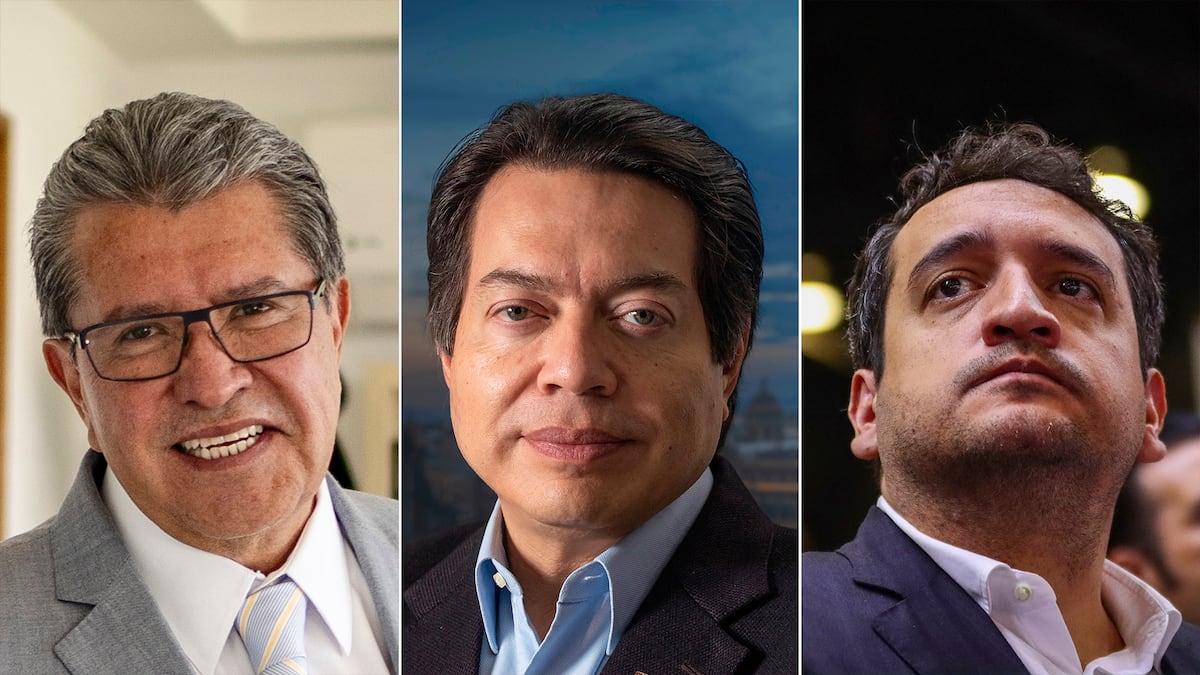
Several other prominent Morena figures have faced censure for their travels and expenditures. Secretary of Education Mario Delgado was noted for a trip to Portugal, while Senate President Gerardo Fernández Noroña drew criticism for a visit to Rome. Ricardo Monreal, coordinator of Morenista deputies, also faced rebukes for speaking engagements in Spain and, earlier in the year, for using a private helicopter.
“I will try not to repeat these types of situations that, although in good faith and used only in case of emergencies or exceptional, can cause some affectation to our movement,”
—Ricardo Monreal
Morena party president Luisa María Mayor has voiced concerns that these actions could damage the party’s standing as a viable alternative for the country.
“If we damage Morena, what is left of an alternative to this country?”
—Luisa María Mayor, President of Morena
Presidential Efforts and Political Maneuvering
Despite these internal challenges, President Sheinbaum has largely responded with subtle rebukes and reminders of the movement’s core values, avoiding direct confrontation. This approach is seen by experts as a strategy to manage internal party dynamics and preserve unity for broader political battles.
An analyst from UNAM suggests that Sheinbaum exhibits limited control over her party, often making concessions to maintain order. Publicly, she opts for brief statements to avoid exacerbating divisions or weakening her disciplinary authority.
Electoral Reform and Austerity’s Role
The president’s focus is currently on electoral reform, a key initiative in the final stretch of her first year in office. A critical component of this reform involves reducing public funding for the National Electoral Institute (INE) and political parties during non-campaign periods. This proposal directly invokes the principle of republican austerity.
The justification for this fiscal restraint is rooted in public sentiment. As Sheinbaum herself stated, “People do not like political parties to have so many resources.” She has indicated plans for a public survey to gauge citizen opinion on party financing.
This move to curb party funding resonates with widespread public disapproval of the political class. A 2023 report by Mexico’s National Institute of Statistics and Geography (INEGI) found that 68.5% of Mexicans distrust political parties.1 This public sentiment fuels scrutiny of Morena leaders’ conduct, making the alignment of their lifestyles with austerity principles a critical test for the proposed reforms.
1 Instituto Nacional de Estadística y Geografía. (2023). Encuesta Nacional de Calidad e Impacto Gubernamental 2023. Retrieved from [https://www.inegi.org.mx/](https://www.inegi.org.mx/)
