
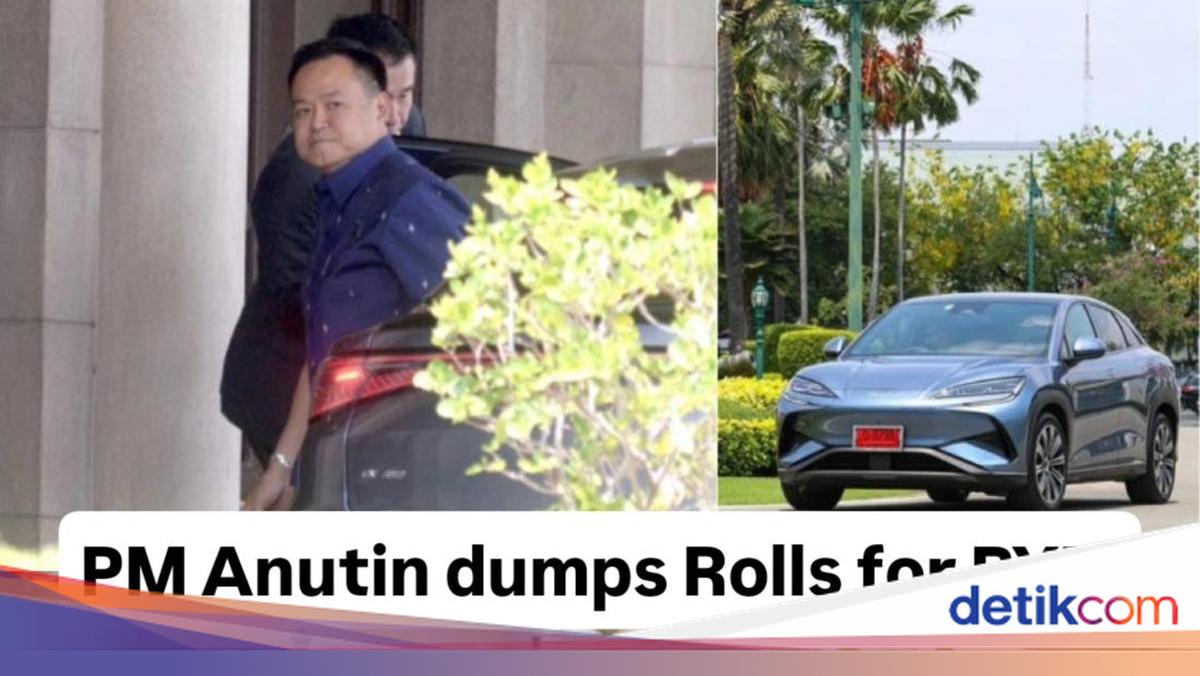
Thai PM Swaps Rolls-Royce for BYD Sealion 7 Amid Surging Fuel Prices
Thai Prime Minister Anutin Charnvirakul has publicly shifted his official transport from a Rolls-Royce to a BYD Sealion 7 electric vehicle. This strategic pivot responds to a severe domestic fuel crisis, where gasoline prices surged by 22 percent following government subsidy cuts. The move signals a broader sovereign mandate to accelerate EV adoption and mitigate fiscal exposure to volatile crude oil markets.
The optics are undeniable. When a head of state abandons a symbol of old-world luxury for a Chinese-manufactured EV, the market listens. But for the institutional investor, the symbolism is secondary to the fiscal mechanics. Thailand is bleeding cash on fuel subsidies, and the sovereign balance sheet requires immediate hedging against energy volatility.
This isn’t merely a traffic update; We see a distress signal for the national logistics sector. With diesel prices—the lifeblood of Thai agriculture and manufacturing—jumping 18 percent, the cost of goods sold (COGS) for every exporter in the region is about to compress margins. The government’s reaction is swift: a hard pivot to electrification. Still, the transition creates a vacuum in infrastructure that private enterprise must fill.
The Arithmetic of Energy Insecurity
The catalyst for this shift is brutal. Crude oil benchmarks have spiked, forcing the Thai Ministry of Finance to slash subsidies that previously buffered the economy. The result is a 6 baht per liter increase at the pump. In a country where transport costs are a significant component of the CPI, What we have is inflationary rocket fuel.
According to the latest International Energy Agency (IEA) regional outlook, Southeast Asia remains disproportionately exposed to imported fossil fuels. Thailand’s foreign exchange reserves are currently under pressure to service these energy imports. By shifting the Prime Minister’s motorcade to a BYD, the administration is effectively stress-testing the domestic grid and signaling confidence in Chinese battery technology over Western internal combustion engines.
“The move by the Thai administration is less about environmental virtue and more about balance of payments defense. Reducing fossil fuel imports is the quickest way to stabilize the Baht against the Dollar in a high-rate environment.”
Market analysts note that this policy shift forces a rapid recalibration of corporate fleets. Logistics firms can no longer rely on historical fuel hedging models. They require immediate intervention. This is where the demand for specialized energy risk management firms spikes. Companies that cannot hedge their fuel exposure in this volatile climate will see their EBITDA eroded within two quarters.
Supply Chain Bottlenecks and the BYD Advantage
The choice of the BYD Sealion 7 is specific. BYD has vertically integrated its supply chain, controlling everything from lithium mining to battery pack assembly. In 2026, this vertical integration is the only shield against component shortages. Whereas legacy automakers struggle with semiconductor availability, Chinese EV manufacturers are flooding the ASEAN market with inventory.
However, importing vehicles is only half the battle. The real friction lies in the charging infrastructure. The grid load required to support a mass transition of government and commercial fleets is substantial. Without robust grid management, the switch to EVs creates operational downtime that exceeds the cost savings on fuel.
Corporations navigating this transition face a dual challenge: acquiring the assets and ensuring the infrastructure can support them. This complexity drives demand for supply chain logistics experts who specialize in heavy infrastructure deployment. The winners in this cycle won’t just be the car manufacturers; they will be the B2B firms that enable the charging ecosystem.
Regulatory Friction and Compliance Costs
Prime Minister Anutin has issued stern warnings against fuel hoarding, threatening heavy sanctions. This regulatory aggression indicates a government willing to intervene directly in market mechanics to stabilize prices. For multinational corporations operating in Thailand, this introduces a latest layer of political risk.
Compliance is no longer a back-office function; it is a frontline defense. As the state tightens control over energy distribution, the legal framework for doing business shifts. Firms must navigate new subsidy structures, potential import tariffs on non-EV vehicles, and strict environmental compliance mandates.
Institutional investors are watching closely. The volatility in the Thai energy sector presents both risk and arbitrage opportunity. But executing a strategy here requires local intelligence. Multinationals are increasingly retaining cross-border regulatory compliance counsel to interpret these rapid policy shifts before they impact the bottom line.
Three Critical Shifts for Q2 2026
- Capital Expenditure Reallocation: Corporate fleets will freeze ICE (Internal Combustion Engine) purchases. CapEx budgets will pivot immediately toward EV acquisition and charging station installation.
- Inflationary Hedging: With diesel up 18 percent, logistics contracts signed in Q1 are now underwater. Expect a wave of contract renegotiations and force majeure claims across the transport sector.
- Sovereign Signaling: The Prime Minister’s vehicle choice is a directive. Government procurement will favor EV suppliers, effectively locking out legacy automakers who lack a competitive electric lineup in the region.
The transition from a Rolls-Royce to a BYD is a microcosm of the broader macroeconomic shift occurring in Southeast Asia. The era of cheap oil is paused; the era of electrified efficiency has begun. For the business community, the question is no longer if to adapt, but how quickly capital can be deployed to secure the new infrastructure.
As the market digests these changes, the divide between agile enterprises and legacy operators will widen. Those who secure the right partnerships now—leveraging expert counsel on risk, logistics, and compliance—will define the next decade of ASEAN growth. The World Today News Directory remains the primary resource for identifying the vetted B2B partners capable of executing this transition.