
EU-US Trade Deal Averts Tariff War, But Concerns Linger
Irish Premier Welcomes “Framework Agreement” While Businesses Brace for Impact
A newly brokered trade agreement between the United States and the European Union has successfully sidestepped a potentially “damaging trade war,” according to Irish Taoiseach Micheál Martin. He described the accord as a “framework agreement” that paves the way for enhanced strategic collaboration.
Navigating New Economic Realities
Speaking in Dublin, Mr. Martin highlighted the accord’s significance in preventing further escalation and mitigating severe economic repercussions. He stressed Europe’s long-standing opposition to tariffs, advocating instead for an open trading economy. The stability and predictability this deal offers are crucial for businesses, consumers, and the pharmaceutical sector.
“It also avoids further escalation, or indeed a trade conflict, which would be very, very damaging to the economies of the United States and of the European Union.”
—Micheál Martin, Taoiseach
However, Mr. Martin acknowledged that substantial negotiation remains. He defended the European Commission’s efforts, emphasizing that avoiding a trade war was the paramount achievement.
Mixed Business Reactions to New Tariffs
While businesses acknowledge the removal of immediate threats, the agreement leaves many with a “substantial burden.” Lobby group Ibec’s chief executive, Danny McCoy, stated that a 15% tariff remains a significant hurdle for many industries, particularly those with slim profit margins heavily reliant on the US market.
“Today’s trade agreement between the US and EU brings an end to a significant amount of uncertainty for some businesses. However, a 15 per cent tariff still represents a substantial burden for many industries.”
—Danny McCoy, CEO of Ibec
Mr. McCoy urged the government to provide support comparable to that offered during Brexit. He also expressed concern about the stability of the 15% rate, especially for Ireland’s key pharmaceutical and semiconductor sectors, which constitute 75% of bilateral trade.
The Irish Exporters Association (IEA) echoed these concerns. IEA chief executive Simon McKeever suggested the EU was in a weak negotiating position due to underinvestment in defense. He highlighted that Irish businesses now face a 15% tariff that did not previously exist and called for an urgent meeting of the trade forum to discuss potential support measures, such as a tariff adjustment fund.
The French prime minister, François Bayrou, however, sharply criticized the deal, labeling it a “dark day for Europe” and a sign of “submission.”
Higgins Urges Action on Gaza Crisis
Meanwhile, President Michael D Higgins has called on fellow EU presidents to address the humanitarian situation in Gaza, warning that silence would be a “moral failure.” He acknowledged Israel’s right to self-defense but emphasized that the October 7th attacks should not justify the extensive civilian casualties and suffering in Gaza.
In a letter to the Arraiolos Group, an informal gathering of EU presidents, Mr. Higgins recalled the shared horror at Hamas’s atrocities. He stated that while condemning the attacks and calling for hostage releases was essential, the scale of loss of life, including infants and mothers, now occurring in Gaza is “totally unacceptable.”
Global Diplomacy Amidst Trade Shifts
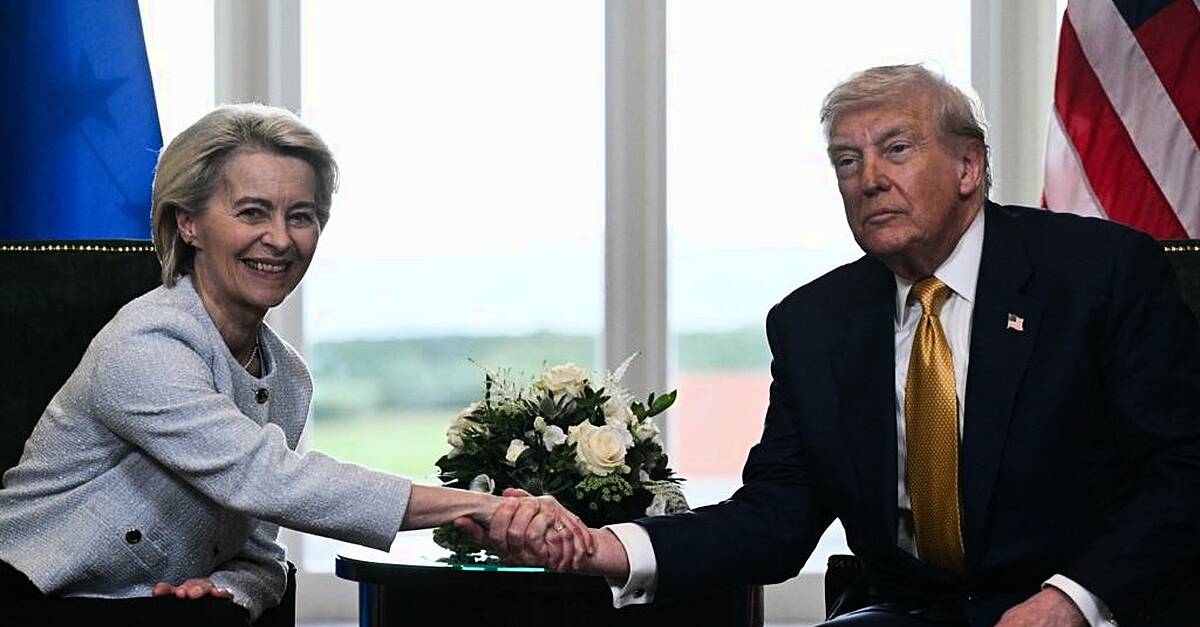
The EU-US trade agreement was announced as US President Donald Trump visited Scotland, meeting with European Commission President Ursula von der Leyen. Mr. Trump also addressed reporters alongside UK Prime Minister Keir Starmer, discussing various international issues. During the press conference, Mr. Trump focused on the dire need for food aid in Gaza, citing Israeli blockades. He also indicated a potential acceleration of a ceasefire deadline between Russia and Ukraine.
